’28 Years Later: The Bone Temple’ First Reactions Praise Ralph Fiennes Performance and Nia DaCosta Direction

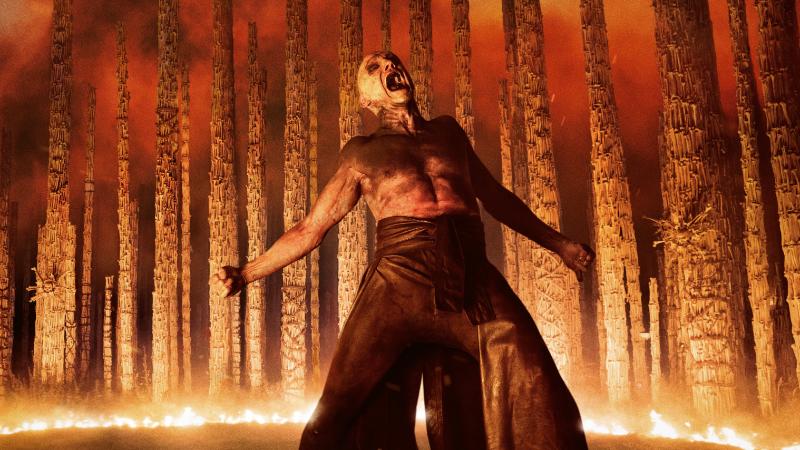
Early viewers of ’28 Years Later: The Bone Temple’ describe the film as a brutal and audacious sequel that shifts focus from infected hordes to human survivors grappling with isolation and faith. Directed by Nia DaCosta, the movie screened for press on Tuesday night in the U.S. and U.K., prompting immediate social media responses. Reactions highlight its polarizing ambition, with some calling it the strongest entry in the franchise for emotional depth and narrative focus.
Nia DaCosta, known for ‘Candyman’ and ‘The Marvels’, steps in after Danny Boyle directed ’28 Years Later’. She was persuaded to helm the project by Jonathan Glazer, director of ‘The Zone of Interest’. The film expands the lore of the Rage Virus outbreak, set in North East England among isolated communities. Dual storylines follow Dr. Ian Kelson in his search for a cure and young Spike’s entanglement with a violent gang led by Sir Jimmy Crystal.
Ralph Fiennes stars as Dr. Kelson, a role that draws widespread acclaim for its complexity and intensity. Viewers note Fiennes delivers poetic layers, with one especially insane sequence earning applause during screenings. Jack O’Connell plays Sir Jimmy Crystal, the gang leader, in a performance praised for mesmerizing presence alongside Fiennes. The supporting cast includes Erin Kellyman, Emma Laird, Chi Lewis-Parry as a standout, Maura Bird, Sam Locke, and newcomer Alfie Williams as Spike.
Critics emphasize the film’s exploration of cultism, trauma, psychosis, and compassion, sidelining much of the infected action for human drama. Dimitri Kraus called it “brilliant: a sequel that operates on a much weirder wavelength than its predecessor, tackling the idea of a false god in a surprisingly thorny manner.” Ryan Hollinger described it as “brutally audacious,” noting its uncompromising and idiosyncratic ambition that may divide audiences. The narrative maintains tension while incorporating surprising humor, with themes of faith, control, fear, religion, the NHS, and isolation woven throughout.
Matt Neglia praised how the film “deepens the franchise’s lore with new questions and some long-awaited answers in the quietest yet undeniably most brutal installment.” Paul Klein highlighted its “brutal examination of faith, control and fear,” adding that it stays funny while building absolute tension. Kat Hughes deemed it “exactly how you do a middle chapter of a trilogy.” Viewers warn of its graphic nature, with Tori Brazier stating it “cranks everything up to 11” and requires a strong stomach.
Dynamic camerawork propels the story, recapturing the magic of prior films while introducing bonkers elements. Amon Warmann credited DaCosta for great results, with Fiennes as MVP. Brandon Benitez declared it “arguably the best of the franchise,” enraptured by its message of faith, isolationism, hope, and wonder. Will Salmon noted it takes big swings that mostly land, nastier and funnier than the first sequel.
The production marks Sony Pictures’ continuation of the trilogy, with Boyle producing alongside Alex Garland. Garland, who wrote the original ’28 Days Later’, returns for the scripts. Filming wrapped earlier this year after principal photography in the U.K. DaCosta’s vision juxtaposes precisely with Boyle’s groundwork, focusing on erosion from isolation akin to the virus itself.
Giovanni Lago appreciated the introversion of the world, calling it a strong start to the new year. Rachel Leishman found it “beautifully chaotic, breathtaking,” eager to watch O’Connell and Fiennes for hours. Christopher Rates It positioned it as one of the decade’s greatest horror movies for brutality and intensity. As the second film in the trilogy, it builds toward a finale, leaving audiences shocked by its weird turns and eager for more.
DON’T MISS: