The King of the B-Movies’ Favorite Films

Roger Corman remains one of the most influential figures in cinema history, having launched the careers of icons like Francis Ford Coppola, Martin Scorsese, and Jack Nicholson. While he was famous for producing low-budget genre films with lightning speed, his personal taste leaned heavily toward ambitious, artistic, and grand productions. Corman’s selections for the Sight & Sound greatest films poll reveal a deep appreciation for directorial mastery and epic storytelling.
Here are the ten movies Roger Corman loved most.
Citizen Kane (1941)
Orson Welles’ debut is frequently cited as the greatest film ever made, and Corman was among its many admirers. The film revolutionized cinematography and narrative structure, influencing every generation of filmmakers that followed. For a producer who valued efficiency and impact, Welles’ technical ingenuity was undeniable.
The Godfather (1972)
It is fitting that Corman selected a masterpiece directed by his former protégé, Francis Ford Coppola. This crime saga is perfect in almost every regard, from its rich visual texture to its complex family dynamics. Corman famously gave Coppola his start, but he recognized that the director eventually surpassed his teacher with this defining work of American cinema.
Rashomon (1950)
Akira Kurosawa’s groundbreaking film challenged the concept of objective truth by retelling the same event from conflicting perspectives. Its influence on narrative cinema cannot be overstated, introducing the world to a new way of storytelling. Corman admired the film’s ability to be both a gripping mystery and a philosophical inquiry.
War and Peace (1966)
Sergey Bondarchuk’s Soviet adaptation of Tolstoy’s novel is one of the most expensive and expansive films ever produced. With thousands of extras and battle sequences that have never been equaled, it represents the kind of scale Corman rarely worked with but clearly respected. It stands as a monumental achievement in managing chaos on screen.
The Tin Drum (1979)
Directed by Volker Schlöndorff, this adaptation of Günter Grass’s novel is a surreal and disturbing look at German history through the eyes of a boy who refuses to grow up. The film’s striking imagery and bold thematic choices appeal to those who value cinema that takes risks. It remains a unique entry in the canon of European art-house films.
Dr. Strangelove or: How I Learned to Stop Worrying and Love the Bomb (1964)
Stanley Kubrick’s dark satire on nuclear annihilation is as hilarious as it is terrifying. Corman, who often worked within the sci-fi and horror genres, surely appreciated the film’s ability to turn apocalyptic dread into comedy. The precision of Kubrick’s direction turns a nightmare scenario into a perfectly controlled farce.
La Dolce Vita (1960)
Federico Fellini’s exploration of celebrity culture and excess in Rome is a visually indulgent masterpiece. The film wanders through the glamorous and hollow lives of its characters, capturing a specific moment in time with unmatched style. Corman’s inclusion of this title highlights his love for international cinema that prioritizes atmosphere over traditional plot.
Chinatown (1974)
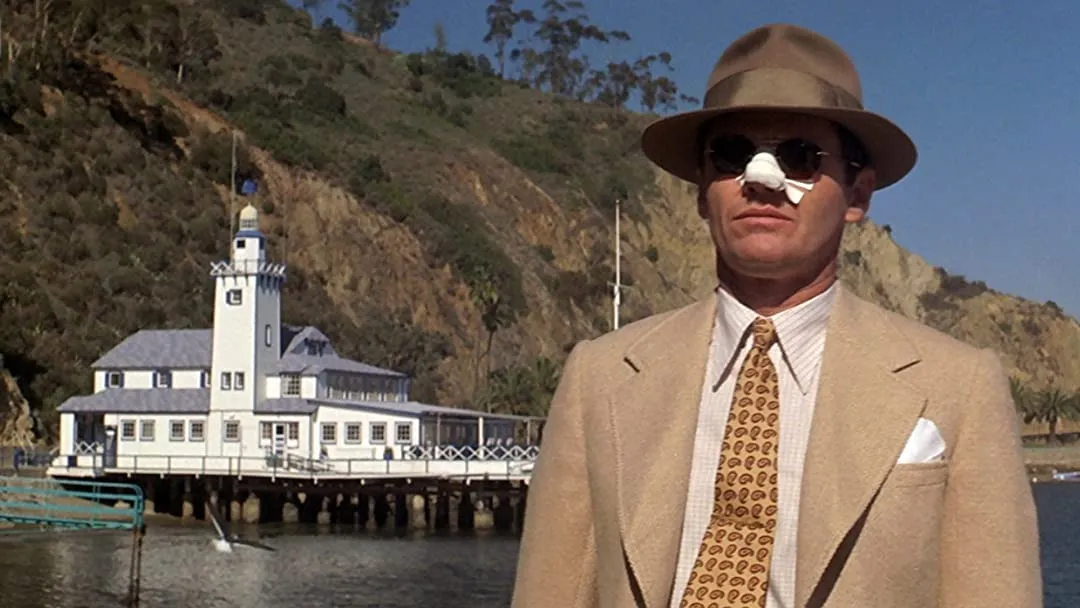
Roman Polanski’s neo-noir features a screenplay that is often taught as the gold standard of writing. Jack Nicholson, another Corman graduate, delivers one of his best performances as a private investigator uncovering deep corruption in Los Angeles. The film’s cynical tone and flawless construction make it an enduring classic.
The Seventh Seal (1957)
Ingmar Bergman’s allegorical tale of a knight playing chess with Death is one of the most parodied and revered images in film history. It tackles heavy existential questions about faith and mortality with stark, high-contrast black-and-white photography. Corman appreciated the film’s intellectual depth and its power to captivate audiences with simple but profound imagery.
Lawrence of Arabia (1962)
David Lean’s historical epic is the definition of big-screen cinema. With its sweeping desert landscapes and Peter O’Toole’s mesmerizing performance, the film demands to be seen on the largest canvas possible. For a filmmaker known for budget constraints, this movie represents the ultimate example of what can be achieved with vast resources and vision.
If you have a favorite among Corman’s picks, let us know in the comments.
DON’T MISS: