
Did Lizzie Borden Get Away with Murder Before ‘Monster’ Reexamined Her Case?


The case of Lizzie Borden remains one of the most enduring true crime stories. On August 4, 1892, her father Andrew and stepmother Abby were brutally murdered with a hatchet in their Fall River, Massachusetts home. More than a century later, the intrigue surrounding the case has been reignited by Netflix’s ‘Monster: The Lizzie Borden Story.’
This new series prompts viewers to revisit two pivotal questions: Was Lizzie Borden found guilty, and if so, how did she evade justice? The real story is even more perplexing than the nursery rhyme suggests.
No, she was not found guilty. On June 20, 1893, Lizzie was acquitted by an all-male jury after approximately 90 minutes of deliberation. The trial, which took place from June 5 to June 20, 1893, concluded with a not guilty verdict.
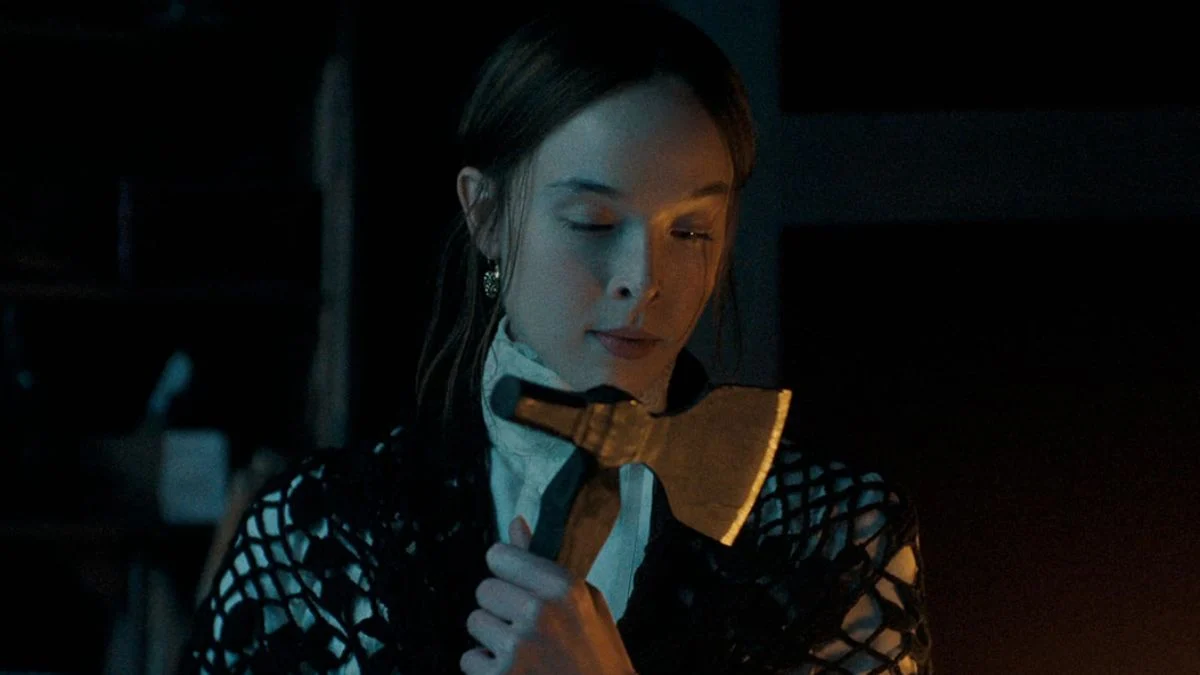
The trial captivated the nation long before the era of streaming. Investigators scrutinized Lizzie’s account of her whereabouts and uncovered significant family tensions. Newspapers across the country meticulously covered the case, turning her into one of the most infamous defendants of her time.
However, a not guilty verdict does not equate to a declaration of innocence. Jurors merely needed to determine that the prosecution had not proven guilt beyond a reasonable doubt, and they were not required to identify another suspect. This distinction is crucial in understanding why the case continues to provoke debate.
The prosecution faced a significant hurdle due to the absence of concrete evidence. While there were many suspicious circumstances, there was little physical proof linking Lizzie to the murder weapon. Andrew was killed within a narrow timeframe of about 15 minutes, yet Lizzie had no blood on her, and the weapon was never definitively identified.
Courtroom rules also favored Lizzie. The judges barred her inquest testimony from being used at trial, despite the contradictory and confusing nature of her answers, which she provided without legal counsel. This ruling eliminated some of the most damaging evidence the state could have presented.
Additionally, Lizzie’s social standing played a role. She was well-regarded in her community and active in her church, and later observers suggested that societal attitudes regarding gender and class made it difficult for jurors to envision a woman of her status committing such a heinous act. Prosecutors relied on stereotypes about women’s cunning to compensate for their lack of direct evidence, yet the jury still chose not to convict.
The judge’s closing remarks may have also influenced the outcome. Justice Justin Dewey’s summary drew criticism for seemingly favoring her innocence while praising her character and church involvement.
After the verdict, Lizzie’s freedom did not bring her solace. Having spent nearly ten months in jail, she returned to Fall River, where suspicion continued to loom over her. She became increasingly isolated, adopted the name Lizbeth, and moved into a large home with her sister Emma.
The infamous rhyme contributed significantly to the case’s longevity. It misrepresented many details, from Abby’s relationship with Lizzie to the number of strikes, and effectively branded her guilty in the public’s mind despite the verdict. This folklore is a major reason the story continues to resurface in popular culture.
No other suspects were ever charged, and the murders remain officially unsolved. This unresolved nature is precisely what makes the case a rich source for dramatic retellings.
Netflix’s ‘Monster’ offers its own interpretation of the events. The fourth season of the Ryan Murphy and Ian Brennan anthology premiered on September 17, 2026, releasing all eight episodes simultaneously, and marks the first time a woman has been given the title of Monster. Ella Beatty stars as Lizzie, with Rebecca Hall as Abby, Vicky Krieps as maid Bridget Sullivan, Charlie Hunnam as Andrew, Billie Lourd as sister Emma, and Jessica Barden as actress friend Nance O’Neill.
The series is not a documentary and does not claim to be one. Netflix itself describes the show as a fictionalized interpretation that alters historical facts. The trailer depicts Lizzie as a repressed young woman who conspires with her rebellious maid to murder her abusive parents, even featuring Sarah Paulson as serial killer Aileen Wuornos.
That connection to Wuornos is a dramatic fabrication, and Netflix Tudum states there is no evidence linking the real Wuornos to the Borden murders. Murphy has indicated that her inclusion relates to the season’s exploration of female rage. Critics have had mixed reactions as well; Rotten Tomatoes reports a 50 percent approval rating from 12 reviews, while Metacritic shows mixed or average responses.
So, did Lizzie Borden truly get away with murder? Legally, she was acquitted, and no other suspects were ever charged, but history has never entirely exonerated her. If the show’s portrayal of Lizzie has you reconsidering the verdict, which piece of evidence or courtroom decision do you believe should have swayed the jury differently?