
How the Real Unabomber Was Caught and Why Netflix’s ‘Unabomber’ Movie Is Trending


Director Janus Metz’s ‘Unabomber‘ has quickly become the most watched film on Netflix since its release in September. The narrative centers on a young Ted Kaczynski, portrayed by Jacob Tremblay, who becomes involved in ethically questionable psychological experiments led by Russell Crowe’s Professor Henry Murray.
As the film captivates audiences, a pressing question arises: How was the Unabomber apprehended after evading capture for so long? The actual events are more bizarre than most thrillers, culminating in a nearly two-decade investigation that concluded due to Kaczynski’s own writings.
Between 1978 and 1995, Kaczynski sent bombs to selected targets, resulting in three deaths and 23 injuries. Dubbed the Unabomber, short for University and Airline Bomber, investigators had scant information about their target despite it being the largest and costliest FBI investigation in U.S. history.
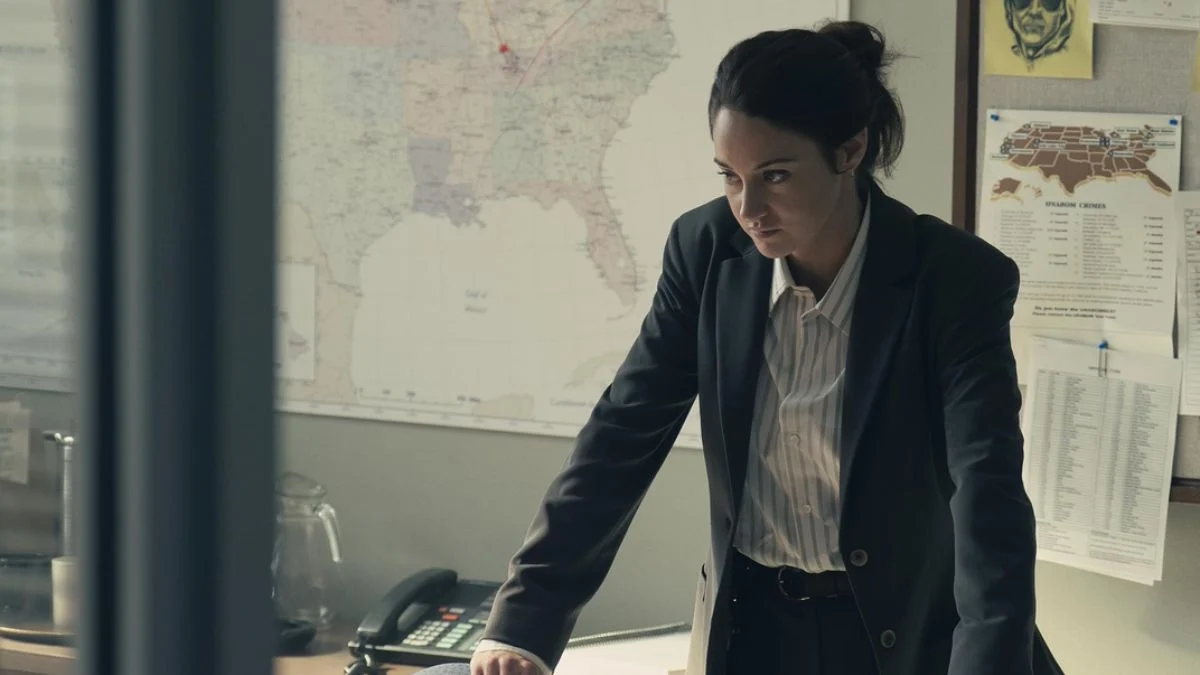
The investigation expanded significantly, involving over 150 full-time investigators, analysts, and agents from the FBI, ATF, and other agencies. However, progress was minimal until 1995, when Kaczynski sent his manifesto to various news outlets.
In June 1995, the bomber dispatched a 35,000-word manifesto to The New York Times, The Washington Post, and other publications, criticizing modern technology. The task force suggested publishing it, hoping a reader might recognize the author, despite concerns about yielding to a terrorist’s demands.
The decision proved beneficial. FBI Director Louis Freeh and Attorney General Janet Reno authorized the publication, believing it could lead to identifying the bomber. A woman named Linda Patrik recognized the phrasing and arguments in the manifesto as similar to those of her brother-in-law, Ted Kaczynski.
Initially skeptical, her husband, David Kaczynski, later expressed to ABC News that the words resonated with his brother’s voice on an emotional level.
The couple took their time. They collaborated with a private investigator and a former FBI behavioral science expert to assess whether Ted could be the Unabomber before reaching out to the FBI. Analysts concluded that the letters were likely penned by the same individual who wrote the manifesto, prompting a lawyer to contact the bureau on the family’s behalf.
Investigators then scrutinized the writing. David shared a 23-page essay Ted wrote in 1971, and the phrase “sphere of human freedom,” present in both documents, caught the attention of FBI special agent Terry Turchie. This, along with other writing anomalies and evidence, enabled authorities to obtain a search warrant for Kaczynski’s remote Montana cabin.
On April 3, 1996, agents arrested Kaczynski near Lincoln, Montana, discovering another bomb, bomb-making materials, and the original manuscript of the manifesto. They also retrieved over 40,000 handwritten journal pages detailing bomb experiments and the crimes. Kaczynski later pled guilty to avoid the death penalty, receiving four life sentences.
The impact on the family was profound. David wished to remain anonymous, but his identity soon became public, leading Ted to vow never to forgive him.
For those expecting a straightforward retelling of the manhunt, the Netflix film may come as a surprise. Instead of focusing solely on the years of attacks, it weaves through various periods of Kaczynski’s life, including his time at Harvard. Netflix describes it as a drama inspired by true events, chronicling his evolution from a Harvard prodigy and test subject to the Unabomber as the FBI closes in.
Critics have mixed opinions on this approach. SlashFilm praised it as a surprisingly effective thriller with a polished look and strong performances, but noted it loses momentum when shifting to the FBI storyline. Another reviewer rated it three out of five, observing that the agent character, Joanna Miller, likely represents a composite of various agents involved in the case.
Despite the divided reviews, the film has attracted a large audience. History indicates that Netflix projects about real-life criminals often land in the top ten, and the appetite for true crime remains strong. Given that the real capture hinged on a family’s difficult decision, do you think ‘Unabomber’ should have focused more on David and Linda rather than the FBI subplot?