
Cary-Hiroyuki Tagawa Dies at 75 from Stroke Complications

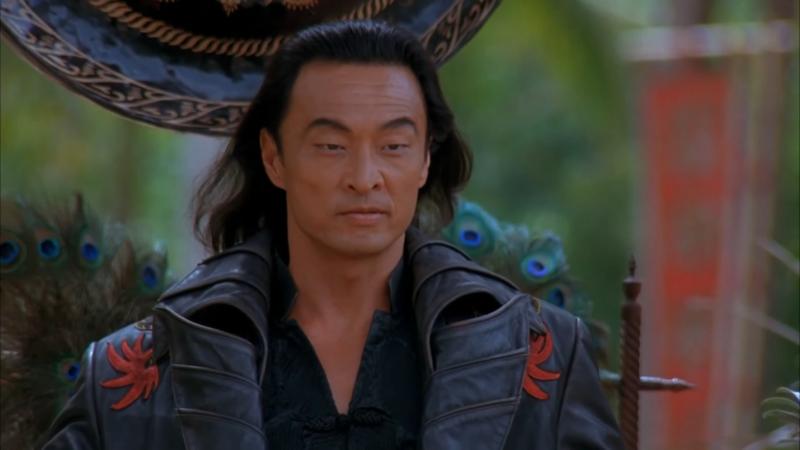
Cary-Hiroyuki Tagawa, the commanding actor who brought menace to Shang Tsung in the ‘Mortal Kombat’ franchise, passed away Thursday in Santa Barbara, California. Surrounded by family, including his children, Tagawa succumbed to complications from a stroke at age 75. His death marks the end of a prolific career spanning over four decades, where he embodied villains and antiheroes with a piercing intensity that blended Japanese heritage and Hollywood grit.
Tagawa’s breakthrough arrived in 1988 with a pivotal role in Bernardo Bertolucci’s ‘The Last Emperor’, portraying the manipulative aide to Puyi, the final Qing emperor. The film, which swept nine Oscars, showcased his ability to convey quiet menace through subtle expressions and precise diction. He followed with a memorable turn as the raincoat-wearing Lo Pan in John Carpenter’s ‘Big Trouble in Little China’, a cult action-comedy where his sorcerer lord orchestrated chaos amid San Francisco’s Chinatown underbelly. That performance, blending physicality with ethereal menace, solidified his niche in genre fare.
In 1995, Tagawa stepped into the ‘Mortal Kombat’ universe as Shang Tsung, the shape-shifting sorcerer hosting the interdimensional tournament. His portrayal in the live-action film, directed by Paul W.S. Anderson, captured the character’s soul-stealing arrogance through elongated pauses and predatory stares, grossing $122 million worldwide. He reprised the role in the 1997 sequel ‘Mortal Kombat: Annihilation’ and the 2011 animated ‘Mortal Kombat: Legacy’ web series, while voicing the villain in the franchise’s video games, including ‘Mortal Kombat 11’ in 2019. These iterations amplified his status among gamers and fans, with Shang Tsung’s fatality moves becoming iconic in the fighting genre.
Tagawa’s resume extended to espionage thrillers, including a brief but lethal appearance as Kwang Lo in James Bond’s ‘License to Kill’ (1989), where he dispatched a henchman with a razor-edged tricycle wheel. In the 2001 war epic ‘Pearl Harbor’, he played Admiral Isoroku Yamamoto, delivering measured gravitas to the architect of the attack. His work in ‘Memoirs of a Geisha’ (2005) as the Chairman offered a rare sympathetic lead, contrasting his usual antagonists, while in ‘Elektra’ (2005), he menaced Jennifer Garner as the Yakuza boss Roshi.
On television, Tagawa lent authority to Amazon’s alternate-history series ‘The Man in the High Castle’ from 2015 to 2019, portraying the noble Nobusuke Tagomi across four seasons. In that role, he navigated multiverse intrigue with philosophical depth, earning praise for humanizing a bureaucrat in a Nazi-occupied America. Earlier, he appeared in the 1980s miniseries ‘The Cinder Path’ and voiced characters in animated projects like ‘The Ghost in the Shell: Stand Alone Complex’. His final credits included a 2024 guest spot in ‘NCIS: Hawai’i’ and the upcoming indie drama ‘The Legend of the White Horse’, set for 2026 release.
Born September 27, 1950, in Tokyo to a Japanese father and American mother, Tagawa grew up in Hawaii and Tennessee, training in martial arts and theater. He honed his craft at the University of Tokyo before relocating to Los Angeles in the 1970s. Over 150 credits, he often drew from his biracial background to infuse roles with cultural nuance, as in ‘Snow Falling on Cedars’ (1999), where he played a fisherman entangled in wartime prejudice. Tagawa also advocated for Asian representation, mentoring younger actors through workshops at the Beverly Hills Playhouse.
Directors frequently cast him for his 6-foot-1 frame and bilingual fluency, which allowed seamless switches between English and Japanese dialogue. In ’47 Ronin’ (2013), alongside Keanu Reeves, he depicted the shogun in a steampunk-infused samurai tale, emphasizing loyalty’s cost. His voice work extended to video games like ‘Soulcalibur VI’ (2018), where he reprised roles with gravelly timbre. Tagawa’s personal life remained private; he is survived by four children from two marriages and leaves behind a legacy of unforgettable adversaries.
The entertainment community reacted swiftly, with New Line Cinema issuing a statement: “Cary’s portrayal of Shang Tsung defined a generation of gamers and filmmakers alike.” Fans flooded social media with clips of his ‘Mortal Kombat’ confrontations, underscoring his enduring impact. As Hollywood grapples with the loss, Tagawa’s ability to elevate archetypes into complex figures ensures his villains will haunt screens for years.