
‘Delusion’ Recap and Ending Explained: Unraveling the Family Secrets in Netflix’s Thai Mystery


‘Delusion’ is a six-episode Netflix Thai series directed by Chayan Laoyodtrakool, beginning as a supernatural village mystery that reveals deeper family issues. Set in Chiang Khan, Loei Province, the story follows a community searching for someone to blame after a child’s disappearance, with suspicion falling on an elderly man suffering from dementia. This man, Narong, has a daughter named Wan who must defend him against the town’s accusations.
The ending of ‘Delusion’ is a shocking twist that challenges everything viewers have been led to believe. What initially appears to be a supernatural mystery gradually transforms into a narrative about hidden family sins. Here’s a closer look at the finale and its emotional impact.
Narong’s dementia complicates his defense, making it difficult for even his family to trust him. Wan, a high school teacher, finds herself battling the town’s gossip. The series cleverly instills doubt in viewers as well. Early on, a confused Narong attacks his wife Pannee, mistaking her for the demon Phii Pong.
His actions, including an attempt to drown his grandson Aim, do not help his case. Many viewers may have been ready to condemn him, which is precisely what the writers intended.
However, Narong is not the killer; he knows more than he reveals. His character blurs the lines between forgetfulness and concealment, making every moment of confusion feel significant.
The truth is rooted in reality rather than the supernatural, deeply entwined with Wan’s own family history.
The actual murderer is Wat, Wan’s brother, who left home to pursue a career as a doctor. The irony is stark: the seemingly respectable son is responsible for the violence.
After enduring bullying in his youth, Wat becomes mentally unstable, believing he must punish those he deems unworthy of life. Sak, who later blackmails the family for land and money, also meets a violent end due to his greed.
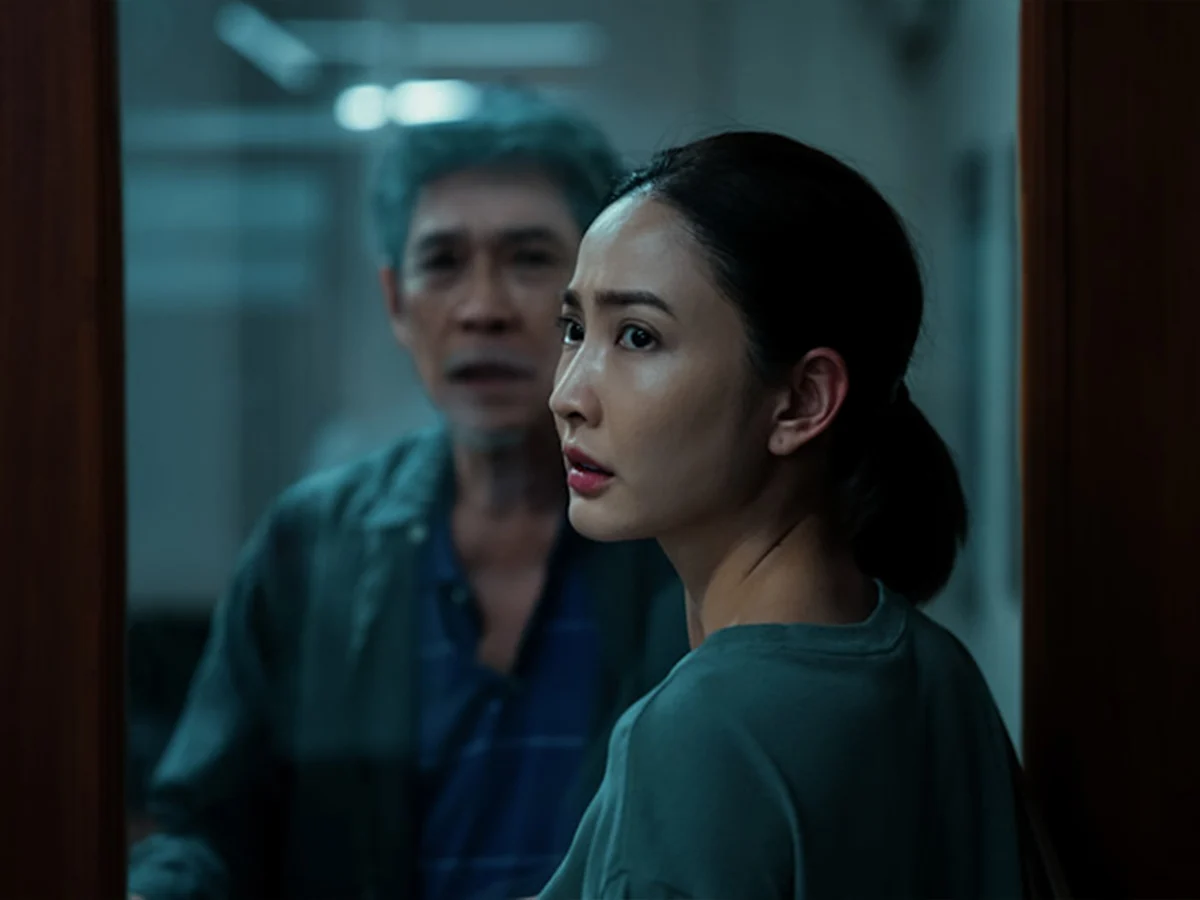
Wat nearly kills Wan to protect himself, but instead urges her to act like a sister, reminding her of her presence during the bullying. This haunting moment reframes Wan’s guilt as she has spent the series defending her father, only to confront her own role in the family’s dark past.
The cabin contains evidence of Wat’s crimes, including the body of his first victim. Pannee burns it down, leading to her arrest by officer Pete, who suspects the family is hiding something. Pannee even claims responsibility, but the finale hints that this may not be the complete truth. Pete has already connected the recent murders to similar cases in other provinces.
A surprising twist reveals that the Phii Pong of the series was a fabrication by Sak, who exploited the villagers’ fears for profit. After the first murder, Sak killed another boy, blaming it on Phii Pong and posing as a shaman to capitalize on the community’s terror.
While the folklore itself is real, with Phii Pong being a figure in Thai mythology associated with failed dark magic, the show uses this legend to illustrate human greed.
The overarching message suggests that superstition can obscure reality, and mental health issues are often misunderstood. This theme resonates particularly through Narong’s storyline.
The finale does not provide a clear resolution. Wat remains free as Wan and her family choose to protect him, frustrating viewers who anticipated a courtroom showdown.
Despite having evidence linking Wat to the murders, Pete cannot act due to insufficient proof. He is transferred again, urging Wan to stop shielding her brother and break the cycle of violence.
The ending implies that perception shapes reality, and parents will go to great lengths to protect their children. Wan also grapples with her part in her brother’s downfall, though the series leaves it ambiguous whether earlier intervention would have made a difference.
Not everyone agrees that the journey was worthwhile. One critic noted that the plot’s complexity undermines the series’ intended messages. Nevertheless, the open ending has sparked discussions among fans. One writer speculates that a potential second season could explore a rivalry between Wat and Wan. If you were in Wan’s position, would you continue to protect Wat, or finally turn him in to Pete?