James Cameron Rejects Generative AI in ‘Avatar’ Sequels to Preserve Actor Integrity

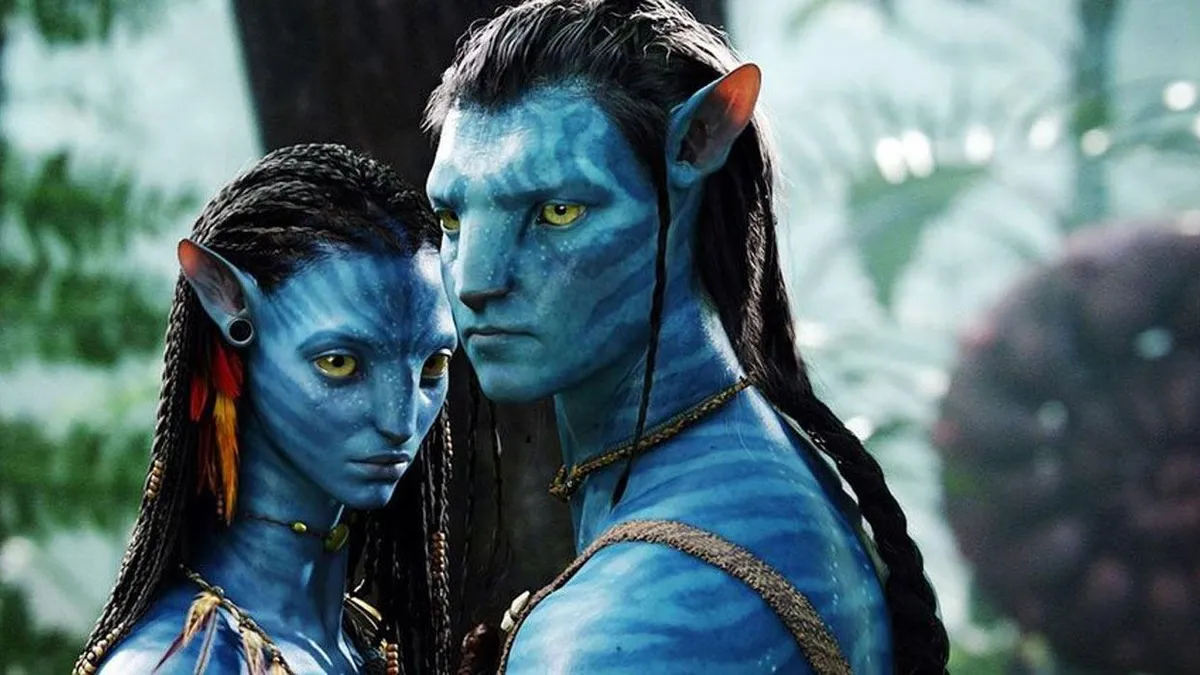
James Cameron’s firm stance against generative AI in the ‘Avatar’ franchise underscores a deepening Hollywood rift over technology’s role in filmmaking. The director, whose 2009 original grossed $2.92 billion worldwide, insists on traditional methods to maintain authenticity in performance capture. This position emerges as studios grapple with AI’s potential to disrupt jobs, echoing concerns from the 2023 SAG-AFTRA strike that secured protections against digital replicas.
Cameron addressed the issue during the December 5, 2025, Paris premiere of ‘Avatar: Fire and Ash’, the third installment in the series produced by 20th Century Studios and Lightstorm Entertainment. He stated, “You’re going to see the pinnacle of the most advanced imaging technology in the world. We don’t use generative AI… we’re not replacing actors.” The film, budgeted at $350 million, employs motion-capture suits and LED volume stages at New Zealand’s Weta Digital, where 1,800 artists rendered 2.5 million visual effects shots.
The ‘Avatar’ sequels, shot back-to-back from 2017 to 2020, prioritize human-driven creativity amid AI’s rise. ‘The Way of Water’ in 2022 earned $2.32 billion, utilizing underwater performance capture that required 300 custom rigs for actors like Kate Winslet and Cliff Curtis. Cameron, 71, collaborated with Weta FX—acquired by Unity in 2022 for $1.6 billion—to advance facial scanning without algorithmic generation, contrasting tools like Sora that synthesize scenes from text prompts.
This approach aligns with Cameron’s history of innovation, from ‘The Terminator’ in 1984’s practical effects to ‘Titanic’ in 1997’s $200 million CGI water simulation. He consulted with the Visual Effects Society, which reported in 2024 that 60% of VFX workers faced burnout from tight deadlines. For ‘Fire and Ash’, the Na’vi language—developed by Paul Frommer with 1,000 words—remains voiced by Sam Worthington and Zoe Saldaña, avoiding AI dubbing that plagued 2024’s ‘The Lord of the Rings: The Rings of Power’ reshoots.
Hollywood’s AI debates intensified post-strike, with Disney’s 2024 guidelines mandating consent for likeness use. Cameron’s rejection extends to de-aging, opting for prosthetics on 80-year-old Jon Landau’s production oversight. The franchise, projected to reach $10 billion across five films by 2031, films in 8K resolution for IMAX, emphasizing sensory immersion over synthetic shortcuts.
Critics like Kristen Stewart, who on December 6 decried Netflix’s potential Warner Bros. acquisition as “art-killing consolidation,” view Cameron’s purism as a bulwark. Netflix’s $82 billion deal, announced hours later, integrates Warner’s 100,000-hour library, raising fears of algorithm-favored content. Cameron, whose ‘Aliens’ in 1986 blended practical and early CGI, warned, “AI is a tool, not a replacement—lose the human element, and you lose the soul.”
‘Fire and Ash’ opens December 19 in North America, following a global rollout that grossed $150 million from early screenings. Worthington reprises Jake Sully, leading the Omatikaya against human colonizers in a plot spanning volcanic biomes. Saldaña returns as Neytiri, with new cast including Oona Chaplin as Varang, a fire Na’vi leader. The score, composed by Simon Franglen, incorporates 50 indigenous instruments recorded live.
Production employed 2,000 New Zealand crew members, boosting local GDP by $250 million annually. Cameron’s Deepcore submersible tech, used for real ocean dives, informed bioluminescent designs. As AI tools like Runway ML generate 4K clips in minutes, Cameron’s method—averaging 18 months per film—prioritizes iteration, with 500 test renders per scene.
This philosophy influences peers; Denis Villeneuve’s ‘Dune: Messiah’ in 2026 shuns AI for practical sandworms. The ‘Avatar’ saga, rooted in Cameron’s 1994 concept art, evolves Eywa’s ecosystem with 300 new species, all hand-animated. Box office analysts forecast $2.5 billion for ‘Fire and Ash’, driven by 70% international markets where IMAX screens number 1,700.
Cameron’s comments, covered by Variety, resonate amid FTC scrutiny of media mergers. With ‘Avatar 4’ filming in 2026 and ‘5’ scripted, the series cements his $1 billion net worth while championing labor. As generative AI adoption hits 40% in indie films per 2025 MPAA data, Cameron’s rejection signals a premium on human artistry in blockbuster cinema.
DON’T MISS: