Kristen Stewart Questions Directorial Control of ‘Twilight’ Sequels

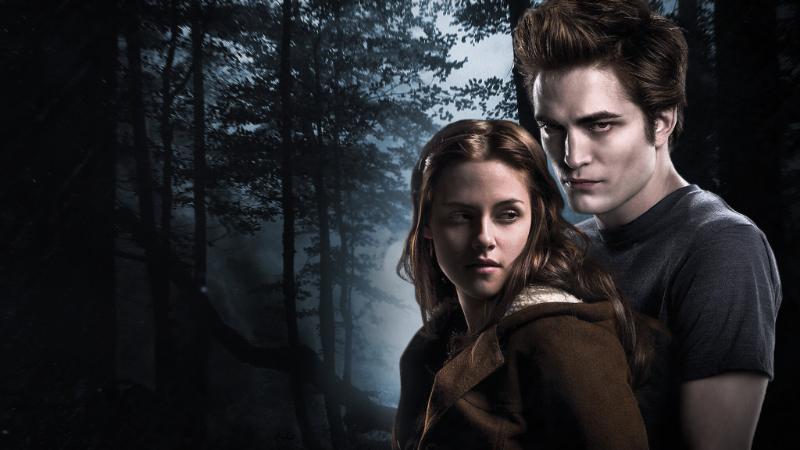
Kristen Stewart reflects on the franchise that launched her stardom, casting doubt on whether its sequel directors truly helmed their visions amid studio pressures. In a new interview, she expresses empathy for Chris Weitz and Bill Condon, suggesting their efforts emerged despite a stifled process. The remarks surface as Stewart promotes her directorial debut, highlighting contrasts between indie autonomy and blockbuster constraints. Her candor underscores the tensions of early-career fame in Hollywood’s high-stakes machinery.
Stewart praises Catherine Hardwicke for imprinting the first ‘Twilight’ installment with distinct personality, crediting the director’s influence on the 2008 film’s tone. Hardwicke’s approach injected a raw, personal edge into Bella Swan’s world, setting it apart from the sequels’ more homogenized aesthetics. Stewart notes that subsequent entries, under Weitz for ‘New Moon’ in 2009 and Condon for ‘Eclipse’ in 2010, ‘Breaking Dawn – Part 1’ in 2011, and ‘Breaking Dawn – Part 2’ in 2012, grappled with overwhelming external input. This dynamic, she argues, diluted individual creative imprints in a series that grossed over $3.3 billion worldwide.
The actress wonders aloud if Weitz and Condon “actually felt like they fully directed those movies,” a sentiment born from her on-set observations. She recalls feeling “bad for them and proud of them,” acknowledging the resilience required to infuse any signature amid the chaos. Despite the hurdles, Stewart observes that their films “had personality, in spite of a really stifled process,” describing the results as “almost overtly, bizarrely, spastically themselves.” These nuances, she explains, surfaced through stylistic quirks that pierced the franchise’s glossy uniformity.
Weitz, transitioning from family comedies like ‘About a Boy’, brought a visual lyricism to ‘New Moon’, emphasizing Edward Cullen’s brooding isolation through desaturated palettes and sweeping Italian vistas. His budget escalated to $50 million, up from the original’s $37 million, allowing expanded action sequences and a larger ensemble. Condon, known for ‘Dreamgirls’, infused the later entries with operatic drama, particularly in the vampire-werewolf hybrid birth scenes of ‘Breaking Dawn’. His installments averaged 130-minute runtimes, prioritizing emotional crescendos over the first film’s concise 122 minutes.
Stewart’s perspective emerges in the context of her evolution from Bella Swan to multifaceted auteur. The ‘Twilight’ saga, adapted from Stephenie Meyer’s novels, spanned five films across four directors, each navigating Summit Entertainment’s evolving oversight. Hardwicke’s tenure ended after the debut due to scheduling conflicts, paving the way for Weitz’s appointment amid fan demands for escalated spectacle. Condon’s involvement marked a shift toward mature themes, culminating in the series finale’s $829 million global haul.
The interview coincides with Stewart’s feature directorial bow, ‘The Chronology of Water’, an adaptation of Lidia Yuknavitch’s memoir starring Imogen Poots as a swimmer-turned-writer grappling with trauma. Shot over 28 days in Portland, Oregon, the film employs nonlinear structure and immersive sound design to mirror its protagonist’s fractured psyche. Producers include Brian Swardstrom and Dylan Marchetti, with a runtime of 108 minutes targeting Sundance’s 2026 competition slate. Stewart’s script condenses the 300-page source into taut vignettes, emphasizing bodily autonomy and narrative reclamation.
This reflection arrives 17 years after ‘Twilight”s premiere, which propelled Stewart to A-list status alongside Robert Pattinson and Taylor Lautner. The ensemble’s chemistry drove merchandising empires, from cosmetics lines to novel tie-ins generating $1.5 billion in ancillary revenue. Weitz later directed ‘Cinderella’ in 2015, while Condon helmed ‘Beauty and the Beast’ in 2017, both earning over $1 billion. Their ‘Twilight’ chapters, though critiqued for pacing, sustained the saga’s cultural dominance through fan conventions and soundtrack sales exceeding 10 million units.
Stewart’s comments resonate amid ongoing discussions of auteurship in franchises, where directors like Denis Villeneuve in ‘Dune’ reclaim narrative control. She contrasts the experience with her indie work, such as ‘Personal Shopper’ in 2016, which earned a César for Best Actress. Now 35, Stewart balances acting in ‘Love Lies Bleeding’ with producing via her company, Mortal Kombat. Her insights affirm ‘Twilight”s foundational role while critiquing the collaborative costs of megahits.
DON’T MISS: