
‘Two and a Half Men’ Creator Shares A-List Star Who Turned Down Sitcom Role


When a popular series loses its lead, fans eagerly anticipate who will fill the void. The casting decision for ‘Two and a Half Men’ was particularly surprising, as revealed in a new memoir that sheds light on the aftermath of Charlie Sheen’s departure in 2011.
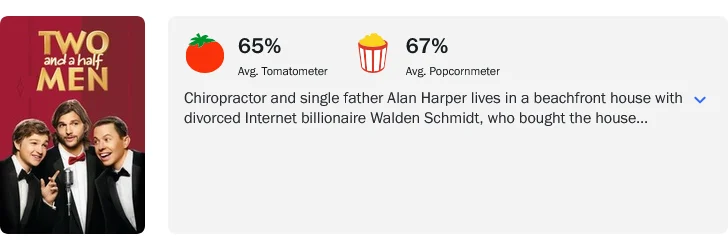
‘Two and a Half Men’ aired on CBS for 12 seasons, from September 2003 to February 2015. Following Sheen’s exit, Ashton Kutcher was brought in as Walden Schmidt starting in the ninth season. However, the journey to securing Kutcher was far more complicated than viewers realized.
In his recently released memoir, ‘Sitcom: A Memoir,’ which debuted on October 13, creator Chuck Lorre discloses that Hugh Grant was initially approached for the role. CBS and Warner Bros. reportedly offered Grant a staggering $750,000 per episode along with a four-day workweek, a substantial offer for a film star transitioning to television in 2011. Grant ultimately declined, and Lorre’s account of how the negotiations fell through has garnered significant attention.
Sheen was earning approximately $1.25 million per episode, so the offer was certainly serious. Lorre explains that the intention was not for Grant to mimic Charlie Harper but rather to create a character that embodied a “Hugh Grant-type.”
The main obstacle was not financial. Concerned about the demands of live television, Lorre made considerable efforts to ease the workload, including suggesting the elimination of a live studio audience in favor of pre-recorded laughter. At one point, it seemed this strategy might succeed.
Lorre recounted to E! News that Grant was initially on board. “When it came time to sign a contract and proceed, he bailed. He just bailed,” he stated. Lorre mentioned that he has not had any communication with Grant since, as an agent or manager simply informed him that Grant was no longer interested.
Lorre has expressed respect for Grant’s decision, suggesting that the actor believed the sitcom wasn’t the right move for his career, prioritizing creative aspirations over a lucrative contract. Representatives for Grant did not respond to requests for comment.
This account slightly contrasts with earlier reports. Deadline had indicated that the offer could reach $1 million per episode, a figure that diverges from Lorre’s memory. Grant himself has previously mentioned the situation on Howard Stern’s show, noting that the absence of a script or character concept was a significant issue.
He also referred to the proposed salary as stratospheric, implying that the choice was not straightforward. CBS News reported in 2011 that the demanding schedule of producing 24 episodes was a key factor. Despite the differing narratives, one fact remains: Grant ultimately declined the offer.
Losing Grant was a significant blow for Lorre, who told then-CBS president Les Moonves, “I guess the show is over.” However, Moonves had a different vision and encouraged Lorre to meet Kutcher, despite Lorre’s concerns about Kutcher’s age for the role they had in mind.
Kutcher eventually took on the role of Walden Schmidt, a heartbroken internet billionaire, allowing the show to continue for four more seasons. Lorre noted that Kutcher earned $63 million throughout his 84-episode stint, while co-star Jon Cryer went on to win his second Emmy. “Winning!” Lorre quipped, echoing Sheen’s famous catchphrase.
The revamped series surprised many who anticipated it would fail without Sheen. The ninth season actually garnered better ratings than the eighth, peaking during Sheen’s time before gradually declining after Kutcher’s first season. Ultimately, the series concluded after its twelfth season.
For fans, this revelation presents an intriguing what-if scenario. A different leading man could have significantly altered the show’s tone and legacy. While Grant’s version of the sitcom will remain unseen, Lorre’s memoir provides a rare insight into how close it came to happening.
Have something to add? Let us know in the comments!