
‘Verity’ Ending Explained: How the Film’s Conclusion Differs from the Book


The ending of the ‘Verity’ movie was always set to be a focal point. Based on Colleen Hoover’s novel, it tells the story of a young writer named Lowen Ashleigh, who is brought in to complete the works of an ailing bestselling author, Verity Crawford. For years, readers have debated whether Verity is a villain or a victim of a dangerously crafted narrative.
Michael Showalter’s film adaptation, featuring Anne Hathaway, Dakota Johnson, and Josh Hartnett, now presents this debate to audiences. If you’re looking for an explanation of the ‘Verity’ movie ending, this guide outlines what occurs with Jeremy, Lowen, and Verity, how the film diverges from the book, and why even the author has had mixed feelings. Major spoilers ahead.
Both the book and the film share a pivotal moment. In the novel, Jeremy kills Verity after reading her manuscript. The movie retains this brutal twist, showing Jeremy suffocating Verity, believing she intentionally drowned their daughter, Harper, in the lake.
However, the film takes a darker turn. Jeremy decides to dispose of Verity’s lifeless body in the lake, mirroring the tragic fate of their daughter. This haunting visual creates a cruel symmetry to the family’s tragedy.
Additionally, the movie introduces a new scene not found in the book. After Verity’s body is recovered, Jeremy and Lowen share an emotional conversation with the police. This moment allows viewers to witness their grief, intensifying the question of who is truly telling the story.
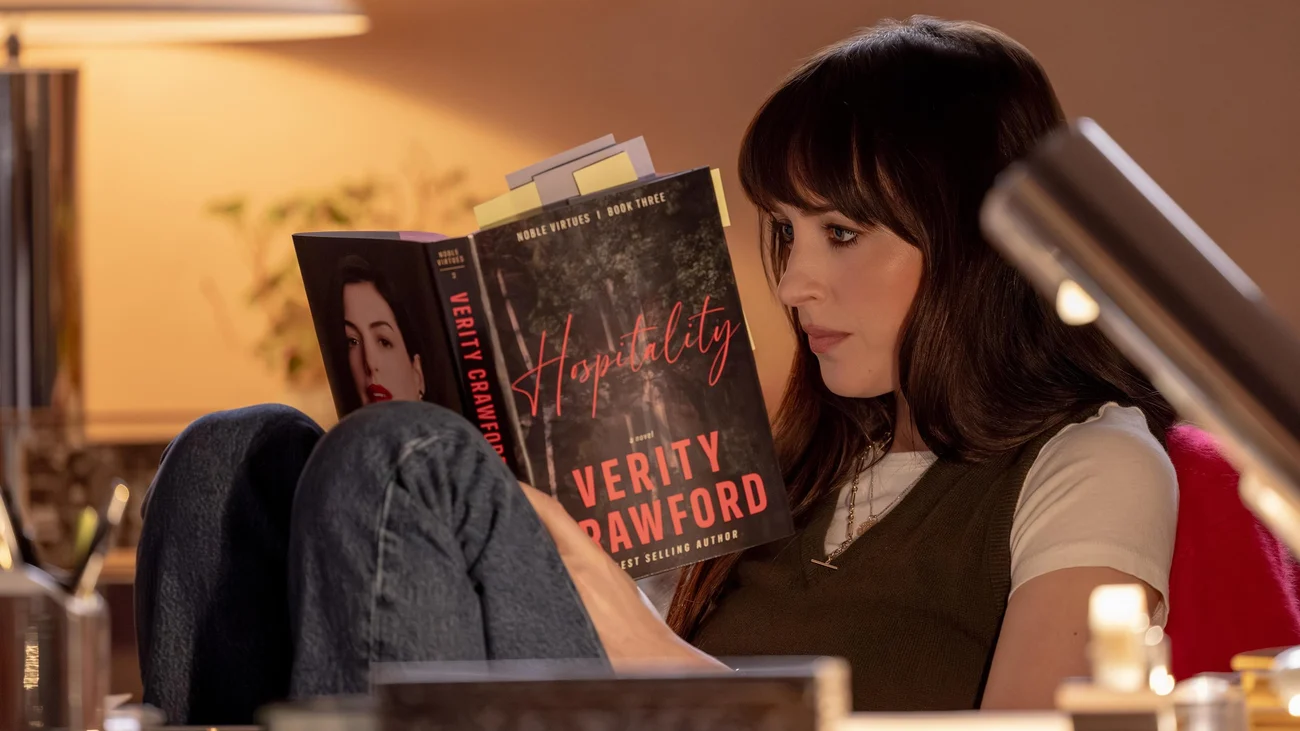
To grasp why the ending resonates so deeply, one must revisit the manuscript. Lowen discovers ‘So Be It,’ a secret autobiography revealing Verity’s darkest thoughts. The official synopsis indicates that Lowen struggles to distinguish between fiction and reality as she grapples with Verity’s twisted confessions.
The novel adds an intriguing layer. After Verity’s death, Lowen finds a hidden letter where Verity claims her manuscript was merely a writing exercise, which Lowen destroys before Jeremy can read it. This leaves readers with two conflicting portrayals of Verity and no means to verify either.
Fans have scrutinized every detail for clues. Some readers point to a scar on one of the daughters, questioning if it serves as evidence that the manuscript was genuine and the letter was fabricated. So far, coverage of the film has not clarified how it addresses the letter, leaving this question open for discussion.
The debate surrounding the ending lacks a definitive resolution. This ambiguity has always been central to the narrative, and the film seems intent on preserving that uncertainty.
One of the most significant differences lies in the aftermath of the killing. The book skips ahead to Jeremy and Lowen’s life together seven months later, while the film remains in the immediate aftermath.
Showalter faced challenges in crafting this version. He mentioned that the team explored various endings, including Lowen’s character arc. Nevertheless, the adaptation closely follows the novel’s main plot points, as reported by the media.
Some cuts clarify why the ending feels different on screen. The film omits one of the couple’s children and Lowen’s sleepwalking subplot. Johnson shared with Pedestrian that scenes of her sleepwalking were filmed but deemed uninteresting due to their silence.
Hoover appears to be at ease with these changes. She conveyed to Showalter and screenwriter Nick Antosca that readers are generally accepting of alterations as long as the core essence of the story remains intact.
The film was crafted to sustain the ongoing debate. Showalter told E! News that the movie presents multiple perspectives, stating, “You get three different versions of the story.” This approach allows for Verity, Jeremy, and Lowen to each be seen as unreliable narrators.
Even Hoover has been affected by this portrayal. She previously stated that she believed Verity was truthful in her manuscript, yet after viewing the film, she found herself empathizing with a character she once viewed as more sinister. When the author of the book reevaluates her own ending, it suggests that the audience is not alone in their confusion.
Critics are divided on whether this approach is effective. SlashFilm’s review suggested that Showalter adheres closely to the book, which may limit his creative freedom. Others may view this fidelity as precisely what fans desired.
Regardless, the final scene of Jeremy sending Verity into the same water that claimed Harper will resonate. Do you believe that lake scene indicates Jeremy accepted the manuscript’s truth, or was he simply too far gone to care about the letter’s validity?