
Who Is Salvador Quinn in ‘Silo’? Unraveling the Mystery of the Ghost Character

‘Silo‘ has consistently hidden its most significant secrets in the past, yet few figures loom as large in the present timeline as Salvador Quinn. Although he never appears on screen, his influence permeates the show’s central enigma regarding the events that transpired 140 years ago.
Fans have dedicated two seasons to piecing together the fragments of his narrative, revealing a story far darker than a mere historical footnote. Here’s everything you need to know about the man whose secrets could ultimately unravel Silo 18.
Salvador Quinn served as the head of Silo 18’s IT Department a century and forty years before Bernard Holland’s time, and he had a daughter named Allie. His name first surfaced in ‘Silo’ season one, appearing at the top of a copy of Silo 18’s enigmatic Pact, indicating that he was once a key authority figure in the underground city.
Some accounts describe him as the mayor of Silo 18 during the last rebellion, though little is definitively known about his fate afterward. As the leading figure during the rebellion, Quinn appears to have spearheaded the movement against the rebellious workers from the Mechanical.
Silo 18 commemorates that uprising with “Freedom Day,” a celebration of how the conformers and authorities successfully quelled the rebels before it was too late. Quinn’s name has subtly woven through both seasons of ‘Silo,’ making him one of the series’ most discussed unseen characters.
Prior to Year 0 AR, rebellions in Silo 18 were frequent, occurring approximately every 20 years, with each new uprising fueled by knowledge of previous ones. This cycle repeatedly threatened the airlock’s opening, endangering every resident’s life.
At some point, Quinn discovered a hidden metal door in a concealed cavern at the bottom of the Silo, a space unknown even to the head of IT and their shadow. To prevent the Safeguard Procedure from being activated—which would have resulted in the death of every citizen due to the imminent risk of a breach—Quinn made a drastic decision.
He confiscated and destroyed all books and documents in Silo 18, subsequently blaming the rebels for this destruction. In episode eight of ‘Silo’ season two, it’s revealed that Quinn also tainted the silo’s water supply with a memory-erasing drug during his time.
This medication gradually erased residents’ memories of pre-rebellion artifacts, effectively resetting the silo’s collective consciousness and suppressing dissent for 140 years, albeit at the expense of truth and personal agency. Quinn also limited access to information and servers, all in the name of preserving the Silo, which has rendered him one of the most reviled figures in its history among those who view his methods as oppressive.
In ‘Silo’ season two’s episode four, Judge Meadows briefly mentions Salvador Quinn moments before her demise after Bernard poisons her. Just before her death, Meadows informed Bernard Holland that Quinn had left behind a coded letter, implying he may have uncovered hidden truths about the Silo.
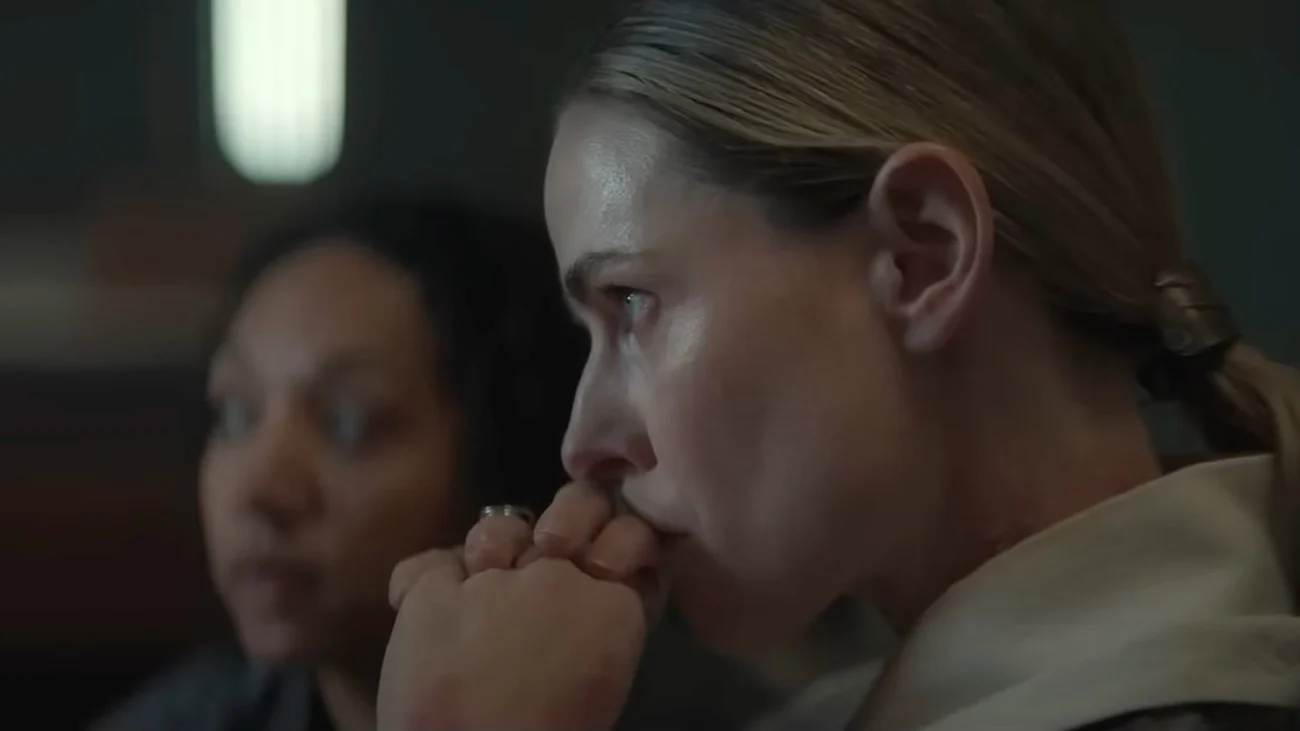
Holland then instructed Lukas Kyle, an IT worker sentenced to the Mines, to repair the damaged hard drive and recover its files. Quinn had reportedly written the letter to his wife 140 years earlier, with part of it encoded, and Meadows had apparently decoded it herself but refused to disclose the contents to Bernard.
Bernard enlisted Lukas as his shadow specifically to gain access to the tools needed to decipher the code, and after some trial and error, Lukas determined that the code used Quinn’s own copy of The Pact as its key. The coded nature of the letter suggests it was a deliberate act of concealment, raising questions about what exactly Quinn discovered and why he opted to hide it instead of sharing it openly.
Salvador Quinn’s letter is rumored to reveal the existence of fifty interconnected silos, redefining them as controlled environments rather than sanctuaries meant to safeguard humanity. If Meadows truly deciphered the letter, she may have learned that the silos’ origins are far more sinister than residents have been led to believe, as Silo 18’s citizens have long been told that the outside world is uninhabitable due to toxic conditions.
Quinn’s findings likely exposed the silos as a manufactured system, potentially linked to the destruction of the Earth’s surface itself. This recontextualizes Quinn from a mere administrator to someone who may have stumbled upon the entire show’s foundational deception.
Bernard, notably, views Quinn as a hero and the architect of the Silo’s long-term stability, believing Quinn’s message might hold the key to preventing an imminent rebellion and further destruction. This dichotomy in perception—oppressor to some, savior to others—makes Quinn a compelling ghost at the heart of ‘Silo.’
The first two seasons of ‘Silo’ received critical acclaim, and that popularity has led to renewals for two additional seasons. Season two delved deeper into Quinn’s history and his descendants, helping clarify a narrative that had previously felt frustratingly opaque.
Fans remain genuinely intrigued by how Salvador Quinn can still influence the story decades after his death, especially as more of his past comes to light. Given how much of ‘Silo’ still relies on buried history, Quinn’s letter feels less like a closed chapter and more like a fuse that has already been ignited.
As ‘Silo’ continues to explore what Quinn knew and why he concealed it, how deep do you believe the corruption in Silo 18’s founding story actually runs?