
Did Cathy Truly Love Charles in ‘East of Eden’ or Was It Something More Sinister?


Few pairings in classic literature are as unsettling as Cathy Ames and Charles Trask in ‘East of Eden’. Their encounter occurs on the night of Cathy’s marriage to Adam when she drugs him with her sleeping medicine and goes to Charles’s bed. This moment is one of the most discussed in John Steinbeck’s novel, prompting readers to question whether any genuine affection was involved.
So did Cathy love Charles in ‘East of Eden’? The truth is complicated. Cathy is depicted as someone who does not love, does not attach, and does not dream, yet the text provides enough ambiguity to keep the debate alive.
Cathy is rescued by Adam Trask and his brother Charles that night after being left bloodied in a field near the Trask farm in Connecticut. From the outset, the two brothers react to her in completely opposite ways.
Charles senses something dark within her and feels reservations, while Adam falls in love blindly and devotedly. Charles is the only person in the house who seems to perceive her clearly, and he does not like what he sees.
That clarity is mutual. Cathy believes Charles is quite similar to her and fears him for that reason. From their first meeting, they recognize something in each other that others overlook. This shared darkness is the closest thing to a bond between them, but a bond is not synonymous with love.
Part one of the novel concludes with Cathy drugging Adam into a deep sleep and then having sex with Charles. The scene is shocking not due to romance, but because it is so calculated.
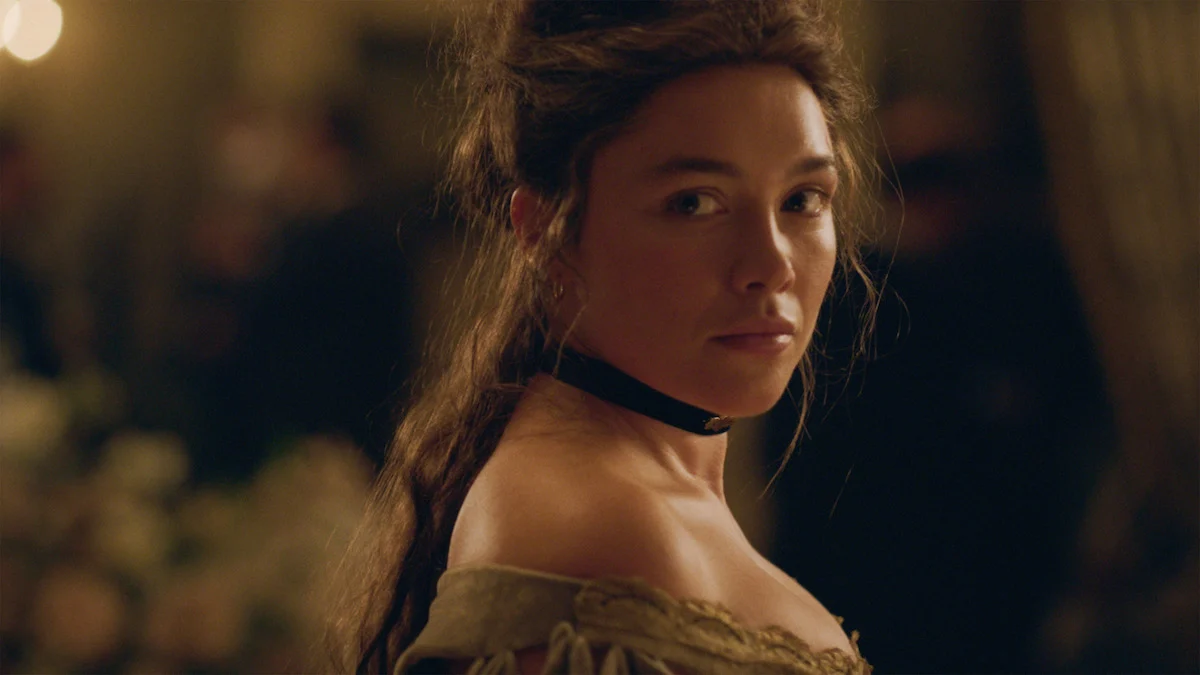
Charles, having been drinking, is initially hostile, questioning where Adam is. Cathy dismisses his objections, explaining that his brother mistakenly took her sleeping medicine. Her approach lacks any indication of longing; it feels like a woman who knows precisely how to manipulate.
The act is not one of passion but rather a cold calculation on Cathy’s part, while for Charles, it becomes a moment of dark amusement at his brother’s expense. If love existed in that room, it was not the kind most readers would recognize.
A notable line in the text keeps fans engaged. The passage includes the words “I could have loved Charles.” This phrasing hints at what might have been rather than confessing what was.
The feelings that seem to run deeper belong to Charles. One analysis suggests that his love for Adam’s future wife is evident throughout the book, explaining his fury upon discovering Adam and Cathy’s marriage.
Steinbeck himself provided insight into Cathy’s character. In his letters about the novel, he described her life as one of revenge against others due to a vague sense of her own inadequacy. A person driven by revenge and lack is ill-equipped to love anyone, even someone who understands her.
The events of that night with Charles resonate long after it concludes. After moving to California, Cathy becomes pregnant, and the novel leaves ambiguous whether the father is Charles or Adam. This uncertainty intertwines the brothers through the next generation.
Adam, for his part, never stops loving her. His unwavering devotion to Cathy, despite her wickedness, highlights the complexities of human relationships. Her response to that love is brutal; after giving birth to twins, she abandons her family and shoots Adam in the process.
The story has been reimagined numerous times, with each adaptation handling the Charles question differently. In the 1981 miniseries, Bruce Boxleitner portrayed Charles and Jane Seymour played Cathy, where the narrative suggests Charles sees through her but ultimately succumbs to her charms.
Netflix’s adaptation, written by Zoe Kazan, features Florence Pugh as Cathy, Christopher Abbott as Adam, and Mike Faist as Charles. With a fresh cast exploring that wedding night, do you think Cathy ever truly felt something for Charles, or was he merely the one person she could not deceive?