
Heather Glenn’s Muse Transformation In ‘Daredevil: Born Again’ Changes A Heartbreaking Comics Ending


The ‘Daredevil: Born Again’ Season 2 finale concluded with one of the most unsettling final images in recent Marvel TV history. Heather Glenn, the composed therapist who once dated Matt Murdock, donned the bloodstained mask of the very serial killer who attempted to murder her.
This shocking moment has left fans eager for explanations. Heather’s transformation into the new Muse is not a storyline directly taken from any specific comic, yet the show clearly draws inspiration from a much darker aspect of Marvel’s mythology. Here’s what is unfolding on screen and how it relates to the source material regarding a woman wearing that mask.
When Margarita Levieva’s Heather first appeared, she was a respected therapist and bestselling author who connected with Matt Murdock on a blind coffee date. She quickly became integral to the series, balancing roles as Matt’s love interest, the Fisks’ marriage counselor, and the therapist for Bastian Cooper, who is ultimately revealed to be the serial killer Muse.
Her downward spiral begins in Season 1 during a bloody confrontation in her apartment. Muse attempted to use her blood for his next piece of art, but Heather seized his gun during the struggle with Daredevil and shot him dead. After nearly dying that night, she developed a strong aversion to masked vigilantes, eventually accepting Fisk’s offer to become the Commissioner of Mental Health in his administration.
Season 2 deepens her descent. She starts experiencing visions of Muse, and a reveal in the third episode shows she has secretly kept his mask. Additionally, she falsifies psychiatric evaluations to have vigilantes imprisoned indefinitely under Fisk’s regime. By the finale, the woman who once analyzed the significance of a mask is now the one putting one on, having lost her sense of identity without it.
This is where the show and the comics diverge significantly. In the source material, Heather Glenn never becomes Muse or wears any version of his costume. The mantle of a second Muse belongs to a different character entirely.
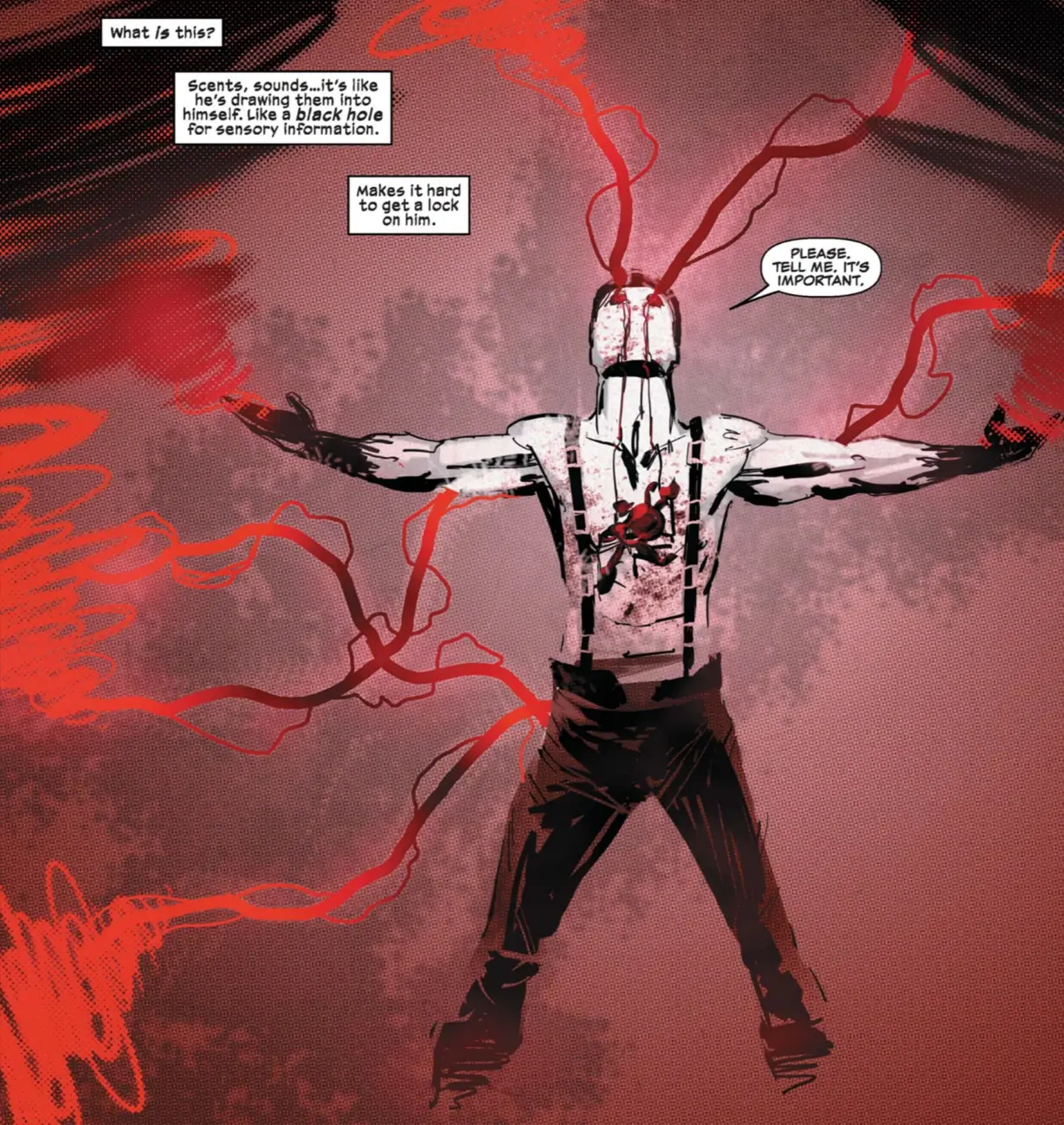
That character is Morgan Whittier, who first appeared in ‘Daredevil: Unleash Hell – Red Band’ #1 in January 2025, created by writer Erica Schultz and artist Valentina Pinti. Morgan was a struggling young artist whose tormented soul was partially drawn into Hell, where the deceased Muse made contact and used that connection to manipulate her until she killed her art tutor.
The comic version of the story heavily incorporates supernatural elements. Morgan eventually battles Elektra, who is the current Daredevil in the comics, with her return from Hell involving Ghost Rider as a sort of getaway driver. While there is comic precedent for a woman in the Muse mask, the original is a possessed art student, not a psychiatrist who killed the original killer with his own weapon.
The show is also making radical changes to Heather herself, going beyond simply placing her in Morgan’s role. The comic version of Heather, who first appeared in 1975’s ‘Daredevil’ #126, was a wealthy socialite, the daughter of Maxwell Glenn and his criminally entangled megacorporation, not a Tribeca therapist.
Her fate in the comics is one of the quietest tragedies in the entire Daredevil saga. After Elektra’s death, a grieving and impulsive Matt proposed to her, but the engagement fell apart under the same dishonesty that doomed their relationship, leading Heather into a spiral of alcoholism and loneliness. In ‘Daredevil’ #220 from 1985, written by Denny O’Neil, Matt discovers her lifeless body and blames himself for her tragic fate.
‘Born Again’ replaces that crushing conclusion with something louder and more bizarre. As Inverse suggests, leaked set photos have all but confirmed Heather’s transformation into a villain, and the outlet argues that another Daredevil antagonist, Typhoid Mary, would have fit her trauma-driven arc just as well. The series is also removing the comic’s supernatural elements, keeping everything grounded in psychological realism, which arguably makes her descent even more disturbing.
The final image of Season 2 serves as a starting point rather than a conclusion. Heather choosing to wear the mask of the man who once tried to kill her signifies the complete collapse of her psyche.
Set leaks have already hinted at what lies ahead. Margarita Levieva has been spotted on the Season 3 set in a Muse-inspired outfit, complete with a bloodstained white mask, a black coat and boots, and what appears to be a dark wig. Whether she becomes Fisk’s quietly weaponized enforcer, a rogue avenger settling her own scores, or something more complex, the show has crafted a remarkably believable path to that costume.
Wilson Fisk’s reaction to her unraveling is another crucial piece of the puzzle. Even after realizing Heather had been pilfering items belonging to his late wife Vanessa, Fisk refrained from retaliating, which is unusual for a man who typically lashes out over minor slights. This restraint suggests he sees potential in whatever Heather is becoming, possibly grooming her into a personal weapon for the battles ahead.
After two seasons of witnessing a brilliant therapist being hollowed out by trauma, the pressing question is whether Heather slipping into that bloodstained white mask represents the tragic culmination of her arc or a complete betrayal of the sharp, grounded woman we first met on that blind coffee date with Matt. Share your thoughts in the comments on which version of Heather Glenn you believe will enter Season 3.