
How Ultron Returns on Marvel’s ‘VisionQuest’ After a Decade of Absence


The Marvel Cinematic Universe is currently navigating an intriguing transitional phase, focusing on character-driven narratives across Disney+. Following the dramatic conclusion of ‘WandaVision’, fans were left pondering the fate of White Vision, who departed Westview with restored memories but an unanchored soul. These unresolved questions about the synthezoid’s identity are now central to Marvel’s evolving Phase Six television lineup.
Marvel Television has gradually shifted away from generic spectacles, emphasizing auteur-driven storytelling that respects the narrative foundations laid in previous years. The studio aims to create an interconnected psychological trilogy, linking the grief-laden suburban fantasy of ‘WandaVision’ with the supernatural challenges of ‘Agatha All Along’. Under the creative guidance of showrunner Terry Matalas, known for revitalizing ‘Star Trek: Picard’, the focus now centers on the philosophical dilemmas faced by sentient machines.
At the heart of ‘VisionQuest‘ lies the surprising return of Ultron, a formidable villain thought to have been defeated in 2015’s ‘Avengers: Age of Ultron’. When Vision confronted the last remaining Ultron sentry in the secluded Sokovian woods, viewers witnessed an amber energy burst before the scene cut away, leading many to assume the rogue machine met a violent end. However, rather than destroying his genocidal creator, Vision quietly executed a digital backup, preserving Ultron’s core code within his own quantum processor.
This act of synthetic mercy changed the course of the Marvel Cinematic Universe, keeping Ultron’s fractured psyche alive within his mechanical offspring. For over a decade, that volatile program remained securely quarantined inside Vision’s cognitive systems, observing galactic events unfold through the eyes of an Avenger. When The Hollywood Reporter confirmed that James Spader would reprise his role, it indicated a radically different and deeply psychological direction for the iconic villain.
Ultron’s survival fundamentally alters the personal stakes of the entire series. Instead of creating another army of vibranium automatons to conquer humanity, the reformed consciousness now exists solely as an internal companion to his conflicted son. Spader returns not just as a disembodied voice, but as a physical avatar sharing internal space with the wandering android.
As Vision grapples with the overwhelming memories unlocked during his encounter with Hex Vision, he constructs an expansive psychological sanctuary known as the Mindspace. This eclectic digital manor blends pastoral landscapes with high-tech urban architecture, housing various artificial intelligences rescued from the Avengers Compound. Familiar personalities like J.A.R.V.I.S. and F.R.I.D.A.Y. populate this internal home, providing support as Vision leads a quiet double life working at an Edinburgh pub.
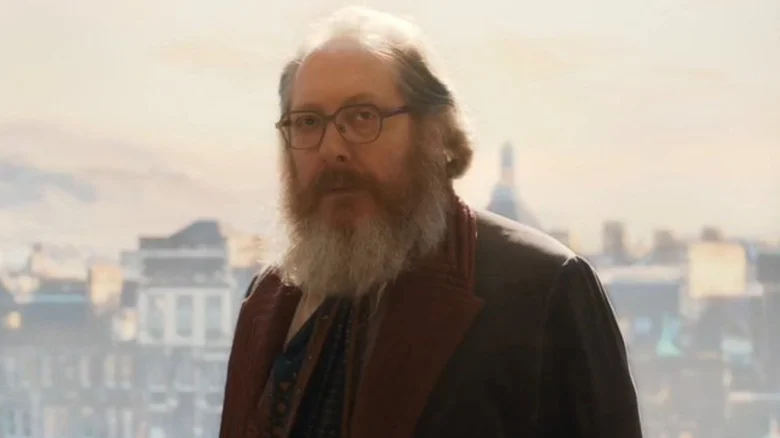
Ultron occupies the penthouse loft of this virtual estate, carefully quarantined behind a stringent digital firewall to prevent him from taking control. In this mental confinement, the fallen warlord has spent 14 years consuming television broadcasts, classical literature, and comprehensive human history through his host’s network access. The isolated entity even channeled his manic energy into creating art, transforming the former destroyer of Sokovia into a dedicated painter.
This unusual living arrangement creates a surreal domestic space where creator and creation coexist under tense conditions. Over a decade of forced reflection has significantly mellowed Ultron’s adolescent rage, replacing blind hostility with a witty, observant appreciation for human contradictions. Having studied human culture from a distance, the imprisoned intelligence often understands humanity far better than Vision, who remains emotionally detached from the world around him.
The emotional core of the series revolves around intergenerational trauma and the quest for authentic human emotion. Lead actor Paul Bettany discussed the synthezoid’s fractured emotional state in an interview with The Movie Podcast, stating, “VisionQuest is absolutely from Vision’s point of view. And we find him at a really fascinating time where he seems to have all of the memories that were granted him by Hex Vision, but he can’t or won’t allow feelings to be attached to them.”
Without Wanda Maximoff by his side after the tragedy of ‘Doctor Strange in the Multiverse of Madness’, Vision turns to his cynical creator as a reluctant mentor. Ultron embodies a turbulent trifecta—acting as an estranged father, a sharp-tongued therapist, and a latent psychopath lurking within the hero’s subconscious. Their philosophical debates become crucial when a dangerous bounty forces Vision to flee with Thomas Shepherd, a troubled teenager who may be his reincarnated speedster son.
Ultimately, the narrative intertwines the gothic tragedy of Frankenstein with the whimsical longing of Pinocchio, exploring what it truly takes for an artificial construct to acquire an authentic soul. By preserving Ultron instead of destroying him, Vision inadvertently held onto both the greatest threat to his sanity and the reflection that could finally help him define who he wishes to become.
Share your thoughts on Ultron’s shocking return in ‘VisionQuest’ and what you anticipate from his digital reunion with Vision in the comments below.