
Ryan’s Rejection of Butcher in ‘The Boys’ Finale Was the Right Choice


The series finale of ‘The Boys’ showcased one of its most impactful moments not through a chaotic action scene but via a straightforward conversation. After enduring Homelander’s torment, young Ryan Butcher had the opportunity to leave with the man who professed his love for him. He chose to decline.
Ryan’s rejection of Billy Butcher has quickly become one of the most discussed scenes in the finale, and rightfully so. Offered a new beginning by Butcher, Ryan firmly stated that surviving Homelander’s cruelty did not inherently make Butcher a good person. This poignant line resonates deeply, and understanding Ryan’s reasoning requires reflecting on nearly five seasons of turmoil.
Cameron Crovetti’s portrayal of young Ryan has been a journey of navigating two destructive father figures, never fully belonging to either. The series finale finally provided him with something neither could offer. This tension was not merely a subplot; it was the backbone of the show’s emotional narrative.
After his mother was accidentally killed by his own heat vision, Ryan grappled with immense guilt and unease about his powers. When Butcher initially rejected him and Homelander reconnected with him, Ryan found himself at his father’s side. The tragedy lies in the fact that the first rejection came from Butcher, leaving Ryan to seek belonging wherever he could.
One of the show’s most unforgettable moments occurs at the end of season three when Homelander kills a man in broad daylight, and Ryan smiles instead of expressing concern for his father’s actions. This smile haunted the series, illustrating the damaging impact of prolonged exposure to the wrong father figure.
The darkening of Ryan’s narrative has been steadily building since season two, culminating in his accidental killing of Grace Mallory in the season four finale. After standing over her lifeless body, he turned away from Butcher, opting for uncertain freedom over allegiance to either side.
For years, the show depicted Butcher as a flawed yet fundamentally sympathetic antihero. However, ‘The Boys’ finale, through Ryan’s words, argues that sympathy does not equate to safety. This moment underscores that while Butcher may have had good intentions, he was ultimately a destructive force, much like Homelander, both needing to be stopped.
Ryan’s rejection of Butcher included a stark comparison to Homelander, as he told the man who longed to be his father, “you’re not a good person either.” This parallel is crucial; both men used Ryan as a symbol of their needs, failing to provide the stability and honesty he deserved as a child.
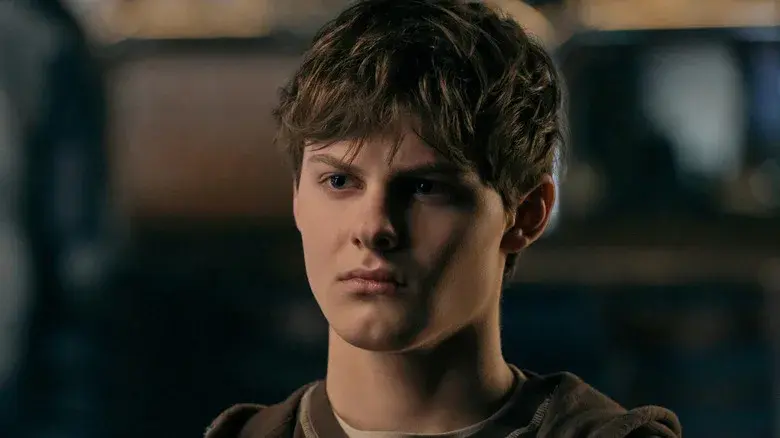
Butcher suggested they find a quiet place to start anew, just the two of them, but Ryan rejected him, asserting he was not a good person and did not want that kind of fresh start. The word “either” in Ryan’s statement is significant. It reflects the perspective of someone who has finally seen through both sides of a conflict he was never meant to be part of.
Showrunner Eric Kripke previously noted that for Butcher, Ryan crossing a certain line symbolized his acceptance of fate, indicating that without Ryan, Butcher had nothing left to cling to regarding his humanity. Ironically, Ryan’s rejection in the finale mirrored Butcher’s own logic.
Butcher’s act of fleeing at the end of season four marked the first genuine decision Ryan made for himself. The finale maintained that sense of agency throughout. For the first time, Ryan was not merely reacting to Homelander’s desires or Butcher’s needs; he was making a clear moral judgment and standing firm.
The finale challenges the notion that salvation comes from the strongest person in the room, with Ryan’s rejection of the fathers who sought to define him serving as a central theme in its concluding moments. This interpretation renders his scene with Butcher not just emotionally impactful but structurally vital to what ‘The Boys’ has always aimed to convey about power and those who wield it.
In the epilogue, Mother’s Milk became Ryan’s legal guardian, providing the boy who had been passed between father figures and institutions with the most stable family bond the show has ever offered. This is the ending Ryan deserved, made possible by his courageous decision to say no to the man who had failed him while masquerading as a figure of love.
The emotional weight of Ryan concluding the series as a powerless teenager under the care of someone who genuinely wanted to protect him rather than exploit him resonates more profoundly than any action sequence in the finale. It is quiet, earned, and devastating in the best possible way. Whether one believes Ryan was too harsh on Butcher or that the rejection was long overdue is precisely the conversation ‘The Boys’ aims to provoke right now.