
‘Sense and Sensibility’ Recap and Ending Explained How the 2026 Adaptation Resolves Sisterhood and Romance


Jane Austen’s classic 1811 novel has consistently been a guiding light for British costume dramas, masterfully depicting the intricate balance between social practicality and unbridled romantic desire. While many period drama fans cherish Ang Lee’s 1995 film, Focus Features and Working Title Films have revisited the English countryside to present a fresh interpretation for modern audiences. This new production merges traditional filmmaking with a raw, earthy aesthetic under the direction of British filmmaker Georgia Oakley.
Spanning 132 minutes, the 2026 film moves away from the rigid elegance often associated with Regency-era adaptations, opting instead for a tactile immediacy captured on 35mm film. Collaborating with Australian screenwriter Diana Reid, Oakley peels back the genteel facade to highlight the economic precariousness faced by aristocratic women, whose survival hinged entirely on marriage laws. Before delving into the emotional complexities of the concluding act, it’s crucial to understand the Dashwood family’s sudden plunge into poverty, which informs every romantic decision they make.
The story kicks off with the unexpected death of Henry Dashwood, whose estate is legally transferred to his indifferent firstborn son, John, bypassing his widow and three daughters. Influenced by his selfish wife, Fanny, John denies the women their expected financial support, forcing Mrs. Dashwood and her daughters—Elinor, Marianne, and young Margaret—to relocate to a modest cottage in Devonshire. Just before their displacement, the reserved Elinor develops a subtle romantic connection with Fanny’s quiet brother, Edward Ferrars, though familial pressure prevents him from expressing his feelings.
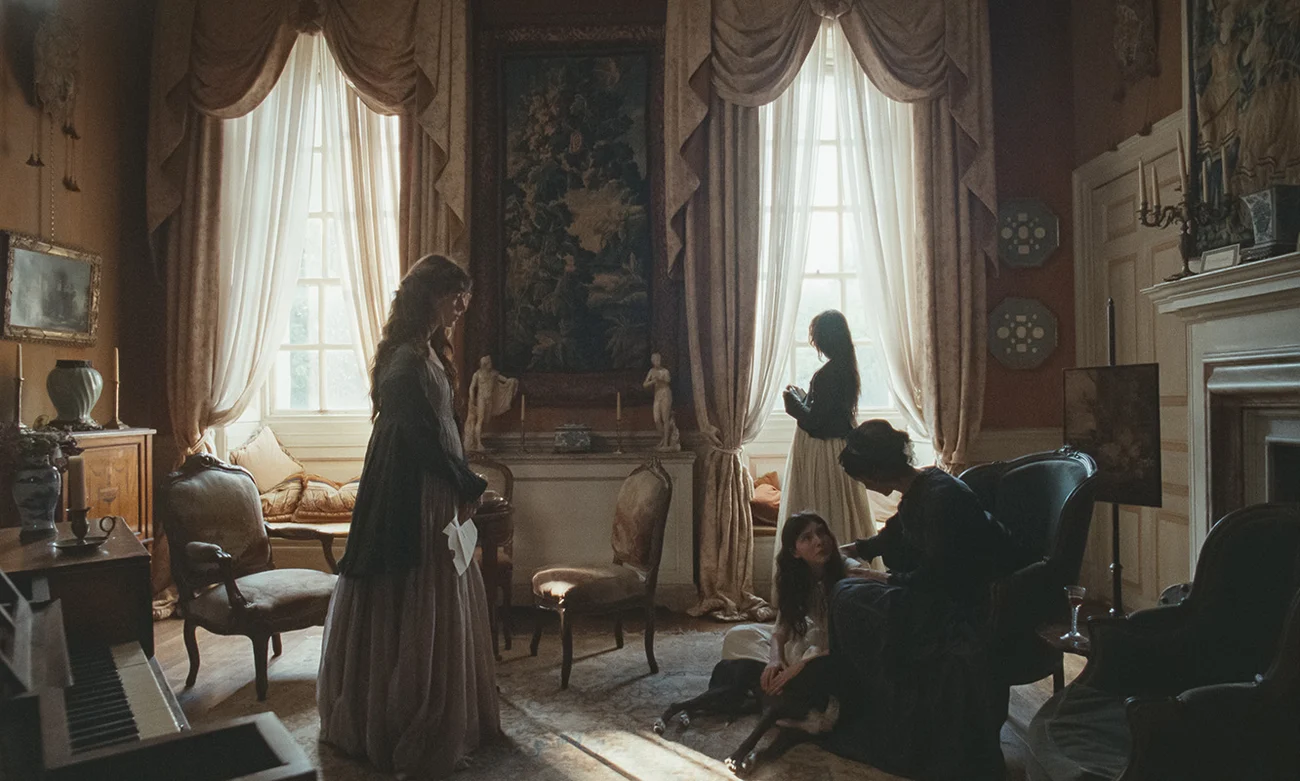
In Devonshire, the emotional journeys of the two elder sisters diverge sharply, reflecting their contrasting philosophical views. The pragmatic Elinor endures silent suffering upon learning that Edward is secretly engaged to the spiteful Lucy Steele, choosing duty over selfish confession. In contrast, Marianne fully embraces her passionate nature after being rescued from the rain-soaked moors by the charming John Willoughby, disregarding the quiet affection offered by the melancholic Colonel Brandon.
The film’s visual design mirrors this inner conflict and domestic closeness, showcasing characters who appear weathered by their circumstances rather than dressed for a costume showcase. Daisy Edgar-Jones mentioned in an interview with Bustle that “Georgia really wanted to bring nature into the film in a really interesting way,” highlighting the creative team’s vision of a Dashwood family that feels more grounded and connected to the earth. This tactile vulnerability reaches a peak when the family travels to London, where Willoughby cruelly rejects Marianne at an aristocratic ball to announce his engagement to a wealthy heiress.
Willoughby’s betrayal devastates Marianne’s romantic ideals, leading her into a physical illness that nearly takes her life after a harrowing walk in the rain. As Colonel Brandon rushes to secure medicine and demonstrate his unwavering character, Marianne begins to confront the dangerous consequences of unchecked sensibility. Simultaneously, Edward faces his mother’s wrath, who disinherits him after his secret engagement to Lucy is revealed, yet he steadfastly refuses to abandon his moral commitments.
Colonel Brandon quietly steps in to offer Edward a modest parsonage at Delaford, providing the impoverished gentleman with an honorable means to support himself. In a heart-wrenching conversation between Elinor and Edward, Elinor suppresses her own sorrow to encourage him to fulfill his duty, showcasing remarkable emotional strength. This critical moment highlights the film’s intricate thematic balance, ensuring both women confront their vulnerabilities before finding romantic fulfillment.
The emotional peak occurs when news arrives at the Dashwood cottage that a marriage has taken place between Lucy Steele and a Mr. Ferrars. Believing Edward is lost to another woman forever, Elinor prepares for a lifetime of heartache until Edward unexpectedly appears at Barton Cottage. In a remarkable twist, Edward reveals that Lucy abandoned him once he lost his fortune, opting instead to marry his newly wealthy younger brother, Robert Ferrars.
Freed from his moral constraints, Edward proposes to Elinor, causing the typically composed heroine to dissolve into tears of joy, releasing years of pent-up emotion. Meanwhile, Marianne gradually recognizes the genuine kindness, intellectual compatibility, and devotion offered by Colonel Brandon, choosing to marry him not out of defeat, but from a place of mature understanding.
Screenwriter Diana Reid explained in an interview on the ScreenUK Podcast that she restructured the narrative dynamics so “both Elinor and Marianne feel truly triumphant – not just the one who wins the right husband.”
By allowing Elinor to embrace her vulnerabilities and Marianne to develop discernment, Oakley’s conclusion illustrates that neither sense nor sensibility is complete on its own. The film’s final moments celebrate the Dashwood sisters’ restored happiness and romantic fulfillment while emphasizing that their unbreakable bond remains the true heart of the story.
What did you think of the new ending in the 2026 adaptation of ‘Sense and Sensibility‘, and how does it compare to previous versions?