
Why Custas Represents the Heart of ‘Witch Hat Atelier’s’ Unique Narrative


Fantasy anime often grapples with the portrayal of disability, typically treating a broken body as a temporary hurdle, easily resolved in the next arc. However, ‘Witch Hat Atelier,’ the eagerly anticipated anime adaptation of Kamome Shirahama’s celebrated manga, takes a different approach, centering on a young boy named Custas.
Serialized in Kodansha’s seinen magazine Morning Two since July 2016, Shirahama’s manga has sold over 7.5 million copies by early 2026. The anime, produced by Bug Films and directed by Ayumu Watanabe, premiered in April 2026 and is available for streaming on Crunchyroll. It arrives with a decade’s worth of devoted readers and an impressive awards history, including the Harvey and Eisner Awards, quickly demonstrating why it has earned such acclaim.
Custas, a traveling minstrel raised in poverty by his adoptive father Dagda, is first introduced after a river accident leaves him trapped under a boulder, severely injuring his legs and jeopardizing his career as a performer. The series does not provide him with an easy escape from this predicament.
What makes Custas particularly intriguing is the societal framework surrounding him. In ‘Witch Hat Atelier,’ witches are prohibited from casting magic directly on a person’s body, meaning that instant healing or physical restoration is unattainable. This crucial rule elevates Custas’s injury from a mere plot point to a lens through which the entire society is scrutinized.
He struggles to navigate the cobblestone paths of his world, faces challenges with even slight inclines, and if his magical chair breaks, he is rendered immobile since only a witch can repair it. Importantly, Custas does not express anger about his disability but rather frustration at how his already diminished social standing has plummeted even further. This nuance is handled with remarkable emotional depth.
Through characters like Custas, both readers and viewers are prompted to examine the ethical implications of witch society, as the series employs its magical rules to ground its fantasy world in a relatable form of injustice.
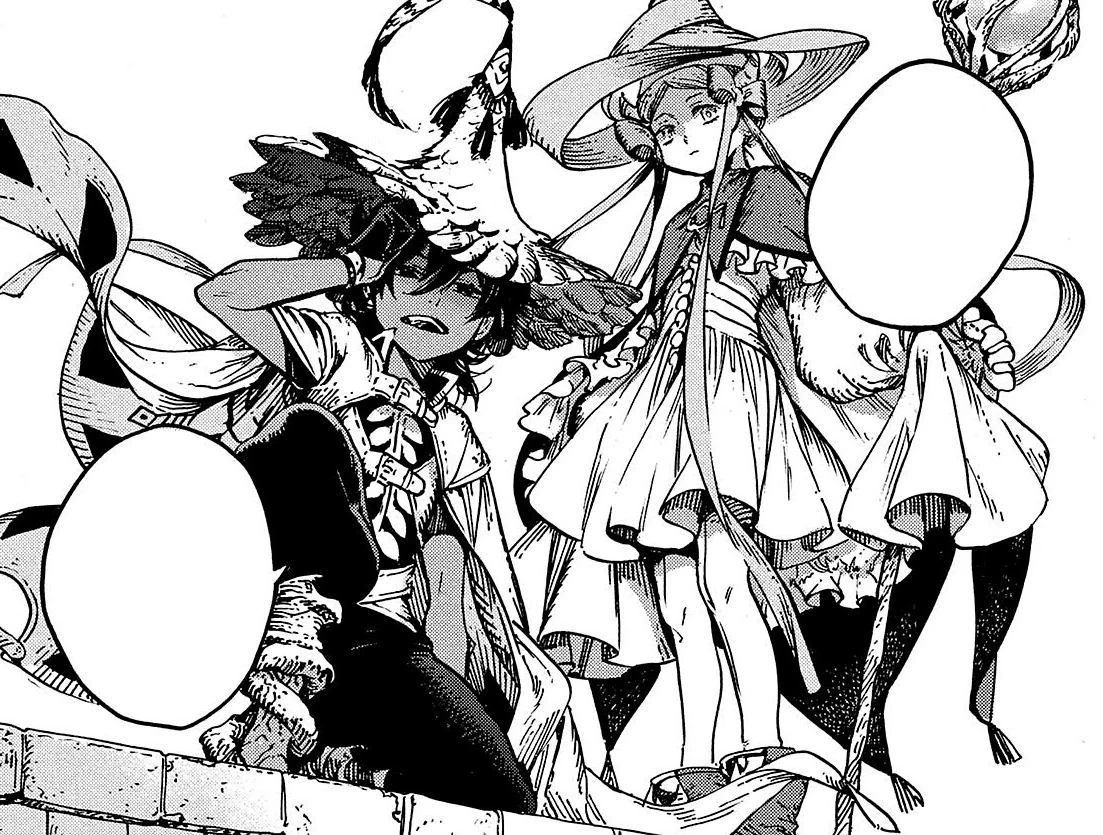
Custas’s character is deeply influenced by his challenging upbringing, leading him to develop a profound obsession with fate, which he perceives as cruel and responsible for his circumstances—something he yearns to escape. When Coco and her friend Tartah create a Winged Cloak for him, the moment resonates with the weight of his past experiences. Custas defiantly laughs in the face of fate, soaring higher than any bird despite being born in the dirt.
Creator Kamome Shirahama has revealed that Custas draws inspiration from Romani and Ainu cultures, a choice that roots his identity in real-world communities historically marginalized and pushed to society’s fringes. This intentionality permeates every aspect of his character development.
As the manga progresses, Custas evolves into a Pointed Cap Witch with Coco’s assistance, donning a pointed hat adorned with a feather motif that reflects his previous Brimmed Cap, marking one of the most well-earned character transformations in the series.
‘Witch Hat Atelier’ has already been hailed by some as the standout anime of spring 2026, celebrated for its classical take on the fantasy genre and stunningly detailed animation. The series balances childlike wonder with thought-provoking themes, and its portrayal of disability is perhaps the most striking way it grounds its magical world in reality.
The universe of ‘Witch Hat Atelier’ is far from a utopia, as Shirahama meticulously explores how disabled characters face exclusion and further disadvantages due to social class, wealth, and marginalization. Custas embodies these struggles in his small yet fierce figure adorned with a feathered hat. In a season filled with remarkable anime, he is quietly emerging as one of the most significant characters of the year.
Share your thoughts on Custas and how ‘Witch Hat Atelier’ addresses disability representation in the comments below.