
Every Location That Brought Emerald Fennell’s ‘Wuthering Heights’ to Life


Few literary settings carry as much emotional weight as the windswept moorlands of Emily Brontë’s ‘Wuthering Heights’. Since its publication in 1847, that haunted Yorkshire landscape has been as integral to the story as Cathy or Heathcliff, embodying both bleakness and beauty. When Emerald Fennell took on the challenge of adapting it for the screen, the choice of filming locations was crucial.
The film features Margot Robbie as Catherine Earnshaw and Jacob Elordi as Heathcliff, and it premiered on February 13, 2026, just before Valentine’s Day, under Warner Bros. Pictures. Fennell made it clear from the beginning that her interpretation would be anything but traditional.
In an interview with W Magazine, she shared that her vision was deeply influenced by her emotional response to the novel at the age of fourteen, stating that it made her realize, “Oh, you can go there. You can make something really disturbing and sexy and nightmarish.”
This heightened, almost hallucinatory vision required a physical world to match. Fennell’s adaptation has been described as a fantastical fever dream, where the Yorkshire Moors are somewhat sidelined in favor of stunning anachronistic sets built at Warner Bros.’ studio in Leavesden, Hertfordshire. Nevertheless, the moors persist at the edges of every frame, asserting their presence like only a real landscape can.
Filming primarily took place in the Yorkshire Dales National Park, with significant outdoor scenes shot in Swaledale and the village of Low Row. The production team spent months in this remote area, capturing the conditions that reflect the story’s emotional extremes. Filming occurred across various locations in the Dales from late January to early April 2025, a time when the moors are at their most elemental, both bleak and beautiful.
The estate of Wuthering Heights itself combines studio sets with real-world locations. Wider views and the ruins featured later in the film are the Old Gang Mill, located below Healaugh Crag, just west of Reeth. Built in 1846, it once processed lead ore from local mines and is now a Grade II-listed monument. Its stark stone structure lends the Earnshaw home a Gothic authenticity that no fabricated set could replicate.
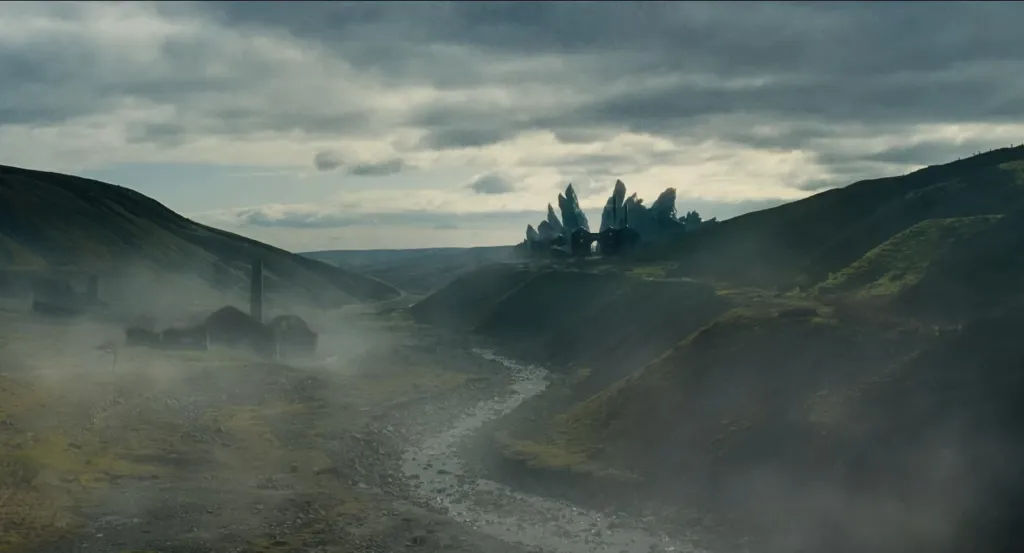
Low Row serves as the primary village setting, chosen for its timeless appearance. Its narrow lanes, stone cottages, and surrounding hills create an authentic period feel. For fans visiting Brontë country, it has become a popular stop along an informal film tourism trail.
Another remarkable location is the tall stone pyramid known as the Needle’s Eye, where young Cathy and Heathcliff seek shelter from the rain and frequently return throughout the film. This folly is located on the Fitzwilliam Wentworth Estate between Rotherham and Barnsley in South Yorkshire. Legend has it that the Earl of Malton constructed it as a bet to prove that a wealthy man could pass through the eye of a needle, succeeding by driving a coach and horses through it.
Bridestones Moor, a community-owned nature reserve near Todmorden, provides another rugged backdrop for the on-screen romance, featuring bulbous stones shaped by centuries of moorland winds. This landscape carries its own literary significance, having been celebrated in poetry long before any film crew arrived.
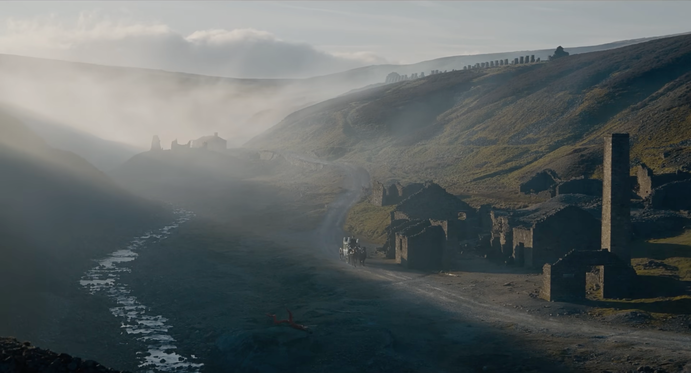
In contrast to the dilapidated farmhouse on its windswept hill, Thrushcross Grange was entirely constructed on studio sets. Production designer Suzie Davies described it as a little prison within nature, where everything is confined or encased, featuring pressed flowers and goldfish in vases, symbolizing the emotional suffocation of Cathy’s married life.
Far from Yorkshire, the opening scene of a public hanging was filmed in the Inner Courtyard of Knole House in Sevenoaks, Kent. This Tudor estate reappears later in the film as a marriage venue for Heathcliff’s spiteful elopement with Isabella. The stark contrast between its formal grandeur and the desolate emptiness of the moor scenes underscores the social divide that propels the story’s tragedy.
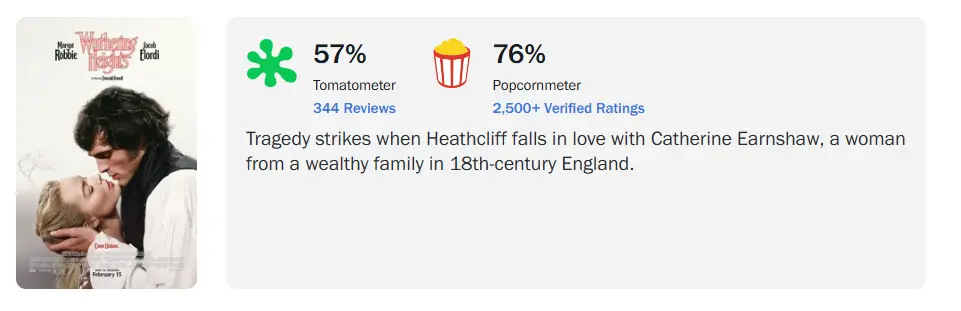
Fennell’s ‘Wuthering Heights’ has been described by some critics as a soaring, achingly romantic homage to the exhilarating experience of reading a great book in one sitting, with its anachronisms presented earnestly and its deviations approached with affection. This critical acclaim has been reflected in the box office, with the film grossing over 242 million dollars worldwide by early May 2026.
Ultimately, Fennell and her team created a world that spans crumbling Yorkshire ruins, whimsical stone follies, purpose-built studio fantasies, and one of England’s grandest Tudor estates. The setting of ‘Wuthering Heights’ is not limited to the wild moors of North Yorkshire; it encompasses everywhere that obsession resides.
Share your thoughts in the comments: do you think Emerald Fennell’s selection of real-world locations and studio sets captures the haunted essence of the novel, or should ‘Wuthering Heights’ have remained closer to Brontë’s original landscape?