
Delilah in ‘Every Summer After’ vs ‘Every Year After’: The Transformation of a Minor Character


When Carley Fortune released ‘Every Summer After’ in 2022, readers were captivated by Percy and Sam’s poignant, second-chance romance. Delilah, a character from Percy’s past, played a subtle role, adding depth and tension to her teenage summers in Barry’s Bay, but she was never the focal point. As a childhood friend and occasional rival, Delilah flickered in and out of the narrative without demanding much attention.
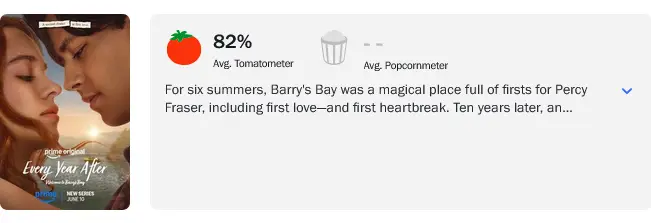
The version of Delilah we see in Prime Video’s adaptation, ‘Every Year After’, which premiered on June 10, is almost unrecognizable. The show was designed to broaden the narrative beyond Percy and Sam, and no character underwent a more significant transformation than Delilah.
In the original novel, Delilah is Percy’s summer friend during her teenage years in Barry’s Bay, a vibrant presence who complicates Percy’s relationships with the Florek brothers before largely disappearing from the adult timeline. In the book’s present-day timeline, Delilah does not reside in Barry’s Bay, and Percy hasn’t spoken to her in years. Their estrangement occurs quietly, lacking the dramatic confrontation depicted in the show.
The adaptation alters nearly every aspect of Delilah’s role. In the series, she becomes a permanent resident of Barry’s Bay after initially visiting due to Percy, marrying a man named Whit and owning a beautiful summer house in the area. She is no longer just a character Percy has lost touch with; she is now deeply integrated into the town, the Florek brothers’ lives, and a complex web of relationships that Percy must navigate.
The show introduces a secret affair between Delilah and Charlie Florek, a storyline absent from the original novel, along with a past pregnancy and abortion that serve as key reasons for the rift in her friendship with Percy. This pivotal moment in their shared history is explored in the episode titled “Plan B,” where Percy reflects on her friendship with Delilah.
The season finale takes Delilah’s storyline in a fresh direction. It concludes with her newly single and independent, hinting at her journey to explore her identity in ways the series has been subtly building up to. A potential second season would likely delve into Delilah’s exploration of her sexuality, as she comes to terms with her attraction to both women and men.
Abigail Cowen, known for her roles in ‘Fate: The Winx Saga’, ‘Chilling Adventures of Sabrina’, and ‘Stranger Things’, plays Delilah. The casting is serendipitous, as Cowen and lead actress Sadie Soverall previously portrayed sisters in ‘Fate: The Winx Saga’, and their established chemistry translates seamlessly into the complex, affectionate tension between Percy and Delilah on screen.
Cowen has expressed her enthusiasm for the role and shared what excited her most about Delilah’s character design. She described Delilah as a vibrant, free-spirited individual in her youth who challenges Percy to step outside her comfort zone. In adulthood, the dynamic shifts, with Percy encouraging Delilah to confront her own issues. This inversion provides the friendship with a genuine dramatic arc rather than mere decorative elements.
Critics have taken notice of this transformation. One review highlighted how Cowen’s Delilah evolves from a seemingly mean-girl character into a multi-dimensional friend with genuine pain and growth, making her one of the ensemble’s standout figures.
Showrunner Amy B. Harris emphasized the type of female dynamic she wanted to portray between Delilah and Percy. She expressed a desire to avoid narratives where women are antagonistic towards each other, aiming instead for a story where these women support one another. The result is a character arc that transitions from conflict to a meaningful, hard-earned connection.
Regardless of whether ‘Every Year After’ receives a second season, Delilah’s evolution from a minor character in ‘Every Summer After’ to one of the show’s most emotionally intricate figures stands out as one of the adaptation’s most commendable creative decisions.
Have something to add? Let us know in the comments!