
‘Unconditional’ on Apple TV The Geopolitical Thriller You Didn’t Know You Needed


Apple TV has steadily established itself as a prime destination for high-quality international dramas, and its latest offering makes a strong case for this trend. ‘Unconditional,’ the Israeli emotional thriller that debuted on May 8, 2026, weaves together political tension, legal suspense, and a poignant family narrative into a gripping experience. The early buzz surrounding the series is hard to overlook, prompting a key question among viewers: does it truly deliver?
This eight-episode series is co-created by Adam Bizanski, recognized for ‘Magpie,’ and Dana Idisis, the mind behind ‘On the Spectrum.’ It features Liraz Chamami alongside newcomer Talia Lynne Ronn, with new episodes released every Friday until June 19. For enthusiasts of tightly woven international thrillers, the pedigree alone warrants attention. However, the central inquiry remains whether the emotional core remains intact as the plot expands.
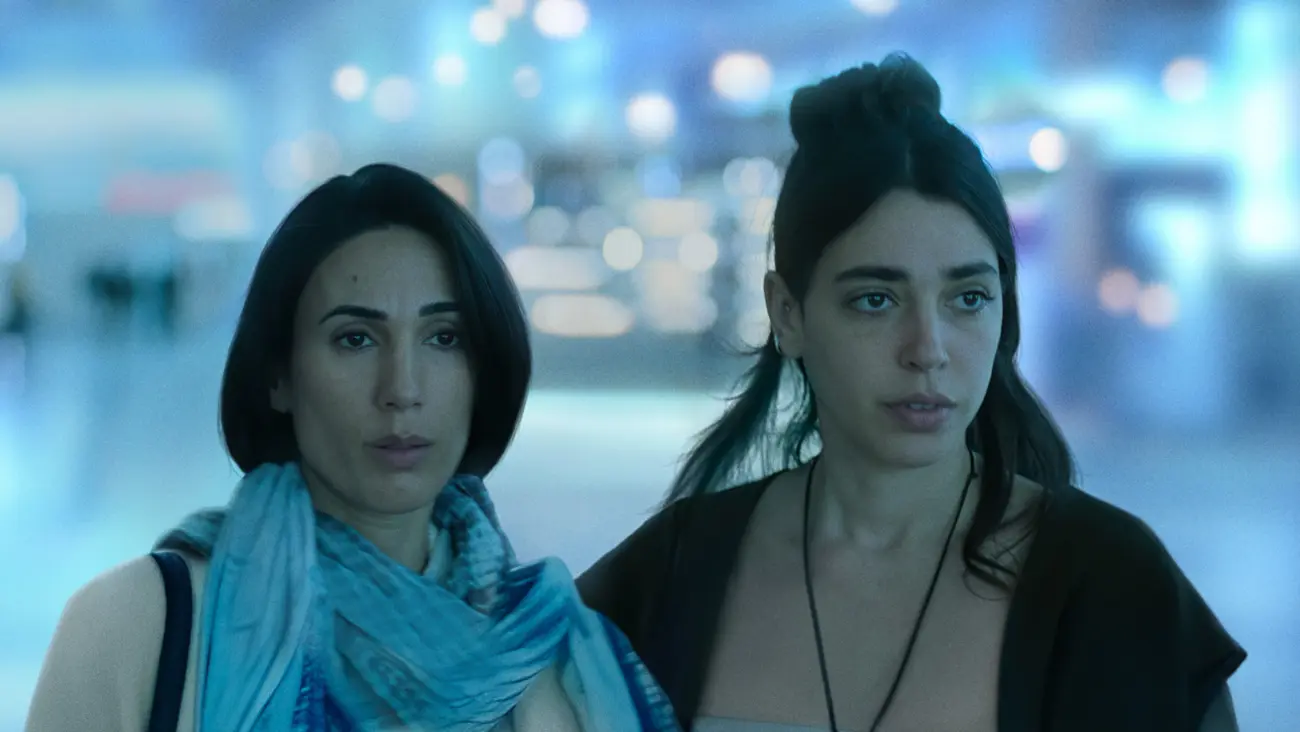
The story kicks off without delay. Orna, portrayed by Chamami, finds herself at a Moscow airport with her 23-year-old daughter Gali, who reassures her that everything will be alright. Moments later, officers arrest Gali on drug smuggling charges, triggering a series of events that ensnares Orna in a perilous web of crime and corruption as she fights to clear her daughter’s name.
The compelling premise captivates viewers as Orna’s determination to rescue her daughter is met with distrust, confusion, and an overwhelming sense of uncertainty. What begins as a mother’s worst nightmare quickly evolves into a larger, politically charged narrative than either character anticipated.
The Jerusalem Post commended lead actress Chamami’s performance, highlighting how her portrayal of Orna significantly enhances the series. The publication noted that she captivates the audience’s interest and empathy from the outset, subtly conveying the character’s profound panic and helplessness as she navigates an unyielding Russian prison system and indifferent bureaucrats back home.
Critics have observed that Chamami portrays Orna’s panic with a sense of quiet confusion rather than hysteria, providing a steady anchor throughout the series. This restraint distinguishes ‘Unconditional’ from lesser entries in the genre that might resort to melodrama.
While each episode begins with a disclaimer, ‘Unconditional’ is evidently inspired by real-life incidents. Gali’s arrest on dubious drug trafficking charges in Moscow echoes the experiences of notable detainees like Brittney Griner, Evan Gershkovich, and Naama Issachar, who was apprehended in 2019 while traveling from India to Tel Aviv before receiving a personal pardon from Vladimir Putin in 2020.
What sets this show apart from other streaming thrillers is the significant response it garnered even before its release. The announcement trailer, featuring Gali in her IDF uniform, ignited discussions online long before the series premiered.
This kind of pre-release cultural engagement serves as both a challenge and a mark of significance for any ambitious drama in 2026.
Reviewers have found ‘Unconditional’ to be an intelligent show that demands full attention, especially for those reading Hebrew and Russian subtitles. The shocks and questions linger long after the credits roll. The series’ willingness to delve into genuine geopolitical discomfort, rather than glossing over it, is one of its boldest attributes.
Keshet International’s distribution head Kelly Wright described ‘Unconditional’ as the company’s most ambitious drama in terms of budget and scale, noting that it was filmed across India, Georgia, and Israel. This expansive scope is evident on screen, giving the thriller a cinematic quality that elevates it above the typical streaming import.
From bustling Indian streets to the stark architecture of Georgia and the sharp urban landscapes of Israel, the production effectively transforms real cities into characters in their own right.
The Saburtalo District in Georgia adds an industrial edge that reinforces the notion that no one is truly safe throughout the narrative. The location work is integral to the story rather than merely serving as a backdrop.
Co-created by Adam Bizanski and Dana Idisis, written by Bizanski, and directed by Johnathan Gurfinkel, the series features Talia Lynne Ronn in her television debut, alongside supporting cast members Amir Haddad, Yossi Marshek, Evgenia Dodina, and Vladimir Friedman. The ensemble convincingly carries the story’s expanding scope.
As Orna strives to free her daughter from captivity, ‘Unconditional’ becomes increasingly detached from reality. According to Variety, this is often for the better. The series embraces its own escalating absurdity with enough self-awareness to remain entertaining rather than frustrating.
At times, the series may feel bloated and slow, with scenes that linger beyond their emotional impact. Certain plot points, particularly regarding how Orna navigates a perilous criminal world, may stretch the credulity of viewers who prefer grounded thrillers. These moments reveal where the show’s ambitions slightly outpace its execution.
Chamami’s authentic portrayal of pain and confusion while searching for her daughter is a key reason viewers will continue watching. Even when the plot mechanics falter, her performance maintains the emotional stakes. For fans of international drama who have already devoured ‘Fauda’ or ‘Tehran,’ ‘Unconditional’ offers a similarly compelling energy, wrapped in a narrative that feels uncomfortably relevant.
If you’ve already watched the first two episodes, share your thoughts on whether Orna’s increasingly perilous journey feels like a must-watch or one twist too many for your liking.