
‘Toy Story 5’ Features Two Credits Scenes That Fans Shouldn’t Miss


If you thought the adventure ended when the house lights came back on, think again. ‘Toy Story 5’ includes both a mid-credits scene and a post-credits scene, making it one of Pixar’s most generous offerings to date. Whether you’re a casual viewer or a devoted fan of the franchise, leaving your seat early would be a genuine mistake.
The film arrives as one of the most anticipated animated releases of the year. Directed with care and emotional depth, ‘Toy Story 5’ focuses on 8-year-old Bonnie, who still plays with cowgirl Jessie and her trusty steed Bullseye but struggles to connect with neighboring kids who have moved on from toys to screens. The result is a movie that resonates with the anxieties of modern parenting and childhood, and its credits sequences maintain that energy right to the final frame.
After Taylor Swift’s original song “I Knew It, I Knew You” plays, the film transitions into a mid-credits scene. This moment is the more substantial of the two bonus scenes, and fans would be wise to consider it an essential part of the main film.
The mid-credits scene does not feature animated bloopers like earlier installments. Instead, it delivers a small yet meaningful story beat by revealing what happened to a certain character after the events of the main film.
Without delving into specifics for those still eager to see it, the payoff feels earned and emotionally connected to everything that preceded it.
Those wanting the full experience will need to stay until the very end, even though the scenes aren’t absolutely essential to the core story. Think of them as a warm and knowing nod to the audience, a generous extra that Pixar has historically used to reward patience and loyalty.
The post-credits scene reveals the conclusion of a storyline involving the army of Buzz Lightyear figures, who float down from the sky into a playground filled with kids who eagerly grab the toys. However, there’s a twist, as one child has an Emperor Zurg action figure in his backpack. It’s a playful tease, perfectly designed to resonate with longtime fans of the franchise.
At the very end of the credits, the toys come together and sing Lilypad’s song over the rolling credits. This light, fun moment doubles as a callback to one of the film’s recurring jokes, sending audiences out of the theater with a smile instead of a cliffhanger.
While not crucial to the narrative that has already unfolded, these stingers are a must-watch for longtime fans and hint at what might come next for the franchise. Pixar clearly has no intention of closing the door on the ‘Toy Story’ universe just yet.
The credits scenes carry extra weight considering what director Andrew Stanton has been saying about the franchise’s future. In an interview with ScreenRant about ‘Toy Story 5’, Stanton hinted at the possibility of a sixth movie, teasing that “you can never say never” while explaining the natural storytelling logic of following the toys as they are passed between children.
“So I always knew that there was a natural possibility to just follow Bonnie, and just follow her life, and just see what happens to the toys if it keeps going,” he shared.
Andrew Stanton, the filmmaker behind ‘Wall-E’ and ‘Finding Dory’, directed ‘Toy Story 5’, bringing a fresh perspective to a franchise many thought had reached its natural conclusion with the fourth installment. His comments suggest a genuine creative vision for extending the series rather than merely chasing box office returns.
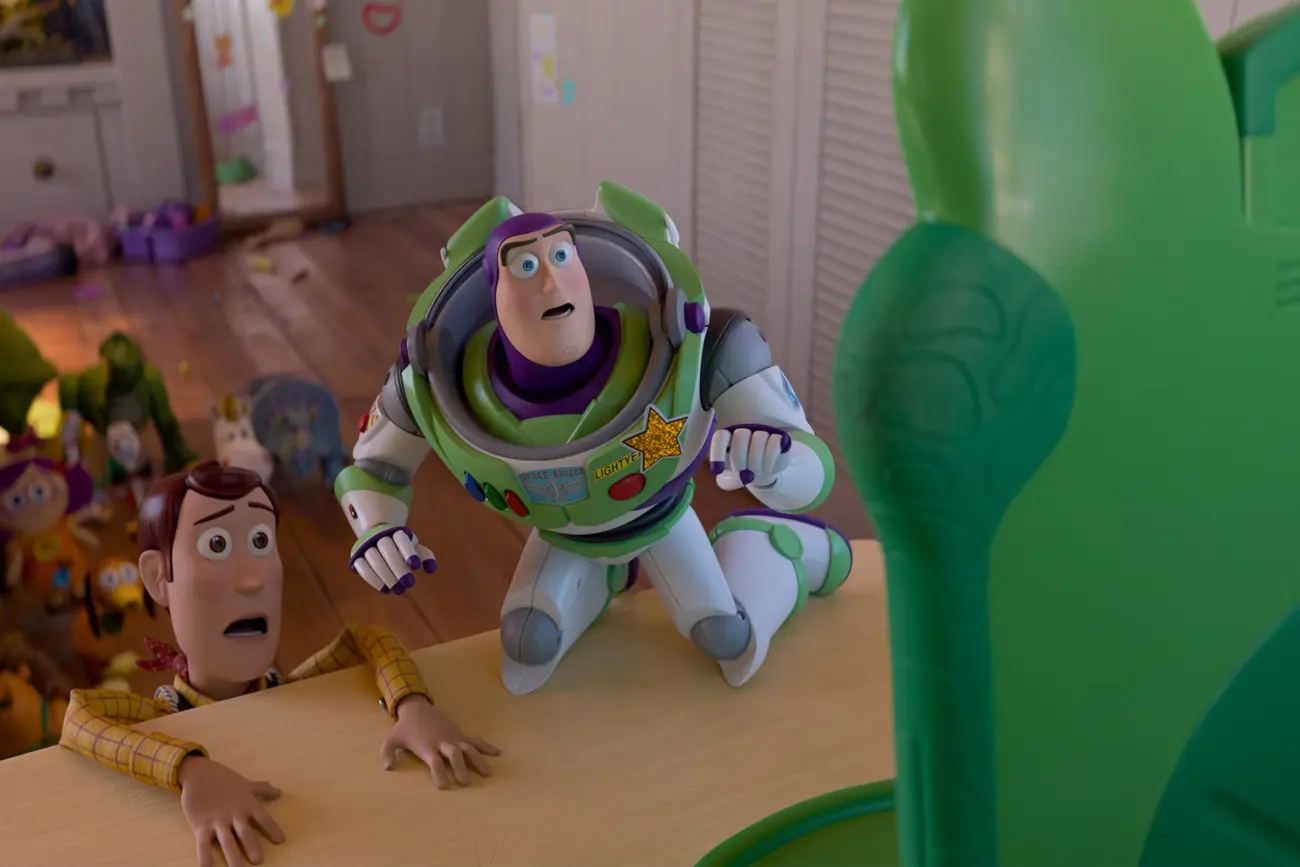
The film’s screenplay finds a way to bring Woody back into the mix, with the pull-string cowboy returning alongside Bo Peep after spending time as a lost toy in the wider world. This reunion sets up a dynamic rich with future potential, should Pixar choose to follow through on the seeds Stanton has now planted.
The film’s central theme addresses the decline of play in modern childhood, framing technology as a paradigm shift in how children relate to each other and the physical world around them. This theme lacks a clean resolution, which is precisely why it leaves room for more storytelling.
Greta Lee voices Lilypad, a frog-shaped tablet designed for kids that quickly becomes Bonnie’s entire world, eventually threatening to replace genuine friendship with algorithmically curated social connections. The dynamic between the warmly analogue toys and the slick digital interloper introduces a new kind of villain, one that could evolve in intriguing ways across future films.
The film features an original score by Oscar-winning Randy Newman, who returns to the franchise once more, anchoring the emotional core of ‘Toy Story 5’ in the same musical language that has defined the series since its inception. His presence serves as a reminder of the accumulated love audiences carry into every chapter of this story, and why the prospect of more of it still generates genuine excitement.
With two credits scenes now part of the conversation and a director openly discussing what a sixth film could entail, the question for fans is no longer whether ‘Toy Story 5’ earns its place in the franchise, but whether Bonnie’s journey with Jessie, Woody, and a reformed Lilypad is something you believe deserves to continue beyond what we witnessed on screen this week.