
‘Fire and Blood’ Condenses Otto Hightower’s Death to One Sentence in ‘House of the Dragon’


Otto Hightower dedicated years to manipulating the Iron Throne, creating a succession crisis, and altering the destiny of the Seven Kingdoms. When his fate was finally revealed in George R.R. Martin’s ‘Fire and Blood,’ he received a mere one-sentence acknowledgment. This brief mention was never going to suffice for the television adaptation.
‘House of the Dragon‘ has always approached its narrative differently from the source material. While ‘Fire and Blood’ reads like a maester’s chronicle, cold and succinct, the HBO series immerses viewers in the political betrayals and emotional turmoil of the Dance of the Dragons. Otto Hightower’s death in Season 3, Episode 2 exemplifies how the show dramatically reinterprets the original material.
The source material barely lingers on Otto’s demise. “Ser Otto Hightower, who had served three kings as Hand, was the first traitor to be beheaded,” is essentially all that ‘Fire and Blood’ provides, quickly transitioning to Jasper “Ironrod” Wylde, who followed him to the block while still insisting that a king’s son must come before his daughter.
The mention of a block is significant, suggesting that these executions were formal enough to warrant a proper beheading setup, likely involving an executioner, rather than the sudden act depicted on screen. The book does not specify that Rhaenyra herself wielded the sword, making it more plausible that this was a traditional public execution carried out under her orders.
In ‘House of the Dragon,’ Otto is brought before Rhaenyra, with Daemon urging her to execute Aegon’s former Hand as a traitor. He emphasizes that if she wishes to rule, she must demonstrate her resolve. Rhaenyra falters and misses Otto’s neck on her first attempt, striking his shoulder blades instead, before finally beheading him on the second stroke while struggling to hold back tears.
The HBO adaptation expands that single archival sentence into a pivotal scene. After three seasons of Rhys Ifans portraying Otto as a cold strategist and master manipulator, the show could not simply move him to the block and expect viewers to feel satisfied. Notably, the series delayed Rhaenyra’s ascension to the Iron Throne until after she executed Otto, reversing the book’s sequence and transforming what could have been a triumphant moment into a far more complex one.
Otto Hightower’s book death is efficient because ‘Fire and Blood’ is structured like a maester’s chronicle rather than a conventional novel. George R.R. Martin often presents events as collected testimony, rumor, and political record, leading to even significant characters exiting with a sentence that feels almost bureaucratic.
This alteration underscores the main challenge of adapting ‘Fire and Blood’ for television. The book reads like a historical text, allowing major figures to be dismissed in a single sentence. The brevity that lends the source material its eerie, documentary quality poses a challenge for television, where audiences have invested years in connecting with characters and performances.
The show benefits from assigning Otto’s death to Rhaenyra rather than Daemon. Had Daemon killed Otto, it would have reinforced what viewers already know about him. By making Rhaenyra the executioner, the series conveys something more unsettling: she has transitioned from claimant to ruler, and from grieving mother to a punitive monarch.
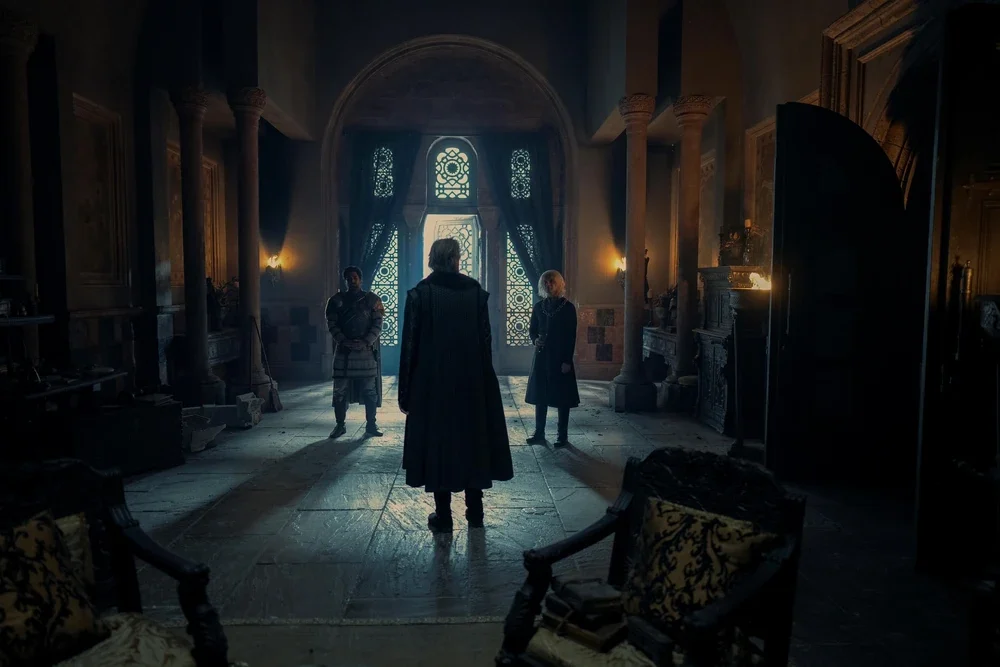
There is no indication in ‘Fire and Blood’ that Rhaenyra herself executed Otto Hightower. While Rhaenyra’s act may frustrate purists, it sharpens her descent in Season 3 and provides Ifans’ formidable schemer with the exit he deserved. The realm now observes a queen whose sense of justice and grief have begun to intertwine.
In Martin’s book, both Gwayne and Otto Hightower were killed when Rhaenyra seized King’s Landing, with Gwayne murdered by Ser Luthor Largent as the City Watch helped secure the city. However, the television series has kept Gwayne far from King’s Landing, placing him alongside Criston on a march through the Riverlands.
By keeping Gwayne alive in ‘House of the Dragon’ Season 3, the series can explore the complexities of his response to his father’s death and how his strategy may evolve following this loss.
A notable new addition to Season 3’s cast is James Norton as Ormund Hightower, a cousin of Alicent and Gwayne who commands the Greens’ armies in the Reach and oversees the young Prince Daeron Targaryen as his ward. With Otto gone, the Hightower name is now scattered across a fractured war, and the family’s future in the Dance of the Dragons appears bleaker than the book suggested.
Whether you believe the show gave Otto the death he deserved or stripped ‘Fire and Blood’ of its cold historical elegance, it would be intriguing to hear your thoughts on whether Rhaenyra wielding that sword herself was the right decision for her character’s journey in Season 3.