
Where Is Costa Concordia Captain Francesco Schettino Now After Netflix’s ‘Shipwrecked’


Netflix’s latest true crime documentary has sparked renewed interest in one of the most notorious maritime disasters of the 21st century. ‘Shipwrecked: Nightmare at Sea’ revisits the January 2012 sinking of the Costa Concordia, prompting viewers to question the fate of the man at the center of the incident.
That individual is Francesco Schettino, the former captain whose decisions that fateful night resulted in the deaths of thirty-two people. The documentary has brought his story back into focus, and audiences are eager to learn about his current status more than a decade later.
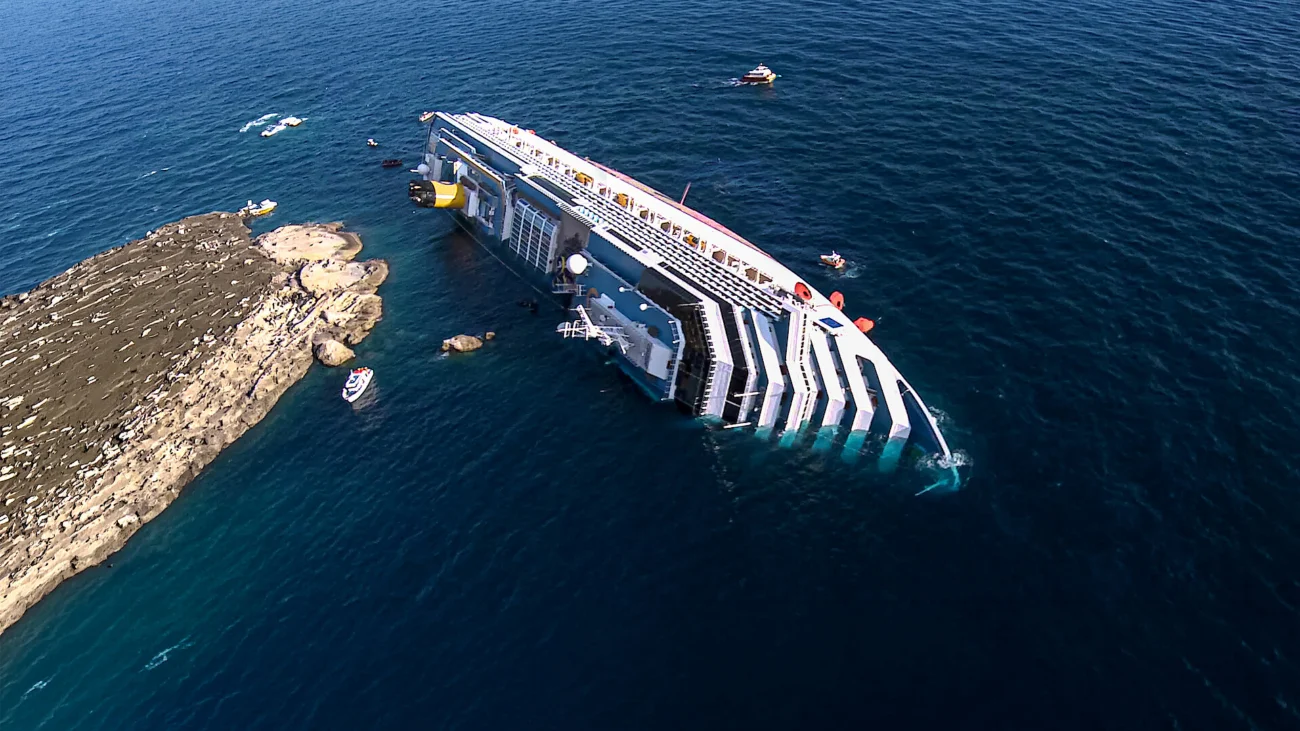
Francesco Schettino was at the helm of the Costa Concordia cruise ship when it sank in January 2012, an event that has gained fresh attention following Netflix’s documentary release. The ship was carrying over four thousand passengers who anticipated a luxurious vacation, complete with more than a hundred chefs and a variety of onboard entertainment, including theaters, shows, and casinos.
However, that vacation quickly descended into chaos. The trip turned disastrous when the ship struck a rock and began taking on water. Schettino faced accusations of intentionally steering the cruise liner too close to the island of Giglio to impress passengers, including his then-lover, Domnica Cemortan.
Schettino has denied these allegations, claiming that the maneuver was encouraged by Costa Cruises for promotional reasons, according to the BBC. Costa Cruises countered that the captain made significant errors in judgment and executed an unauthorized maneuver. The cruise line was never criminally charged in connection with the disaster, although it did avoid a trial by agreeing to pay a fine of 1.1 million dollars.
After a lengthy trial, Schettino was found guilty of manslaughter and was convicted of causing the shipwreck and abandoning the cruise liner before all passengers were safely evacuated. In the documentary, chef Manoj Singh recalled witnessing Schettino on a lifeboat before the evacuation was complete, a detail that has long fueled public outrage.
The allegations of abandonment were arguably just as damaging to Schettino’s reputation as the crash itself. He faced severe criticism for leaving the ship before his passengers, making this moment one of the most discussed aspects of the entire case.
During his trial, the Italian prosecutor labeled Schettino a careless idiot, although the former captain maintained that he was made a scapegoat for the disaster. In February 2015, three years after the tragedy, Schettino was sentenced to sixteen years in prison. Five other cruise ship employees were also found guilty in connection with the incident, but none received prison sentences.
Schettino attempted to appeal his conviction, but he exhausted that process in 2017 and was ultimately ordered to serve his sentence, according to The Maritime Executive. Even after being incarcerated, he continued to contest the ruling.
In January 2018, Schettino filed a complaint with the European Court of Human Rights challenging his conviction. More recently, in 2025, he sought early release, requesting to enter what Italian law refers to as a state of semi-liberty, which allows prisoners who have served at least half of their sentence certain freedoms.
Unfortunately for Schettino, his requests for early release have been either withdrawn or denied. He is currently serving his sentence at Rebibbia Prison in Rome and is expected to remain incarcerated until around 2032.
Outside of his legal struggles, Schettino has occasionally appeared in tabloid stories over the years. According to reports from Crew Center, the British newspaper the Sun once ran a headline suggesting the former captain was ‘back at the helm’ after he was photographed steering a small motorboat off the coast of Meta di Sorrento in Campania, the region where he has been required to stay.
His lawyer at the time, Bruno Leporatti, publicly denied being on the boat with him, but confirmed that Schettino was not prohibited from operating small watercraft or even large vessels, as his conviction did not include a formal navigation suspension.
‘Shipwrecked: Nightmare at Sea’ is described as an immersive documentary that features never-before-seen footage and survivor accounts from the 2012 disaster. The film relies heavily on firsthand testimony to reconstruct the chaos aboard the ship as it began to list.
The documentary premiered on Netflix on July 10 and chronicles how the Costa Concordia deviated from its planned route in January 2012, ultimately leading to the deaths of thirty-two individuals. It also highlights how the shipowner attributed the crash to human error, as the captain allegedly failed to adhere to the authorized route.
One of the documentary’s most striking revelations involves physical evidence. A USB drive was discovered in a journalist’s car containing a recorded conversation between Schettino and the coast guard, in which he was repeatedly instructed to return to the sinking vessel. This exchange has become one of the most infamous audio clips associated with the entire tragedy, and its inclusion in the film has resonated with new viewers encountering the story for the first time.
With the documentary now available for streaming and Schettino still years away from release, it seems an opportune moment to consider how much responsibility a captain should bear for such a catastrophic disaster, and whether ‘Shipwrecked: Nightmare at Sea’ alters anyone’s perspective on what truly transpired that night off Giglio.