
Before ‘The Social Reckoning’ Arrives, What ‘The Social Network’ Left Unfinished


Aaron Sorkin is returning to the world of Facebook, taking on the roles of both director and writer for his new drama, ‘The Social Reckoning’, which is set to release on 9 October, as confirmed by Sony Pictures. The project has already sparked significant discussion, with the release of the first trailer intensifying the conversation.
To prepare for the upcoming film, a quick recap of ‘The Social Network’ is essential. While ‘The Social Reckoning’ serves as a companion piece rather than a direct sequel, it carries the legacy of the original film. Here’s what to keep in mind, what has evolved, and why it’s generating buzz.
‘The Social Network’ depicted the journey of Harvard sophomore Mark Zuckerberg in creating Facebook. The film was loosely adapted from Ben Mezrich’s book, ‘The Accidental Billionaires’. Jesse Eisenberg portrayed Zuckerberg, joined by Rooney Mara, Andrew Garfield, and Armie Hammer.
The film was a tremendous success, grossing $226 million worldwide and receiving eight Academy Award nominations, including Best Picture. It won three Oscars, including Best Adapted Screenplay for Sorkin, Best Film Editing, and Best Original Score.
The prospect of a sequel was uncertain for a long time. In 2020, Sorkin stated he would only revisit that universe if David Fincher returned to direct. Producer Scott Rudin had previously suggested a sequel, and Eisenberg expressed interest in reprising his role in 2019.
Sony describes ‘The Social Reckoning’ as a companion piece to ‘The Social Network’, set 17 years after the events of the first film, featuring an entirely new cast. This makes it more of a spiritual successor than a conventional sequel.
Significant behind-the-scenes changes are evident. David Fincher is not directing this time, with Sorkin taking the helm. Additionally, Trent Reznor and Atticus Ross are not returning for the score, which will be composed by Alexandre Desplat instead.
Interestingly, the release date coincides with the month the original film premiered back in 2010. This timing feels intentional, especially for a narrative centered around the evolving image of a company.
The new film focuses on a different protagonist. Frances Haugen, portrayed by Mikey Madison, is a young Facebook engineer who collaborates with Wall Street Journal reporter Jeff Horwitz, played by Jeremy Allen White, to unveil the company’s closely guarded secrets.
The film draws weight from real events. Horwitz authored a series of articles in October 2021 known as The Facebook Files, which revealed the inner workings and negative impacts of Facebook. Haugen also testified before Congress in 2021 regarding alleged misconduct by the company.
The cast is impressive, featuring Bill Burr alongside Madison, White, and Jeremy Strong. Madison is fresh off her performance in ‘Anora’, adding to the awards season intrigue.
Jeremy Strong takes on the role of Facebook creator and Meta CEO Mark Zuckerberg. In the teaser, his character states he is no longer the person from the dorm rooms, a line that encapsulates his character’s evolution since the first film.
Reactions to the trailer have been mixed. Many users on X, TikTok, and Reddit have praised Strong’s transformation as remarkable and foresee awards recognition, while others question the necessity of the film. Critics have also noted the film’s structure.
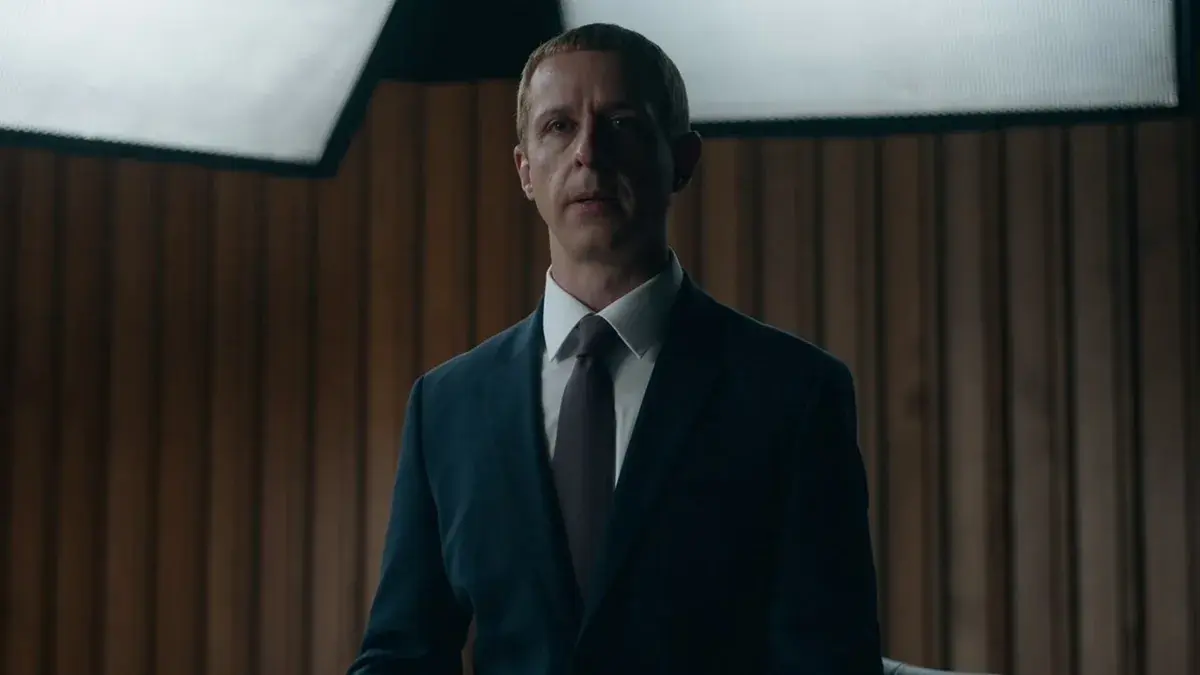
ComingSoon suggested that the trailer presents the film as two narratives intertwined, combining the whistleblower story with Zuckerberg’s court preparations.
Skepticism has been prevalent. TechRadar noted that some viewers likened the trailer to an SNL sketch, while The SS Ben Hecht described it as one of the most poorly received trailers in recent memory, albeit acknowledging that a trailer does not define the film. As the premiere approaches, we invite you to share your thoughts in the comments on whether Strong can emerge from Eisenberg’s shadow or if ‘The Social Reckoning’ will struggle without Fincher’s influence.