
The Wrong Kid Was Taken in ‘Animals’ and the Kidnappers Remain a Mystery


The kidnapping plot in ‘Animals’ appears straightforward at first glance. Ben Affleck plays Mark Kimball, a charming mayoral candidate in Los Angeles whose seemingly idyllic family life unravels when his son Denny is kidnapped, with the abductors demanding a staggering ransom within hours. It sets up a classic race against time.
However, the film takes an unexpected turn. Now streaming on Netflix, viewers are left questioning who was truly taken and who orchestrated the entire scheme. The answers are more complicated than the trailer implies, so consider this your spoiler alert.
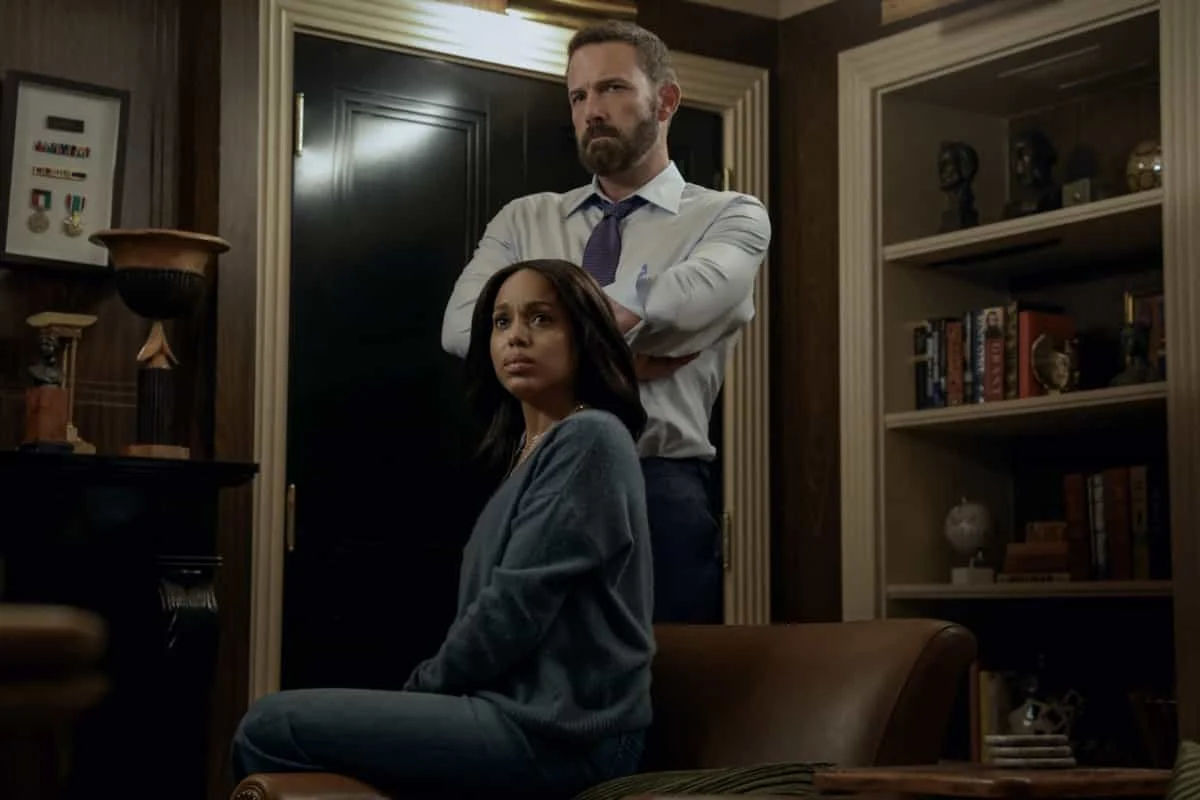
An unidentified caller contacts Abigail and Mark, claiming to have kidnapped Denny and insisting on a $7 million ransom for his return. The couple is prepared to do anything necessary, which is precisely what the film wants the audience to believe for a while.
In a mid-movie twist, it is revealed that the kidnapper has mistakenly taken the wrong child. The boy is actually Hector, the son of Ramon, an undocumented worker who is romantically involved with the Kimballs’ housekeeper, Cecilia. Denny was never in peril.
The mix-up stems from Halloween festivities. Amid the chaos of matching costumes, the kidnapper mistakenly grabbed Hector instead of Denny, as both boys had gone trick-or-treating together, with Cecilia and Ramon’s son accompanying the Kimballs’ child.
This leaves Ramon in a dire situation. Actor Luis Gerardo Méndez highlights that Ramon has no financial resources, no influence, and cannot involve the police due to his undocumented status.
The frustrating reality is that the film never reveals the identities of the kidnappers. Viewers remain in the dark about who they are or their motivations, which was reportedly a deliberate choice. Kerry Washington explained to Netflix Tudum that the film explores the darker sides of human nature, emphasizing that “it’s not about the enemy.”
What the narrative does depict is a small, amateurish crew. Dayle, portrayed by Gillian Anderson, suspects there are only two abductors—one dominant and one submissive. The ransom demand comes from a sinister mystery caller.
The river handoff disproves her theory. Two men in oversized rabbit masks collect the ransom, while a third kidnapper lurks in the shadows throughout the ordeal.
None of these characters receive names, motives, or backstories. For some viewers, this choice is chilling, while others may find it feels like an incomplete narrative.
Once the truth is unveiled, Mark faces a darker set of choices. Dayle presents him with three options: call the police, pay the ransom, or arrange to eliminate the kidnappers to keep the money. Mark chooses the latter.
Financially, Mark is in a tight spot. He has been quietly depleting the family bank account to support his faltering campaign, and Dayle takes the deed to their home as a down payment for her services.
The journey to the exchange showcases one of the film’s boldest visual concepts. Affleck crafted an extensive aerial sequence that traverses from the affluent Westside through Koreatown, downtown, and Skid Row, ultimately arriving at the Los Angeles River. This transforms the city into a commentary on who receives protection and who is overlooked.
Critics are divided on the film’s effectiveness. One review described it as a lackluster take on Akira Kurosawa’s ‘High and Low’ that fails to find its rhythm, while another praised its tight pacing and sharp visuals from cinematographer Robert Elswit.
The climax belongs to an unexpected character. Rand, Dayle’s henchman, shoots the two masked men, but the third kidnapper then kills Dayle and her associate before an unseen gunman takes him out. That gunman is Ramon, who overheard Mark’s plans and followed him. Mark disposes of Dayle’s phone and the bodies of the deceased abductors.
What follows is a twist of political spin. Mark claims he shot the abductor, receiving accolades for his bravery while only facing a year of probation and community service. Ramon takes the cash from Dayle and returns to Mexico with Cecilia and Hector.
Mark’s payoff is surprisingly sweet. He wins the mayoral election, buoyed by a surge of Latino support, and even flirts with the idea of a presidential bid during an interview with Gayle King. Abigail stands by him through the false confession, and the two now share a united front.
Méndez describes the ending as bittersweet, as Ramon emerges as the true hero yet would be labeled a criminal if his actions were known. We invite you to share your thoughts in the comments about whether Ramon deserved the recognition Mark appropriated and whether you would have kept the secret to safeguard your own family.