
Netflix Unveils Influential Films Behind ‘La Bola Negra’


Every remarkable film has a hidden lineage. Directors rarely create a vision from scratch, and the films they hold in their minds often influence everything from tone to composition. For one of this year’s most discussed awards contenders, that lineage has now been disclosed.
‘La Bola Negra’ is the sweeping Spanish-language drama directed by Javier Calvo and Javier Ambrossi, collectively known as Los Javis. They shared the Best Director award at Cannes with Paweł Pawlikowski for ‘Fatherland’, and the film has been generating awards buzz since then. Netflix is positioning it as the centerpiece of its 2026 lineup, providing it with a 47-day theatrical window, the longest in the platform’s history.
Netflix has now disclosed the films that inspired ‘La Bola Negra’. The list features ‘Come and See’ (1985) by Elem Klimov, ‘Apocalypse Now’ (1979) by Francis Ford Coppola, ‘Ivan’s Childhood’ (1962) by Andrei Tarkovsky, and ‘Damnation’ (1988) by Béla Tarr. Additionally, it includes ‘Beau Travail’ (1999) by Claire Denis, ‘Incendies’ (2010) by Denis Villeneuve, ‘The Favourite’ (2018) by Yorgos Lanthimos, and ‘The White Ribbon’ (2009) by Michael Haneke.
⬇️ The films that inspired La Bola Negra ⬇️
-Come and See (1985), directed by Elem Klimov
-Apocalypse Now (1979), directed by Francis Ford Coppola
-Ivan’s Childhood (1962), directed by Andrei Tarkovsky
-Damnation (1988), directed by Béla Tarr
-Beau Travail (1999), directed by Claire Denis
-Incendies (2010), directed by Denis Villeneuve
-The Favourite (2018), directed by Yorgos Lanthimos
-The White Ribbon (2009), directed by Michael Haneke— Netflix Tudum (@NetflixTudum) October 19, 2026
These eight films span over five decades and various countries, from Soviet-era war cinema to modern European arthouse. This eclectic reference list is unexpected for a film centered on queer love and Spanish history, adding to the film’s distinctiveness.
The Advocate highlighted that the film’s harshness and sometimes bitter tone stem from the directors’ cinematic influences, citing Haneke, Tarkovsky’s ‘Ivan’s Childhood’, and Klimov’s anti-war masterpiece ‘Come and See’. One director described the film as ‘Portrait of a Lady on Fire’ seen through the lens of ‘Apocalypse Now’, effectively capturing the blend of tenderness and severity. Their aim was to depict reality starkly while maintaining a gentle perspective through the character Sebastián.
The narrative follows three gay men across three distinct eras: 1932, 1937, and 2017. In the earliest timeline, a young man faces exclusion from a social club due to his sexuality, which lends the film its title. The story is based on four surviving pages of Federico García Lorca’s last play, which he was working on in the summer of 1936, the year of his assassination.
These three timelines intertwine through themes of desire, pain, and inheritance, with a runtime of 2 hours and 39 minutes. Guitarricadelafuente makes his acting debut as Sebastián, alongside Miguel Bernardeau, Carlos González, Milo Quifes, Lola Dueñas, and Julio Torres. The supporting cast features Penélope Cruz and Glenn Close, with Pedro Almodóvar serving as executive producer.
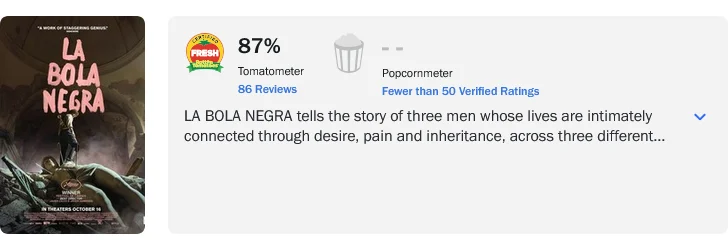
The release strategy is as remarkable as the creative heritage. The film premiered in New York and Los Angeles on October 16, with plans for a broader release before it becomes available on Netflix on December 2. Reports indicate that Netflix acquired it for between $4 million and $5 million following a bidding war at Cannes.
This release window signifies a major shift for a studio often criticized for treating theaters as secondary. Variety noted that Netflix is demonstrating unprecedented confidence in the film. The directors have expressed that they crafted it for the big screen, rather than as a film to be merely rewatched on a streaming platform.
Critics have shown strong support for the film. RogerEbert.com called it one of the most moving films of 2026, commending its ability to transform an unfinished Lorca work into a multi-generational exploration of war, sexuality, and hidden love. Little White Lies described it as a mind-bending, era-spanning tribute to political freedom.
The conversation surrounding awards is already underway. Variety has positioned it as a potential contender for Netflix’s first Best Picture Oscar, with Kalshi traders estimating a 19% chance of winning, second only to ‘The Odyssey’ at 47%. Cannes audiences reportedly gave it a lengthy standing ovation lasting over 15 minutes.
LA BOLA NEGRA tells the story of three generations of men whose lives are intimately connected through desire, pain, and love.
Starring Spanish music sensation Guitarricadelafuente, Miguel Bernardeau, Carlos González, Milo Quifes, Lola Dueñas, Julio Torres, Penélope Cruz, and Glenn Close. From Cannes-winning directors Javier Calvo and Javier Ambrossi (“Los Javis”).
In theaters October 16.— Netflix (@netflix) September 1, 2026
Revealing these influences does more than satisfy curiosity; it positions the film within a long tradition of serious filmmaking rather than as a niche project. It encourages viewers to engage with it alongside some of cinema’s most celebrated works. For awards voters, this context can help frame it as an ambitious, auteur-driven piece.
This also reflects the directors’ backgrounds. Los Javis emerged from television and musical theater, and this list indicates their study of boundary-pushing filmmakers. The outcome is a film that juxtaposes queer love against the backdrop of epic war cinema.
For cinephiles, this list serves as a viewing guide. Watching these eight films before or after ‘La Bola Negra’ provides a way to trace the connections that run through it. Whether you start with ‘Come and See’ or ‘The Favourite’, these links may alter your perspective on the film.
Have something to add? Let us know in the comments!