
Steven Spielberg Reveals His Favorite Alfred Hitchcock Film Is Psycho


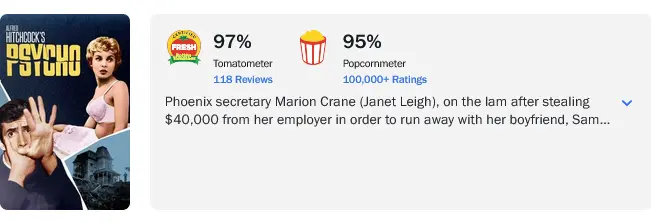
Few director pairings in cinema history feel as destined as Steven Spielberg and Alfred Hitchcock. One revolutionized blockbuster filmmaking for generations, while the other created the language of suspense that filmmakers have been trying to master for decades. Recently, Spielberg shared that ‘Psycho’ is his favorite film from Hitchcock’s impressive catalog, calling it “simple, but incredibly effective,” which elicited a knowing nod from cinephiles rather than surprise.
Spielberg has consistently acknowledged Hitchcock’s influence on his artistic vision, but his specific admiration for ‘Psycho’ indicates a deeper appreciation. It highlights Spielberg’s understanding of great filmmaking: that restraint, suggestion, and concise storytelling can often be more impactful than sheer spectacle.
Released in 1960, ‘Psycho’ transformed the film industry, giving birth to the slasher genre and paving the way for modern event cinema. Its legacy is built on audacity, as Hitchcock produced ‘Psycho’ on a modest budget, shooting in black and white and utilizing his television crew, financing much of the project himself in exchange for a significant share of the profits.
This scrappy, low-budget approach did not hinder the film; rather, it compelled Hitchcock to adopt a lean, precise filmmaking style that Spielberg clearly admires.
What makes ‘Psycho’ revolutionary even today is its ability to convey so much through implication. Hitchcock filmed the iconic shower scene using 78 camera setups, editing it into a 45-second montage that creates the illusion of graphic violence without actually showing the knife penetrating Marion’s body. This scene has been referenced and imitated countless times, yet its true lesson lies in the power of audience imagination. You see almost nothing, but you feel everything—simple, but incredibly effective, just as Spielberg described.
This philosophy, directly influenced by Hitchcock, runs through Spielberg’s own work. The shark attacks in ‘Jaws’ reflect Hitchcock’s “less is more” approach, where violence and its source are largely left to the viewer’s imagination, rather than relying on conventional monster movie tropes.
Notably, this approach was partly born from necessity. Spielberg has remarked that the shark malfunctioning was a blessing in disguise, pushing him to embrace Hitchcock’s principles. This unexpected challenge led one of Hollywood’s most successful directors back to the basics, which were rooted in Hitchcock’s teachings.
Spielberg has often credited Hitchcock as a major influence on his filmmaking, especially in the art of suspense. However, the fact that ‘Psycho’ stands out above all others in Hitchcock’s filmography for him is significant. It’s not ‘Vertigo,’ with its romantic allure and stunning visuals, nor ‘North by Northwest,’ with its glamorous escapades. Instead, it’s the stripped-back, black-and-white thriller that shattered Hollywood norms and demonstrated that a great film doesn’t need to announce itself; it simply needs to resonate.
In addition to winning an Edgar Allan Poe Award for Best Motion Picture, ‘Psycho’ was chosen for preservation in the United States National Film Registry by the Library of Congress. Its cultural impact is vast, but perhaps its most enduring contribution is the permission it granted filmmakers to trust their audiences. The film’s innovative suspense techniques, masterful direction, and the infamous shower scene are frequently lauded for their technical excellence and lasting cultural significance.
Interestingly, the two directors never met. Spielberg had requested a meeting with Hitchcock, but the legendary filmmaker declined, reportedly stating that Spielberg made him feel like a “whore” by comparison, according to actor Bruce Dern’s memoir. This missed connection remains one of cinema’s most poignant moments. Hitchcock never learned from Spielberg how much he absorbed: that simplicity, executed with precision, is the pinnacle of filmmaking craft.
Spielberg’s admiration for ‘Psycho’ is not merely a favorite-film revelation; it offers insight into the artistic values that have influenced some of the most cherished films ever created. Share your thoughts in the comments about which Hitchcock film you consider the greatest.
Have something to add? Let us know in the comments!