
The Tragic Fate of Charles Trask in ‘East of Eden’ and Netflix’s New Miniseries


Few fates in American literature are as quietly devastating as what happens to Charles in ‘East of Eden’. He never leaves the farm, accumulates wealth he cannot enjoy, and ultimately dies alone. His death comes through a lawyer’s letter, reshaping the lives of everyone he leaves behind.
This tragedy is relevant again as Netflix’s seven-episode adaptation of John Steinbeck’s novel premiered on October 1. If you’re watching the new series and curious about Charles’s journey, prepare for a narrative that’s darker and more complex than a simple farewell. Here’s how his arc unfolds in the book and what it might signify for the screen version.
Charles, the son of Cyrus Trask and his second wife, Alice, is characterized by a violent temper and an intense longing for his father’s affection. The wound begins when Cyrus favors a stray puppy over the expensive knife Charles worked hard to buy. This seemingly minor slight evolves into the defining injury of his life.
In response, Charles resorts to violence, brutally attacking Adam until he loses consciousness. When Adam awakens, Charles has already vanished. This assault leaves Charles with a scar, symbolizing exclusion that mirrors the mark of Cain, as the rejected brother bears it.
When Cyrus sends Adam off to the army, the burden falls on Charles. After Adam departs and their mother passes away, Charles is left alone to manage the family farm. He becomes a disciplined, solitary worker while the favored brother remains far away.
Even Cyrus’s death brings no solace. He leaves behind over a hundred thousand dollars, and Charles suspects the money was ill-gotten. For a man who idolized his father, that suspicion is a profound source of grief.
The true fracture occurs with the arrival of Cathy Ames. Found bloodied in a field near the Trask farm in Connecticut, Adam takes her in, seeing an opportunity to care for someone, while Charles perceives danger.
Charles’s instincts are correct. He immediately distrusts Cathy, recognizing a darkness in her that mirrors his own. His warnings go unheeded, positioning him as the brother with a clearer, albeit harsher, perspective on reality.
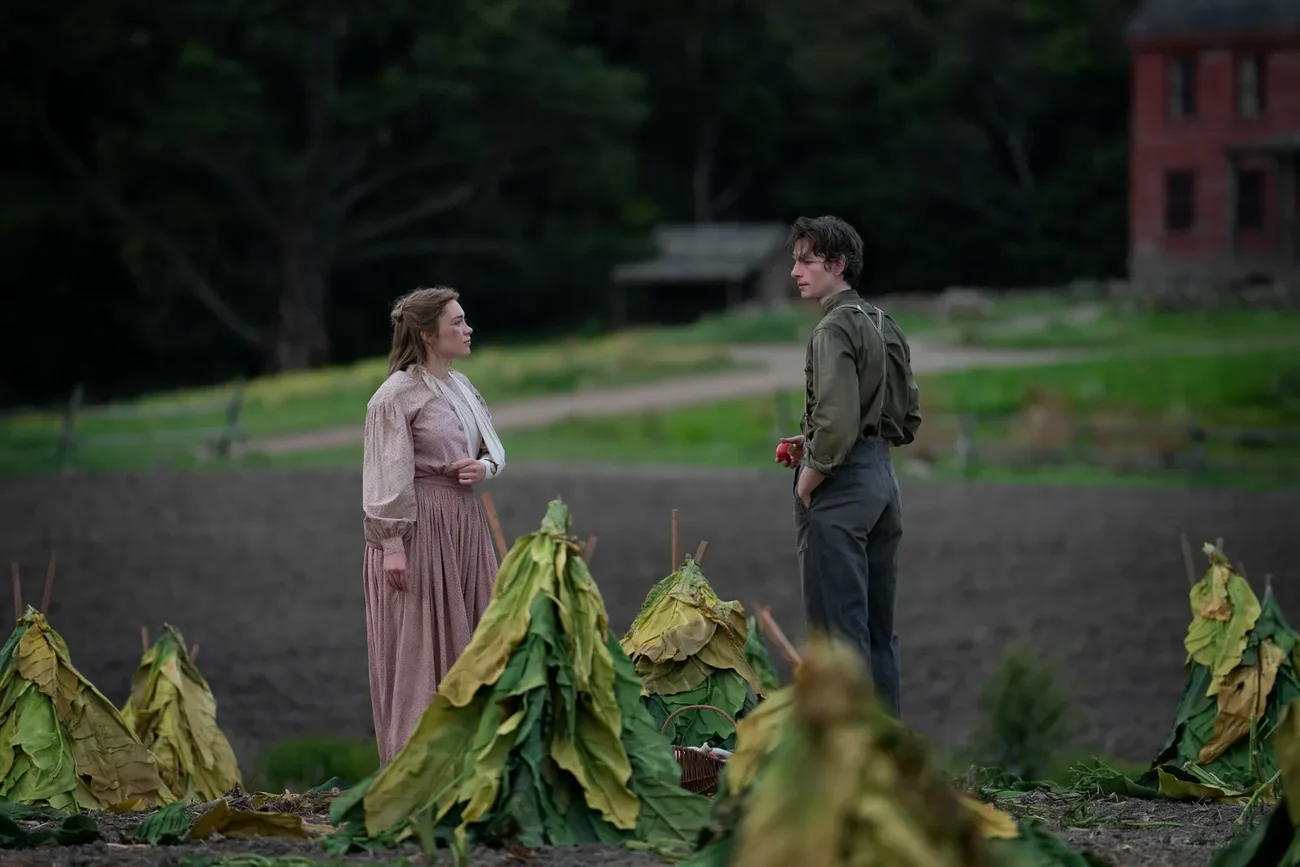
Cathy ultimately prevails. The moment Charles leaves the house, Adam takes her into town and marries her, infuriating Charles when he discovers the news. The most disturbing twist follows, as on their wedding night, Cathy drugs Adam and goes to Charles’s bedroom, where they have an encounter.
The brothers never recover from this betrayal. Adam sells his share of the farm to Charles and departs for California with Cathy, leaving Charles with the land, the wealth, and no one to share it with.
Charles’s demise is sudden and almost cruelly straightforward. He succumbs to a lung ailment on October 12 after only two weeks of illness. Adam learns of his brother’s death only after his own letter to Charles is returned, followed by a letter from the attorneys delivered by the postmaster.
This letter brings a second shock: Charles amassed a fortune exceeding a hundred thousand dollars in land, securities, and cash, which he bequeathed equally to Adam and Cathy, who was still legally Adam’s wife. Leaving anything to the woman he distrusted most is one of the novel’s great enigmas.
Readers have interpreted this choice in various ways. One interpretation views it as a bewildering final expression of love and a poisoned chalice, compelling Adam to confront his brother’s pain long after his death. Regardless, this gift keeps Charles’s presence felt in the story long after his passing.
The repercussions extend to the next generation. When Cathy dies, she leaves her fortune to Aron, part of which is inherited from Charles and part earned through blackmail and prostitution. Steinbeck implies that Charles may be the biological father of the twins Cal and Aron, a truth Cal never learns.
In the Netflix miniseries, Mike Faist portrays Charles alongside Christopher Abbott as Adam and Tracy Letts as their father, Cyrus. Florence Pugh stars as Cathy, while Zoe Kazan developed the adaptation and wrote and produced all seven episodes. This connection is fitting, as Kazan’s grandfather, Elia Kazan, directed the 1955 film version featuring James Dean.
The trailer hints at Charles’s role as the family’s warning system, as he urgently advises Adam to rid himself of Cathy. This instinct aligns with the book’s portrayal, yet it goes unheeded.
Viewers familiar with the novel will likely be attentive to how the series portrays his exit. Charles is not a minor casualty; the conflict between Adam and Charles forms the novel’s dark foundation, a template of brotherly conflict echoed in Cal and Aron. If the miniseries respects that structure, Charles’s lonely death should resonate throughout every subsequent episode.
For newcomers to this story, the lesson is hard to forget. A man who recognized the truth about Cathy, was ignored, and still left her half of everything poses a question the series may challenge us to answer: Was Charles’s final will a last act of love for Adam, or a trap he knew Cathy would exploit?