
The Tragic Truth Behind Jason Voorhees and What Happened at ‘Crystal Lake’


Camp Crystal Lake remains one of the most haunting locations in film history, conjuring images of misty waters and unavoidable dread. When director Sean S. Cunningham premiered ‘Friday the 13th‘ in 1980, this seemingly peaceful summer retreat quickly morphed into a nightmare. The idyllic woodland setting concealed a dark reality, creating a stark contrast between its serene appearance and the violence lurking beneath.
Over the past four decades, the franchise has transformed into a slasher phenomenon characterized by bloody machetes and a hockey mask that has terrified countless viewers. However, before Jason Voorhees became a notorious killer in numerous sequels, his story was rooted in deep sorrow rather than supernatural evil. The real horror at Camp Crystal Lake arose not from malice, but from a tragedy that could have been avoided, stemming from neglect and indifference.
Central to the original mystery is the question of Jason’s physical and developmental challenges during his childhood. According to franchise lore, Jason was born with hydrocephalus, a serious neurological condition that leads to an abnormal buildup of cerebrospinal fluid, resulting in an enlarged head and facial disfigurement. In addition to these physical issues, he faced cognitive and developmental delays that significantly affected his speech, education, and physical coordination.
These severe challenges left young Jason utterly defenseless and reliant on constant maternal care, isolating him from the outside world. Screenwriter Victor Miller initially imagined Jason with typical physical traits but with mental disabilities. However, makeup effects artist Tom Savini opted for a more striking visual representation. Savini aimed to depict the child’s appearance authentically, creating a larger head and drooping facial features that conveyed profound suffering.
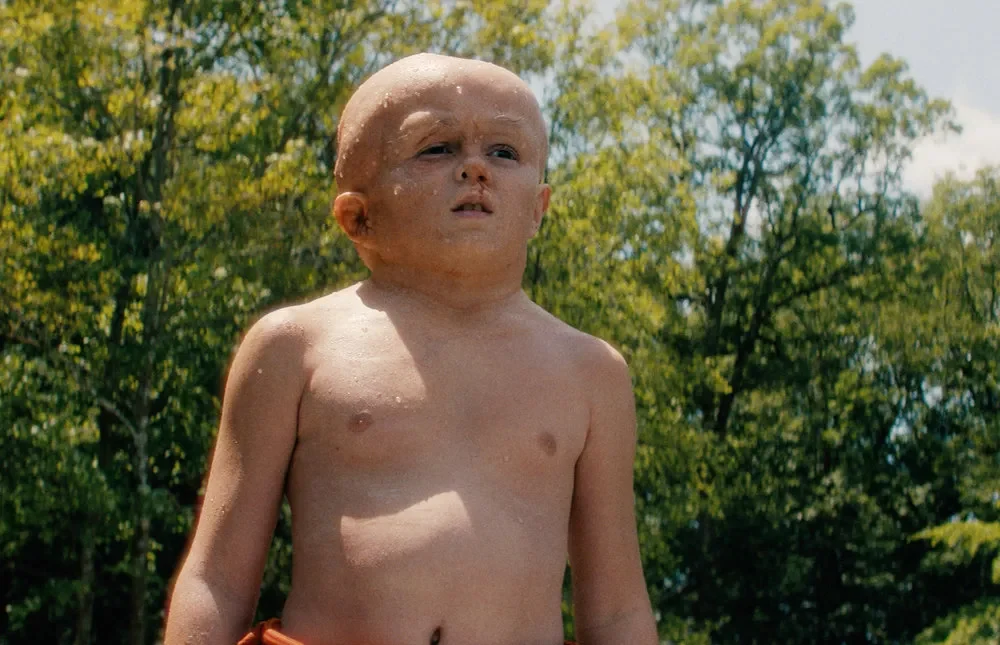
The portrayal of the drowned boy required significant physical transformation, and Ari Lehman reflected on the prosthetic process in an interview with Indie Mac User, stating, “The first time I saw myself in the makeup, it was absolutely surreal.” Lehman spent hours applying facial appliances, false teeth, and real lake mud to create the boy who appears in the final jump scare. This iconic design established Jason as a vulnerable child victimized by congenital illness rather than a monstrous killer.
Due to his condition, Jason was heavily sheltered and homeschooled by his mother, Pamela Voorhees. When Pamela took a job as a cook at Camp Crystal Lake in 1957, she brought her 11-year-old son along for safety. Unfortunately, placing the defenseless child in an unmonitored camp environment led to disastrous consequences.
Bullied by peers who ridiculed his appearance and communication difficulties, Jason was chased onto a wooden dock. The teenage counselors responsible for supervising the waterfront abandoned their posts to engage in activities in nearby cabins, leaving no one to help. Unable to swim, Jason fell into the murky water and drowned in complete isolation.
In the 1980 film, Jason’s drowning served solely as emotional motivation for Pamela’s descent into madness, meaning Jason himself was never intended to be an active slasher. Screenwriter Victor Miller argued that turning the boy into a killer would undermine the core narrative, as noted by Mental Floss, explaining, “Jason was dead from the very beginning. He was a victim, not a villain.” The tragedy was initially meant to serve as a cautionary tale about how systemic neglect can destroy innocent lives.
The enormous success of ‘Friday the 13th’ prompted producers to alter Miller’s vision when creating ‘Friday the 13th Part 2’ in 1981. Filmmakers decided that Jason had somehow survived in the wilderness, witnessing his mother’s death before embarking on his own killing spree. This significant change disregarded the reality of a medically compromised boy in favor of crafting an indestructible horror icon.
Years later, the prequel series ‘Crystal Lake’ from A24 and Peacock revisits this foundational heartbreak with a more nuanced thematic approach. Featuring Linda Cardellini as Pamela and Callum Vinson as young Jason, the series explores the intense stigma faced by the mother and son from the local community. By dramatizing Pamela’s fierce protectiveness, the series re-establishes how the boy’s medical vulnerabilities contributed to the ensuing horror.
Addressing how previous sequels have inconsistently handled the backstory, showrunner Brad Caleb Kane told /Film that “the series is pretty inconsistent in terms of canon,” adding, “The only rule was that it’s got to be a good time.” Modern storytelling demonstrates that revisiting the true tragedy of Camp Crystal Lake allows the character to regain depth. Jason was not born a monster, but rather a sick, bullied boy whose avoidable death led to decades of cinematic horror.
Share your thoughts in the comments below on whether Jason Voorhees is best viewed as a tragic victim of circumstance or if the sequels made the right choice by transforming him into an unstoppable slasher.