
Who Are the Giants in ‘The Odyssey’ and How Nolan Brings Them to Life


Homer’s timeless epic is filled with mythical creatures, but few are as imposing as the giants that obstruct Odysseus on his arduous journey home. With Christopher Nolan’s highly anticipated adaptation now showing in theaters, viewers are experiencing these colossal beings in a manner that truly reflects the grandeur of the original narrative.
The film dives deep into the mythological turmoil of the source material, and the giants are emerging as some of the most discussed elements of the film. From a man-eating Cyclops to a swarm of cannibal warriors, ‘The Odyssey’ gives these formidable beings substantial presence rather than relegating them to mere background elements.
The most renowned giant in Homer’s narrative is Polyphemus, the one-eyed offspring of Poseidon who captures Odysseus and his crew in his lair. Bill Irwin portrays Polyphemus in Nolan’s film, utilizing his background in puppetry and theater to bring the man-eating giant to life. The character ultimately meets his fate at the hands of Odysseus and his men, a pivotal moment that has resonated through the ages.
Choosing an actor known for physical theater instead of a conventional action star adds an intriguing layer to the film’s casting choices.
Polyphemus is joined by a wider array of gods and monsters that Odysseus encounters throughout his adventure, including the goddess Athena, played by Zendaya, the sorceress Circe, portrayed by Samantha Morton, and the sea nymph Calypso, played by Charlize Theron.
Critics have already focused on how the Cyclops scene translates to the screen. One reviewer noted that the poem’s gruesome Cyclopses embody the wild, chaotic spirit that Nolan finally embraces after years of more subdued filmmaking. This tonal shift represents a significant departure for a director typically recognized for his grounded, cerebral blockbusters.
In addition to Polyphemus, ‘The Odyssey’ also showcases the Laestrygonians, a tribe of giants infamous in the poem for assaulting Odysseus and his crew with massive boulders and turning his men into their next meal. The confrontation with these cannibal giants propels the film into genuinely intense territory, with the sequence filmed in Scotland’s Culbin Forest using seven IMAX cameras.
What distinguishes this sequence is the dedication to practical effects over digital shortcuts. The confrontation relies on perspective tricks and wire work instead of CGI, providing the giants with a tangible presence that feels connected to the real world. For a story centered around monsters and gods, this grounded approach is a deliberate choice by Nolan.
The scale of the Laestrygonians encounter has already become one of the film’s most eagerly awaited moments among fans of the myth. This sequence is being highlighted as a standout feature of the movie, crafted with IMAX cameras and practical stunts rather than relying on visual effects. It aligns perfectly with Nolan’s history of favoring in-camera spectacle throughout his career.
Critics argue that these giants serve a purpose beyond mere spectacle; they are essential to the narrative Nolan is crafting. One review pointed out that without its gods and monsters, ‘The Odyssey’ would essentially reduce to the tale of a man who goes out for a pack of smokes and never returns, emphasizing that the mythological elements provide the magic the story requires. This perspective places significant weight on sequences like the Cyclops cave and the Laestrygonian assault to resonate.
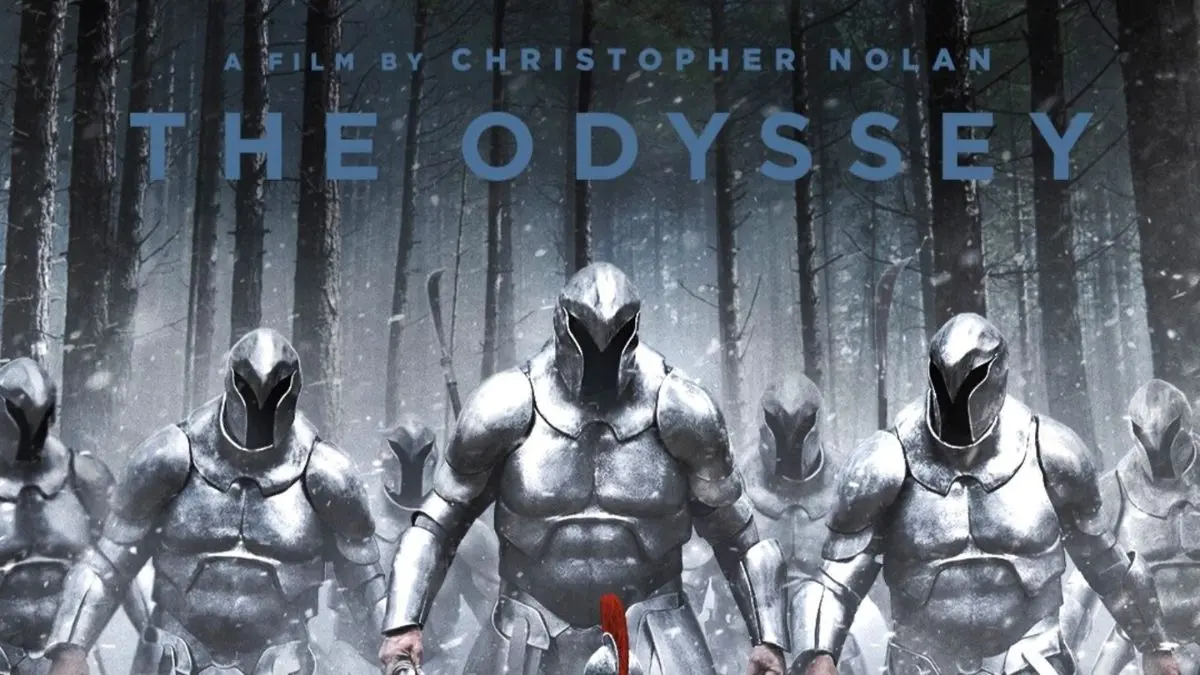
Initial reactions suggest that these sequences are indeed striking a chord with both audiences and critics. Early feedback on the film’s mythological elements has been predominantly positive, with numerous outlets praising the giants as memorable highlights. For a film boasting such star power, it’s noteworthy that the monsters are garnering just as much attention as the A-list cast.
The giants are part of a vast ensemble featuring some of Hollywood’s biggest names. Matt Damon stars as Odysseus, with Anne Hathaway as Penelope, Tom Holland as Telemachus, Zendaya as Athena, Robert Pattinson as the suitor Antinous, and John Leguizamo as Odysseus’ loyal companion Eumaeus. The fact that the giants can still stand out in such a star-studded cast highlights the meticulous effort put into their portrayal.
What makes these giants resonate is how closely the film adheres to Homer’s original narrative while allowing for cinematic creativity. Nolan has confirmed that he aimed to remain faithful to the source material, even choosing to have the characters speak in contemporary English. This balance between fidelity and modernization extends directly to the depiction of the giants.
The film’s overall scale has also become a topic of discussion. Nolan’s enthusiasm for the Premium Large Format experience culminates in ‘The Odyssey’, a monumental project that marks the first feature entirely filmed with IMAX cameras. This choice of format provides the giants with a scope that smaller productions simply cannot replicate.
Not every decision has resonated perfectly with audiences, however. The result is a contemplative action film that is both grand and intimate, albeit one whose flow is occasionally disrupted by the inherently episodic nature of the nonlinear source material and some casting choices that have drawn mixed reactions. Nevertheless, the giants themselves are emerging as a highlight rather than a point of contention.
With Polyphemus and the Laestrygonians now vividly brought to life on an IMAX scale, which of Nolan’s giants made the most significant impact on you during your viewing of ‘The Odyssey’ in theaters?