
Why ‘House of the Dragon’ Calls Rhaenyra The Cruel


The moniker didn’t arise without reason, and that’s what makes it particularly painful. ‘House of the Dragon’ presents viewers with a title that appears to be mere villain branding, yet it is deeply rooted in a blend of historical context, political maneuvering, and a queen pushed to her limits.
When fans first heard the term ‘Rhaenyra the Cruel’ in season two, social media erupted with discussions about whether the label was justified or simply another attack from her adversaries. As is often the case in this world, the truth lies somewhere in the ambiguous middle.
The nickname is not an arbitrary invention for the series. It originates from George R.R. Martin’s ‘Fire and Blood’, the historical novel that serves as the foundation for the show. In that source material, Rhaenyra was branded the Cruel by her opponents after she took control of King’s Landing. This comparison was a deliberate tactic employed by those who opposed her.
The term draws a parallel to King Maegor I Targaryen, known as Maegor the Cruel, who is often regarded as one of the most notorious and despicable kings in Westeros history. By labeling Rhaenyra with the same term, her enemies aimed to convince the common folk that she was as perilous as a tyrant king, and even more so because she was a woman claiming a throne that many believed belonged to men.
Interestingly, the use of Rhaenyra the Cruel in the show is not a direct quote from the books, although it is inspired by Rhaenyra’s narrative in ‘Fire and Blood’. The series has condensed and altered the timeline of how this reputation was formed, but the essence remains true to Martin’s writing.
On screen, the nickname emerges from a calculated political strategy. During the funeral procession for Prince Jaehaerys in the season two episode titled ‘Rhaenyra the Cruel’, commoners express their sympathies to Alicent and Helaena while a herald proclaims Rhaenyra’s alleged crimes, dubbing her Rhaenyra the Cruel. This is a strategic public relations move orchestrated by her foes, not a spontaneous outburst.
Otto Hightower masterminds this scheme, proposing the funeral procession to showcase what he frames as Rhaenyra’s depravity and to bolster support for Aegon.
Alicent and Helaena are drawn into this spectacle, serving as the sympathetic faces of the Greens, which makes the grief feel more personal and the blame more impactful.
Rhaenyra is genuinely taken aback when she discovers that people believe she could orchestrate a child’s murder, quickly realizing that the chaos has been instigated by Daemon, not by any scheme of her own. This disparity between her actual actions and the public accusations is what propels the nickname forward.
The connection to Maegor is not merely a casual insult; it carries a significant historical weight that audiences within the story would instantly recognize. Archmaester Gyldayn’s account in the books portrays Rhaenyra as a grasping and vindictive figure, labeling her a queen as cruel as any king before her. This framing places her in direct conversation with the most infamous rulers in Targaryen history.
Her reign on the Iron Throne became notorious for mass executions and increasingly burdensome taxes on the common folk, who resentfully nicknamed her King Maegor with teats, a phrase that eventually evolved into a common curse in King’s Landing.
While ‘Rhaenyra the Cruel’ is the version fans hear on the show, the book’s portrayal of her infamy is arguably even harsher and more lasting.
When Rhaenyra seizes King’s Landing and the Iron Throne from the Greens in the source material, the common folk initially welcome her, having little affection for King Aegon II. However, the ongoing war and the Blacks’ need for funds force her to impose severe new tax measures that alienate the populace. It is a gradual decline of public favor, not an instantaneous villain transformation.
Viewers have been divided between anxiety and morbid curiosity about witnessing this transformation on screen. Many fans expressed a desire for the show to delve into the reasons behind her earning the Cruel label, with one viewer stating they were ready to see Rhaenyra take the fight to the Greens.
This sentiment has sparked broader cultural discussions, drawing comparisons between her arc and the well-known downfall of Daenerys Targaryen in ‘Game of Thrones’. The show seems to be engaging with this comparison directly rather than avoiding it.
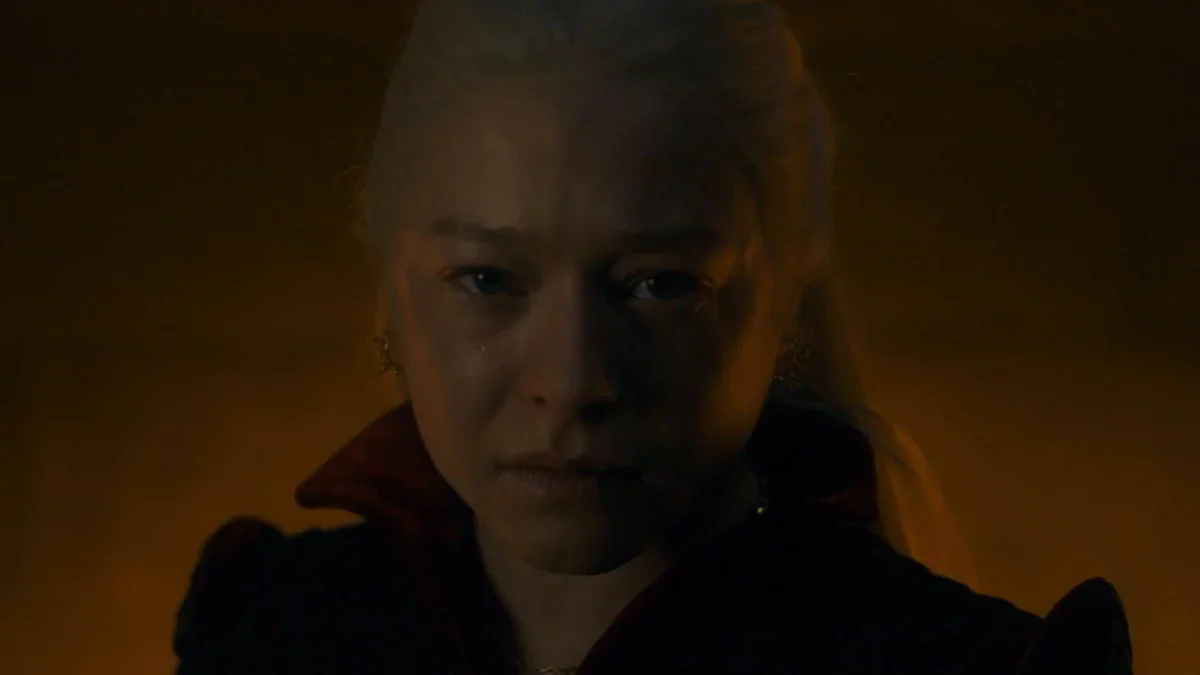
What makes the season three portrayal of this arc compelling, based on early reactions, is that the moment Rhaenyra is meant to fully embrace her colder, harder queen persona is depicted through her tears rather than a triumphant or cold demeanor. This choice suggests that the show aims for viewers to perceive cruelty as a burden she bears, not a mask she relishes wearing.
Whether ‘Rhaenyra the Cruel’ is a fair assessment of her reign or merely the most effective piece of propaganda crafted by her enemies remains a topic of debate. Now that the nickname has firmly taken root on screen, fans appear eager to discuss whether she deserves it or if the Greens are to blame for her reputation.