
Why Odysseus Chose to Hear the Sirens Sing in Christopher Nolan’s ‘The Odyssey’


Homer’s ‘Odyssey’ has endured for millennia, in part due to a pivotal choice made by its hero, Odysseus, who commands himself to be tied to a mast to hear a song that spells doom for all who listen. This decision, made willingly by Odysseus, has sparked endless debate among scholars and now moviegoers about what he was truly seeking.
With Christopher Nolan’s ‘The Odyssey’ currently in theaters, this ancient moment is receiving renewed attention, and the film’s interpretation of the sirens sequence has quickly become one of its most discussed scenes.
In the myth, Circe warns Odysseus that any sailor who approaches the sirens and hears their enchanting song will never return home to his family. Yet, despite this forewarning, Odysseus is determined to experience the song firsthand. With Circe’s assistance, he devises a plan to listen without succumbing to death.
The strategy is straightforward: his crew plugs their ears with beeswax to block the sound, while Odysseus has himself securely bound to the mast, instructing his men not to release him regardless of what he says until they are safely past the island.
One prevalent interpretation suggests that this act is a form of precommitment, as Odysseus anticipates that his willpower will falter the moment he hears the song. Thus, he safeguards his future self against his present desires. This analysis posits that his motivation stems not from lust but from a profound yearning for knowledge, as the sirens’ song promises wisdom and truth rather than mere romance.
Other versions depict the sirens as offering gifts of wisdom, foresight, and relief from sorrow, appealing directly to Odysseus’ renowned curiosity rather than his physical desires. As soon as the song reaches him, he struggles against his bonds and pleads with his crew to set him free, but their adherence to his earlier commands ensures their safe passage past the perilous rocks.
Nolan’s adaptation retains the essence of this setup, with Odysseus bound to the mast as his men row on with their ears sealed. However, the film alters the portrayal of the sirens. Instead of showcasing the creatures up close, they are depicted from a distance, appearing as women on the rocks, allowing the horror to manifest more in Odysseus’ reactions than in the sirens’ appearance.
During the song, Matt Damon’s Odysseus is shown in anguish, screaming and crying. He later reveals to his crew that the song embodies everything he longs for and everything he has lost. This framing shifts the scene from a mere temptation test to a form of grief therapy, with one review characterizing the sirens as catalysts for confronting deep-seated subconscious truths rather than mere seducers.
The sirens sequence is strategically placed as the climax of a series of monstrous trials, following encounters with Scylla and Charybdis, thus elevating it to an emotional zenith in the sea voyage narrative rather than just another hurdle.
Damon portrays a version of Odysseus as a fractured man still haunted by memories of the Trojan War, a psychological scar that influences his response to every challenge, including the sirens. Anne Hathaway plays his wife Penelope, Tom Holland takes on the role of their son Telemachus, and Zendaya portrays Athena, who guides Odysseus throughout his journey.
The cast also features Robert Pattinson as the suitor Antinous, Charlize Theron as Circe, and Samantha Morton as Circe’s fellow enchantress, alongside Himesh Patel as Eurylochus and John Leguizamo as Eumaeus.
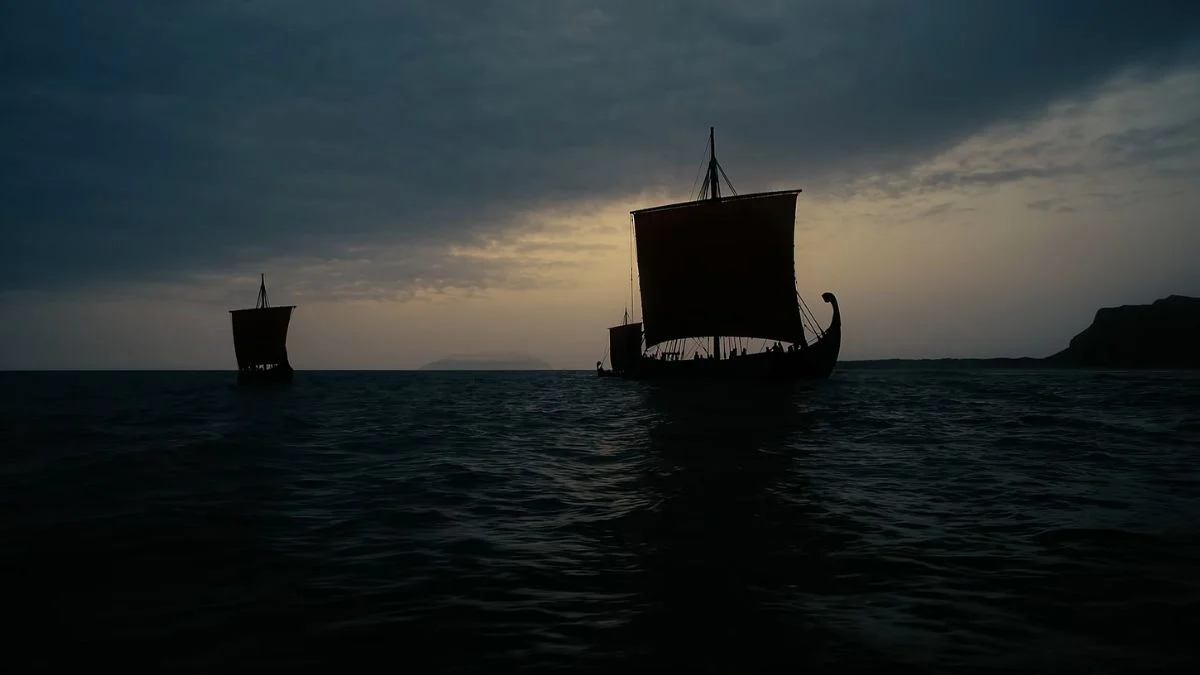
The extensive casting has been a highlight of the film’s promotion since Damon was first announced in the role, with production taking place across Sicily and the island of Favignana using cutting-edge IMAX film technology.
Critics have generally praised Nolan’s approach to Homer’s material, with one review describing the film as a grand epic that offers a more nuanced view of human nature than most films of its kind. The sirens scene, in particular, has been highlighted as evidence of Nolan’s willingness to interpret the source material rather than merely depict it.
The decision to frame the sirens’ song around themes of loss and longing, rather than lust, aligns with ancient depictions that emphasize promises of wisdom, truth, and foresight over physical allure. By maintaining this emotional essence while altering the visual representation, Nolan’s film suggests that Odysseus’ true vulnerability lies not in his body but in his mind.
This distinction is significant, as Homer’s Odysseus is repeatedly characterized by his cleverness. A temptation rooted in knowledge and memory resonates more profoundly with that trait than one based on desire. Nolan’s choice to keep the sirens at a distance while focusing the camera on Damon’s expression indicates a desire for audiences to engage with the internal impact of the song on Odysseus rather than the creatures creating it.
With ‘The Odyssey’ now screening in IMAX, viewers can finally compare Nolan’s sirens to the versions they encountered in school or in adaptations like ‘Percy Jackson.’ The debate over whether Odysseus is motivated by grief, curiosity, or sheer hubris remains unresolved. What do you think Odysseus was truly listening for when Nolan allowed that song to play?