
Why Odysseus Left Home and How Nolan’s ‘The Odyssey’ Reimagines His Journey


Christopher Nolan’s ‘The Odyssey‘ is set to premiere soon, prompting fans to revisit Homer’s original text to grasp what compelled Odysseus to leave Ithaca. The answer is rooted in the Trojan War, a decade-long conflict that separated him from his wife Penelope and their infant son long before his legendary voyage back home commenced.
With Matt Damon portraying Odysseus and Anne Hathaway as Penelope, the film has created significant anticipation ahead of its release on July 17. Understanding the motivations behind Odysseus’s departure provides essential context for the narrative that unfolds.
The Trojan War is the catalyst for Odysseus’s journey away from Ithaca. Nolan’s film depicts his arduous trek home following the war, as he strives to reunite with Penelope. This conflict is what initially drew him into battle, involving him and numerous other Greek kings in a protracted struggle that lasted a full decade before he could contemplate returning home.
The film’s cast highlights the many notable figures connected to the war effort. Jon Bernthal takes on the role of Menelaus, Benny Safdie plays Agamemnon, and Ryan Hurst portrays Ajax, all characters whose destinies were similarly influenced by the years spent fighting at Troy.
Promotional materials have emphasized this backstory as well. One trailer features Odysseus asserting that after years of conflict, nothing could prevent his men from returning home, framing the film as a narrative about a soldier yearning to reunite with his family.
Even Travis Scott’s enigmatic cameo is linked to the war’s origins. In a trailer released in January 2026, Scott delivers a speech referencing a strategy to breach Troy’s walls and set it ablaze, alluding to the Trojan Horse scheme that ultimately led to the siege’s conclusion and initiated Odysseus’s journey home.
Homer’s original poem presents a non-linear narrative, complicating its adaptation. The story begins with Penelope and Telemachus in Ithaca, as Telemachus seeks information about his father’s fate from Trojan War veterans Nestor and Menelaus.
Odysseus is introduced only midway through the tale, stranded on the island of Ogygia as Calypso’s captive, before eventually washing ashore on the island of the Phaeacians, where he recounts his adventures. This narrative structure means that audiences learn about the Cyclops, the Sirens, and Circe through Odysseus’s retelling rather than witnessing events unfold in real time.
This structural challenge has sparked much speculation regarding how closely Nolan will adhere to the original timeline. While it remains uncertain whether he will maintain the poem’s non-linear approach, many anticipate that he will honor its structure. Given Nolan’s penchant for intricate timelines in films like ‘Memento’ and ‘Dunkirk’, this particular challenge seems well-suited to his style.
Early viewer reactions suggest he has made some creative choices along the way. One review highlights a significant departure from the source material, describing it as one of the best scenes in years and adding depth to the narrative.
Nolan’s adaptation emphasizes scale and practical effects to convey both the war Odysseus endured and the challenges he faces in leaving it behind. The film draws inspiration from epic historical works such as ‘Andrei Rublev’ and ‘Ran’, alongside the effects artistry of Ray Harryhausen, and was filmed entirely using IMAX’s 70mm cameras across various locations including Morocco, Greece, Italy, Scotland, Iceland, Western Sahara, and Malta.
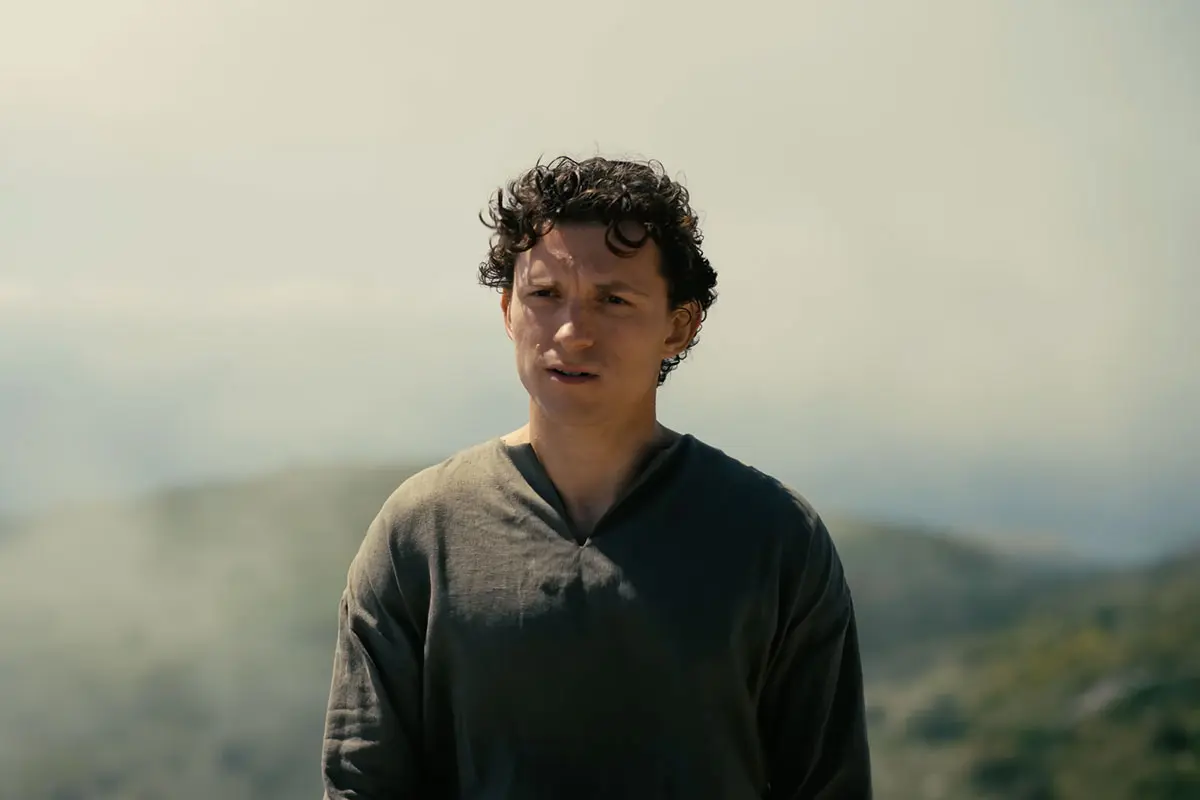
This dedication to practical effects has already garnered praise from early screenings. One review describes it as a monumental achievement, even by Nolan’s standards, commending its commitment to capturing as much as possible in-camera and framing the story as one about the weight of leadership and the struggle between mortals and gods.
The film’s estimated budget reflects this ambition, with approximately 250 million dollars making it one of the most expensive productions of Nolan’s career. This figure aligns with the extensive, multi-country shoot required to portray both the fall of Troy and Odysseus’s decade-long journey back to Ithaca.
At its core, the reason Odysseus left home is just as significant as the journey back, as the poem has always explored the costs of war on those who fight. Nolan’s team seems acutely aware of this, positioning the homecoming as the emotional backbone of the film rather than merely a backdrop for encounters with mythical creatures.
The enduring themes of time, memory, morality, and human resilience resonate deeply with Nolan’s established interests as a filmmaker, shedding light on why he was drawn to this myth following the success of ‘Oppenheimer’. It also suggests that the war itself, rather than just the Cyclops or the Sirens, may receive more attention than casual viewers might expect.
What are your thoughts on whether Nolan’s ‘The Odyssey’ should depict the Trojan War directly, or is Odysseus’s traumatic recollection sufficient to convey the weight of his ten-year journey home?