
Why ‘Street Fighter’ Has Created a Significant Rotten Tomatoes Divide Between Critics and Fans


Adapting cherished arcade franchises for mainstream audiences has long been one of Hollywood’s most precarious endeavors. With properties boasting millions of devoted fans across various console generations, it’s challenging to satisfy both casual moviegoers and die-hard gamers. The struggle to balance traditional storytelling with unabashed video game spectacle continues to create tension in theaters.
Capcom has felt this volatile tension throughout its cinematic history, facing harsh criticism while still cultivating loyal cult followings for its films. The legacy of past adaptations has taught studios that gamers evaluate martial arts blockbusters using different criteria than seasoned festival critics. As Hollywood increasingly embraces video game intellectual properties, the philosophical divide between narrative craftsmanship and arcade authenticity remains unresolved.
This conflict has reached a critical point with the release of Legendary Entertainment and Paramount Pictures’ latest reboot, ‘Street Fighter’. Following the lifting of the review embargo for its October theatrical debut, the film stumbled with a disappointing 41% approval rating from critics on Rotten Tomatoes. In stark contrast, verified audiences flipped the narrative, awarding the martial arts spectacle an impressive 82% Popcornmeter score, resulting in a significant 41-point gap.
Early box office figures mirrored this polarizing reaction, with the reboot earning $4 million in Thursday previews and a projected domestic opening exceeding $30 million. As Variety reported, Paramount secured global distribution for the film as part of a multi-year agreement with Legendary. The $82 million production aimed to revive the dormant franchise, yet the critical response reignited debates about whether reviewers truly grasp video game source material.
Review aggregators present an enlightening narrative when analyzing the ratings. The film’s 41% critical score aligns with a mediocre 46 rating on Metacritic, indicating a consistent lack of enthusiasm among mainstream critics. However, over 500 verified ticket buyers propelled the audience rating above 80%, marking the largest discrepancy for a video game film since the summer box office season.
Critics’ assessments of director Kitao Sakurai often focus on issues of plot coherence and pacing. Many reviewers noted that the screenplay rushes through character motivations to leap between stylized fight scenes, leaving dramatic stakes underdeveloped. Some prominent critics also criticized the film’s abrupt ending, arguing that it halts the narrative to tease future installments instead of providing a satisfying conclusion.
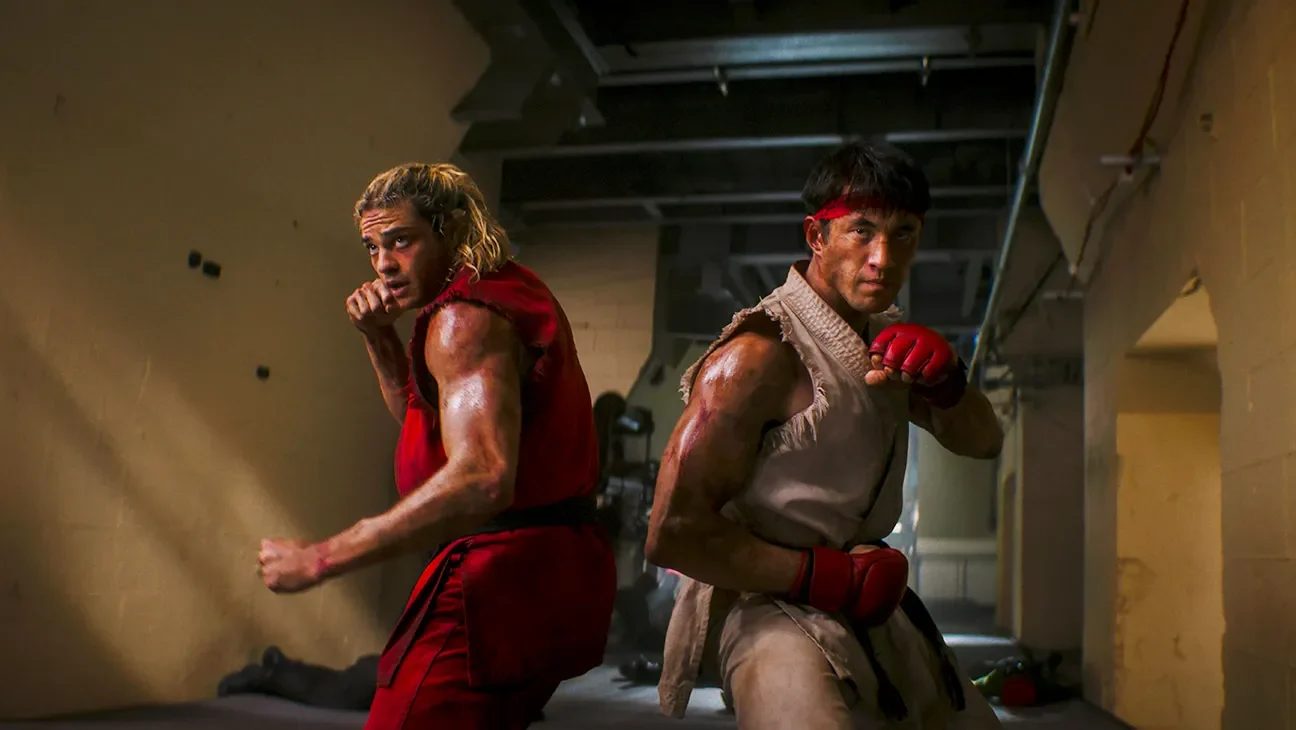
Others criticized the film’s eccentric, camp-heavy humor that permeates its two-hour runtime. Reviewers argued that this comedic tone undermined the emotional arcs between estranged martial artists Ryu, played by Andrew Koji, and Ken Masters, portrayed by Noah Centineo. While a few critics praised the bold visual style, most concluded that the dynamic fight scenes could not make up for the flimsy dramatic foundations.
Conversely, general audiences and longtime gamers have celebrated the film for embracing video game camp. Instead of opting for a grounded, serious tone, Sakurai set the story in 1993 and filled it with over 100 franchise Easter eggs. Viewers have rallied around the authentic choreography, where characters perform recognizable special moves, hadoukens, and dragon punches without hesitation.
The film also garnered widespread acclaim for its hand-drawn anime flashback sequences created by Titmouse, which pay tribute to the 1994 animated Capcom film. Additionally, the charismatic cast emerged as a highlight for audiences, with professional wrestlers Cody Rhodes and Roman Reigns receiving enthusiastic applause for their roles as Guile and Akuma. Callina Liang also impressed viewers with her dynamic martial arts skills as Chun-Li.
This character-driven energy extended to the villainous side, led by David Dastmalchian’s chilling portrayal of General M. Bison. “Why would people follow Bison to the depths that they do to make Shadaloo come to its fruition?” Dastmalchian pondered in an interview with Collider. “And I can’t wait for people to see how that happens.”
Whether this enthusiastic audience support can overcome the chilly critical reception will determine if a sequel is on the horizon. While critics view the film as an overstuffed, chaotic relic of arcade excess, the target audience appears to have received the nostalgic celebration they were eager to experience. History suggests that fighting game adaptations thrive on community passion rather than critical acclaim, meaning Capcom’s latest challenger might ultimately have the last laugh.
Do you align with the critical reviews, or did ‘Street Fighter’ provide the exact fighting game experience you were hoping to see on the big screen?