
How Accurate Is ‘Lioness’? Insights from a Former CIA Officer and Filmmaker


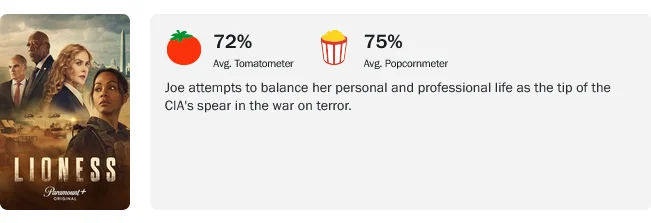
Taylor Sheridan has crafted a television empire filled with gritty, morally complex dramas that blur the lines between entertainment and authenticity, with ‘Lioness’ emerging as one of the most discussed entries in this expanding universe. Featuring Zoe Saldaña and Nicole Kidman, the Paramount+ series centers around an elite CIA program that recruits female operatives to infiltrate dangerous organizations.
While the premise is rooted in real-world history, the show has never claimed to be a documentary. Since its premiere, ‘Lioness’ has sparked discussions about how much of its high-stakes espionage and combat truly reflects actual intelligence work versus the dramatic license that has become a hallmark of Sheridan’s storytelling.
As the series’ third season airs, two individuals with firsthand experience in this realm are weighing in on where fact meets fiction. Former CIA intelligence officer Christina Hillsberg and documentary filmmaker Daria Sommers shared their thoughts with People regarding the show’s depiction of military and intelligence operations, offering a nuanced perspective on its accuracy.
The title of the show is inspired by a real U.S. Army initiative that began in 2003 during the Iraq War, when male soldiers were prohibited from searching areas occupied by local Iraqi women. Female soldiers, often pulled from desk roles rather than special forces, stepped in to fill that gap, leading the Marines to establish their own version of the program in 2005.
Sommers, who co-directed a 2008 documentary about these original service members, has been open about how differently Sheridan’s fictional narrative interprets that legacy. She mentioned that the ongoing debate about the show’s accuracy might not exist if it had been titled differently, stating, “If they had called the show something else, we wouldn’t be having this conversation,” as reported by People.
This distinction is significant for Sommers, who emphasizes that her concern isn’t about critiquing the show or its cast, but rather how using the honorific “Lioness” complicates the already delicate historical record of the women who served under that name. Real veterans of the original program have expressed similar frustrations, feeling that the series disconnects from their actual experiences.
Hillsberg, drawing from her experience as a CIA intelligence officer, provided a more mixed evaluation of the show’s portrayal of agency life. She pointed out that the series’ combat-heavy depiction of its Lioness operatives diverges significantly from reality, noting that most CIA officers do not carry weapons in their daily duties.
Instead, Hillsberg explained that intelligence officers depend more on diplomatic and interpersonal skills, such as active listening, empathy, and conflict resolution, rather than the firearms and tactical training depicted in the series. While officers do receive some firearms and defensive driving training, it rarely leads to the armed field operations shown on screen.
Despite these inaccuracies, Hillsberg appreciates how the show represents women in the intelligence community, valuing its portrayal of strong female characters navigating a historically male-dominated field. She acknowledged that the series captures some emotional realities associated with high-stakes work, even if the operational specifics lean heavily into Hollywood dramatization.
With Sommers’ concerns about historical erasure and Hillsberg’s nuanced perspective on the show’s emotional authenticity, ‘Lioness’ finds itself in familiar territory for prestige television inspired by real events, entertaining viewers while igniting meaningful discussions about the boundary between homage and fiction. As the series progresses into its third season, this conversation shows no signs of waning.
Have something to add? Let us know in the comments.