
The Real Death Myth Behind ‘Moana’s’ Maui Reveals a Darker Ending


Fans of ‘Moana’ recognize Maui as the boastful, tattooed demigod voiced by Dwayne Johnson, a character who continues to thrive and entertain audiences across multiple films. However, many casual viewers may not be aware that the mythological figure Disney based him on has a death myth that is far darker than anything depicted in the movies.
Maui draws inspiration from legends across various Polynesian cultures. While ‘Moana’ and its upcoming sequel ‘Moana 2’ incorporate elements of these traditions for his character and exploits, they notably omit the true conclusion of his story.
In the most commonly recounted version of the myth, Maui meets his demise while attempting to conquer the female death goddess Hine nui te po. He tries to enter her body and emerge from her mouth, but ultimately, the goddess prevails, leading to his tragic end.
Earlier written accounts echo this narrative, with Maui’s father cautioning him that a childhood blessing ceremony had left him vulnerable to death. When Maui inquires about the goddess’s appearance, he learns her eyes shine like dark greenstone, her teeth are sharp as volcanic glass, her mouth is vast, and her hair flows like seaweed. This vivid and almost monstrous description starkly contrasts with the portrayal in ‘Moana.’
The stakes of this final confrontation were not just about Maui’s life. By dying in this attempt, Maui, who sought to grant humanity immortality, inadvertently allowed death to enter the world. This was not merely a misadventure; mythological Maui was risking everything on one last impossible feat, and humanity lost that gamble alongside him.
Different regional versions of the myth also present varying details. Maori mythology closely links his death to the encounter with Hine nui te po, while Hawaiian legends offer a more diverse array of accounts regarding his demise. One Hawaiian tale suggests he angered several major gods in Waipio Valley and was subsequently dashed against the rocks by Kanaloa, one of Hawaii’s four greatest gods. Another fragment tells of Maui transforming into an eel while pursuing a girl who had climbed a tree, only to be killed by a priest, ending his life.
It’s easy to understand why ‘Moana’ chose to omit this darker chapter. The film presents Maui as a comedic mentor rather than a tragic figure, and Disney has historically been selective about which aspects of legends are included.
This selectivity has sparked discussions about the franchise since the original film’s release. Disney’s portrayal of Maui diverges from the authentic mythology, having been softened and reshaped to fit a family-friendly narrative, a point that researchers and cultural commentators have highlighted since 2016.
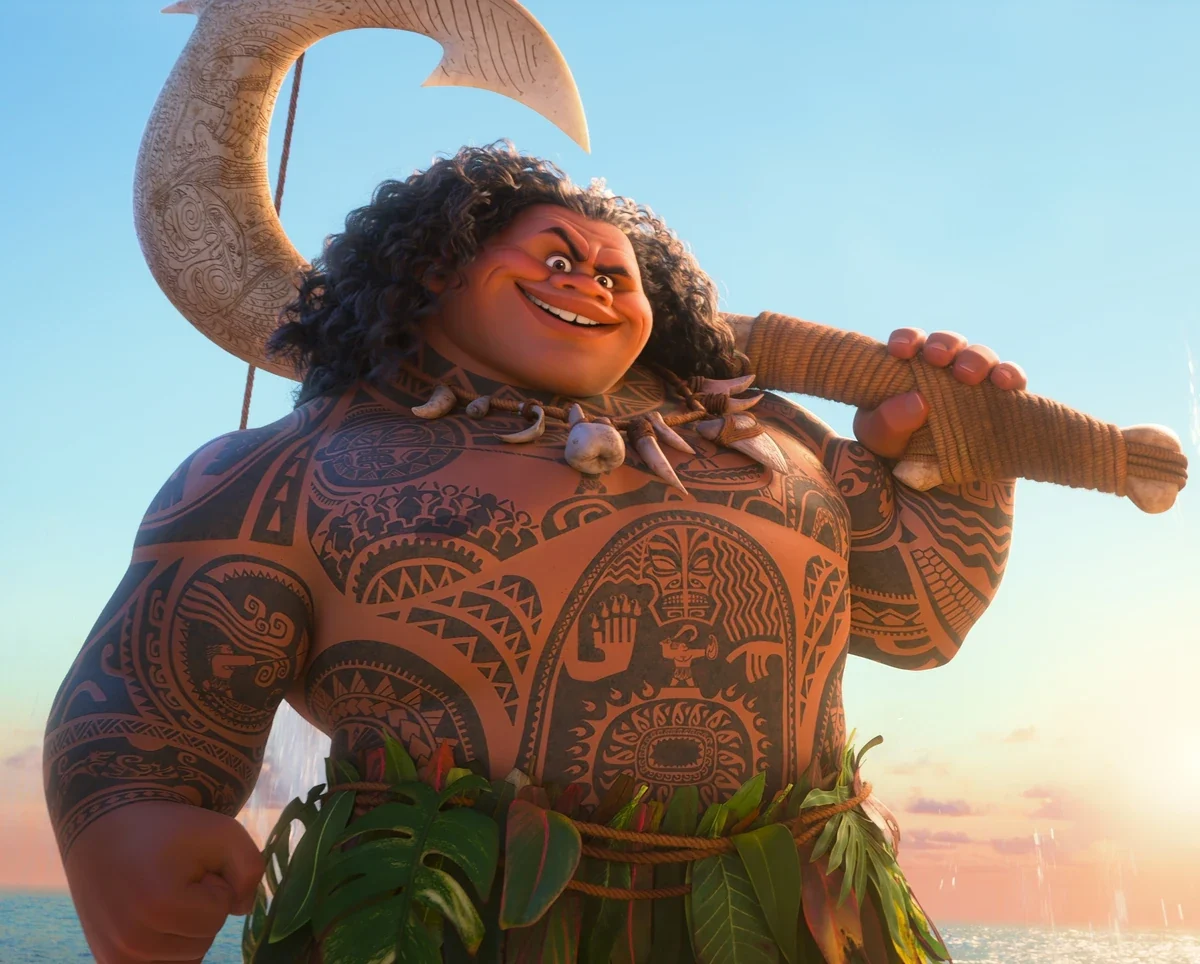
Nevertheless, the film was not created from scratch. The lyrics to Maui’s signature song ‘You’re Welcome’ are quite faithful to the Polynesian myths, detailing how he has aided humanity throughout history. However, the myths extend far beyond the film’s conclusion, venturing into themes that Disney opted not to animate for children.
Auli’i Cravalho, who voices Moana, has shared her experiences of growing up with these stories long before she auditioned for the role. She has mentioned that the demigod Maui, known for pulling up islands with his magical fishhook, was a staple of her childhood bedtime stories in Hawaii. This deep cultural connection makes the disparity between myth and movie even more pronounced for audiences from the region.
With ‘Moana 2’ already expanding on Maui’s mythology and a live-action ‘Moana’ remake reportedly in development, the question of how much darker material Disney is willing to explore becomes increasingly relevant. Maui returns in the 2024 sequel, and the future of the franchise and character remains uncertain, especially with a live-action adaptation on the horizon.
For now, Disney’s Maui appears immortal, capricious, self-absorbed, and mischievous on screen, while his mythological counterpart bears the burden of humanity’s mortality due to his ultimate failure. Whether future films will hint at that ending, even subtly, remains to be seen.
Does knowing how Maui actually dies in the myths change your perspective on his scenes in ‘Moana’ and ‘Moana 2’?